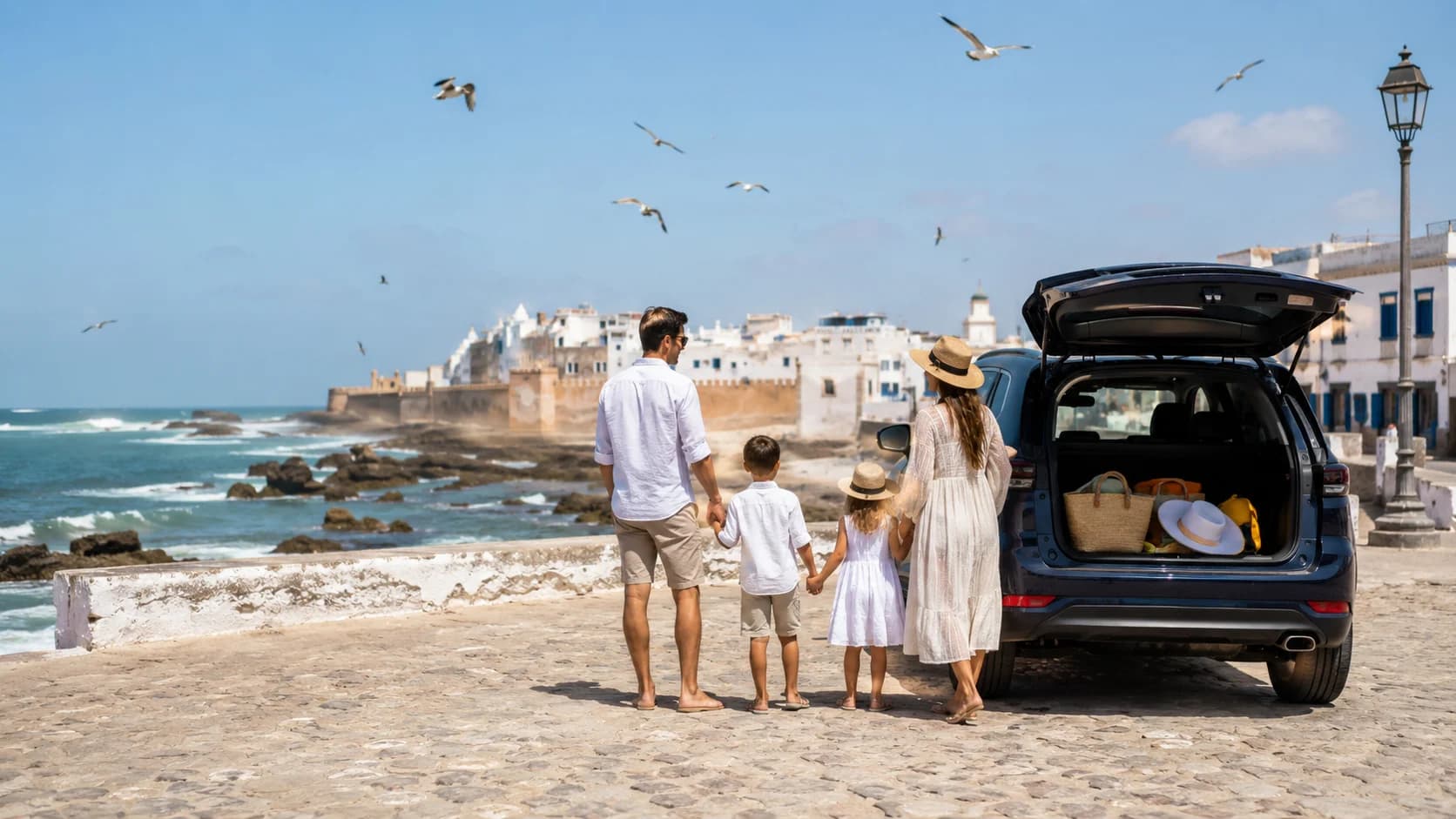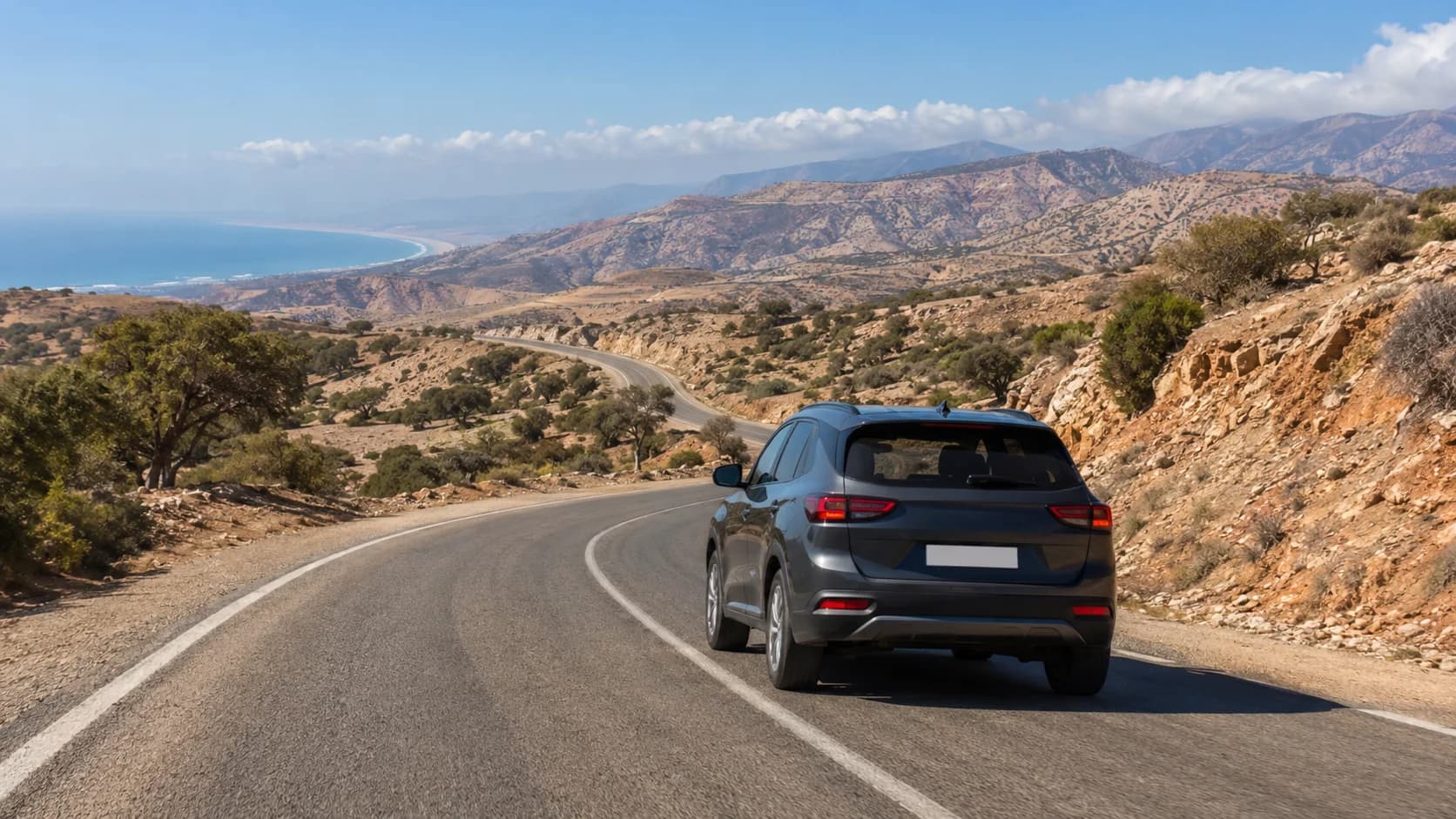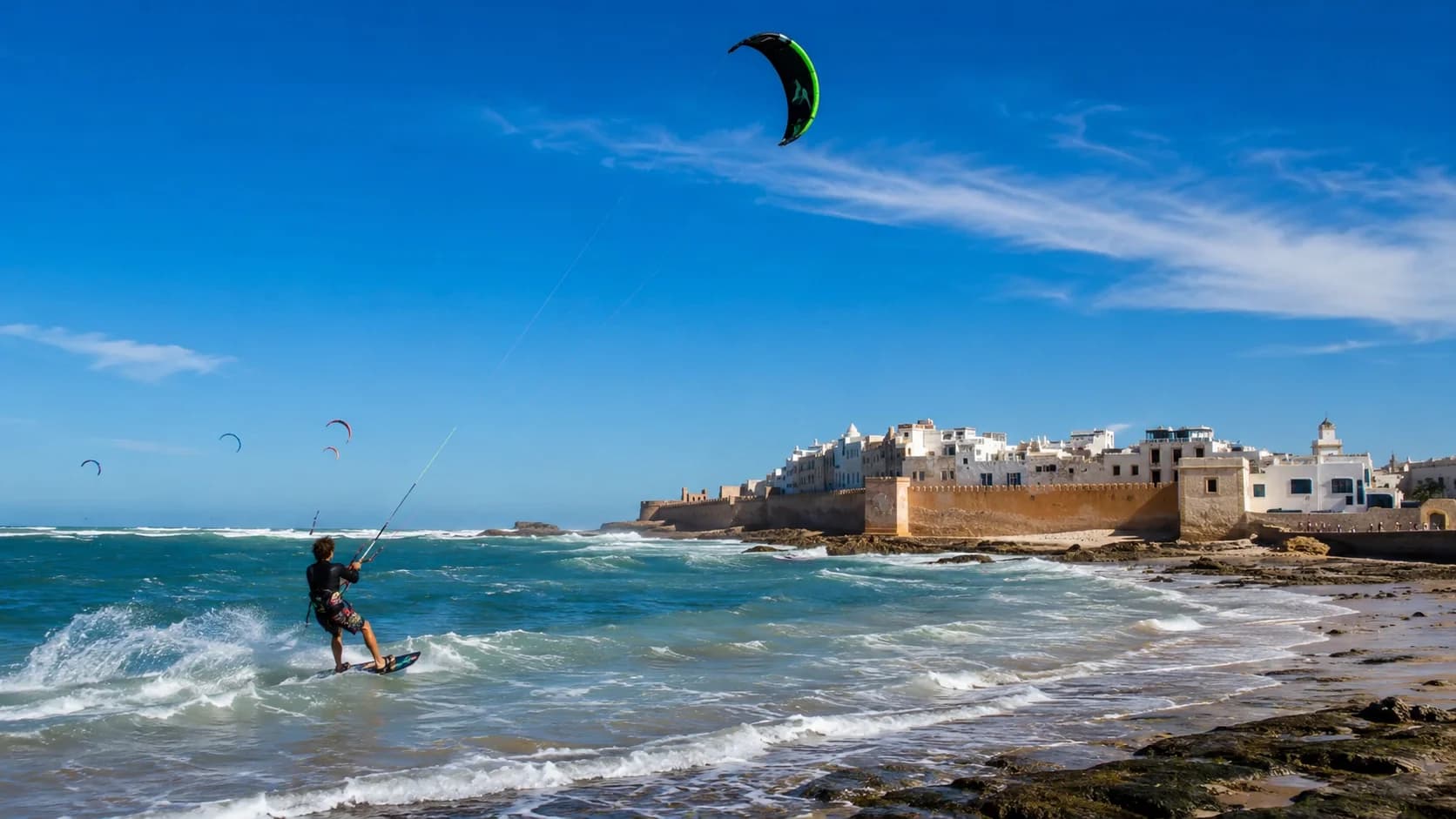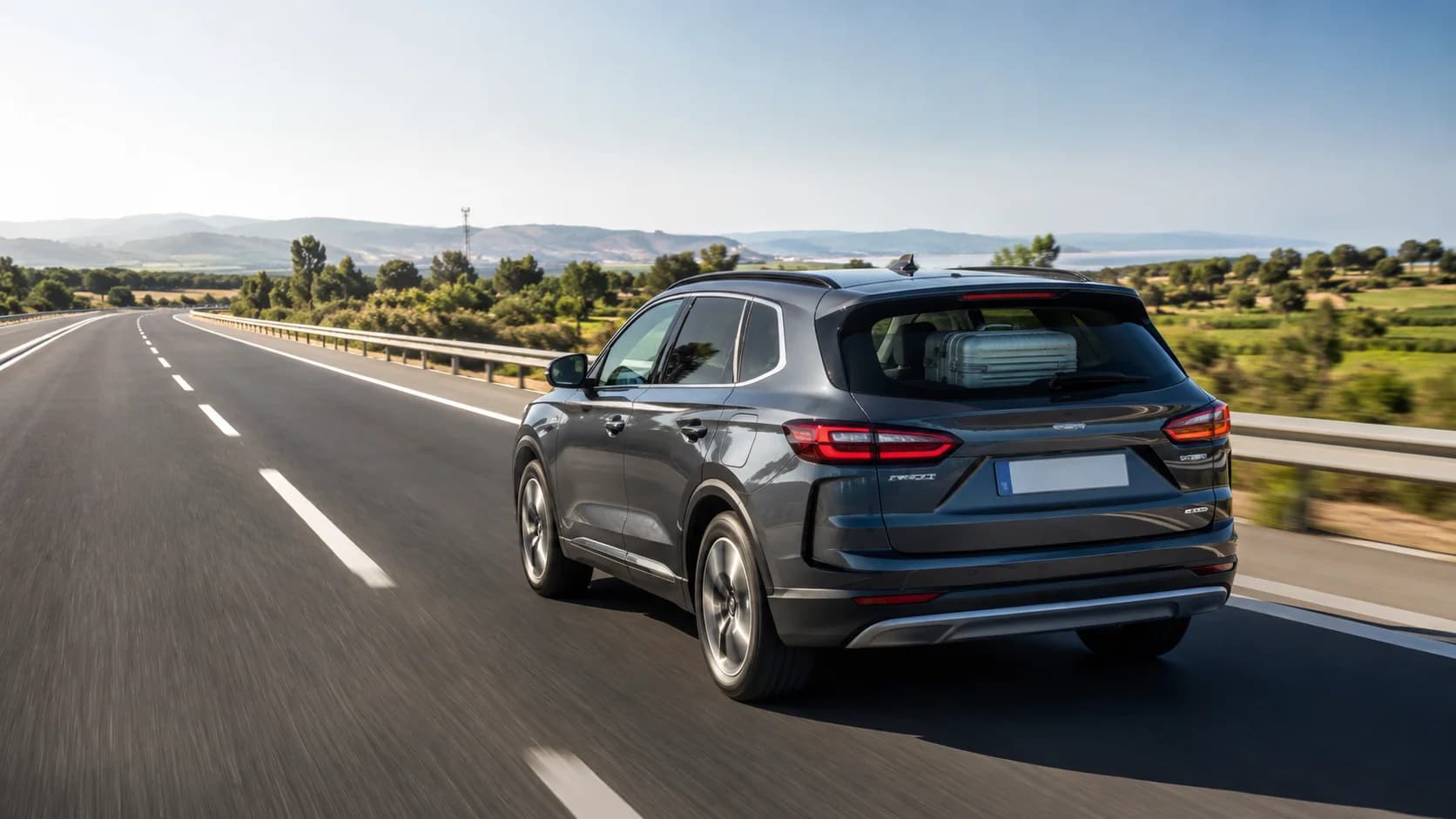









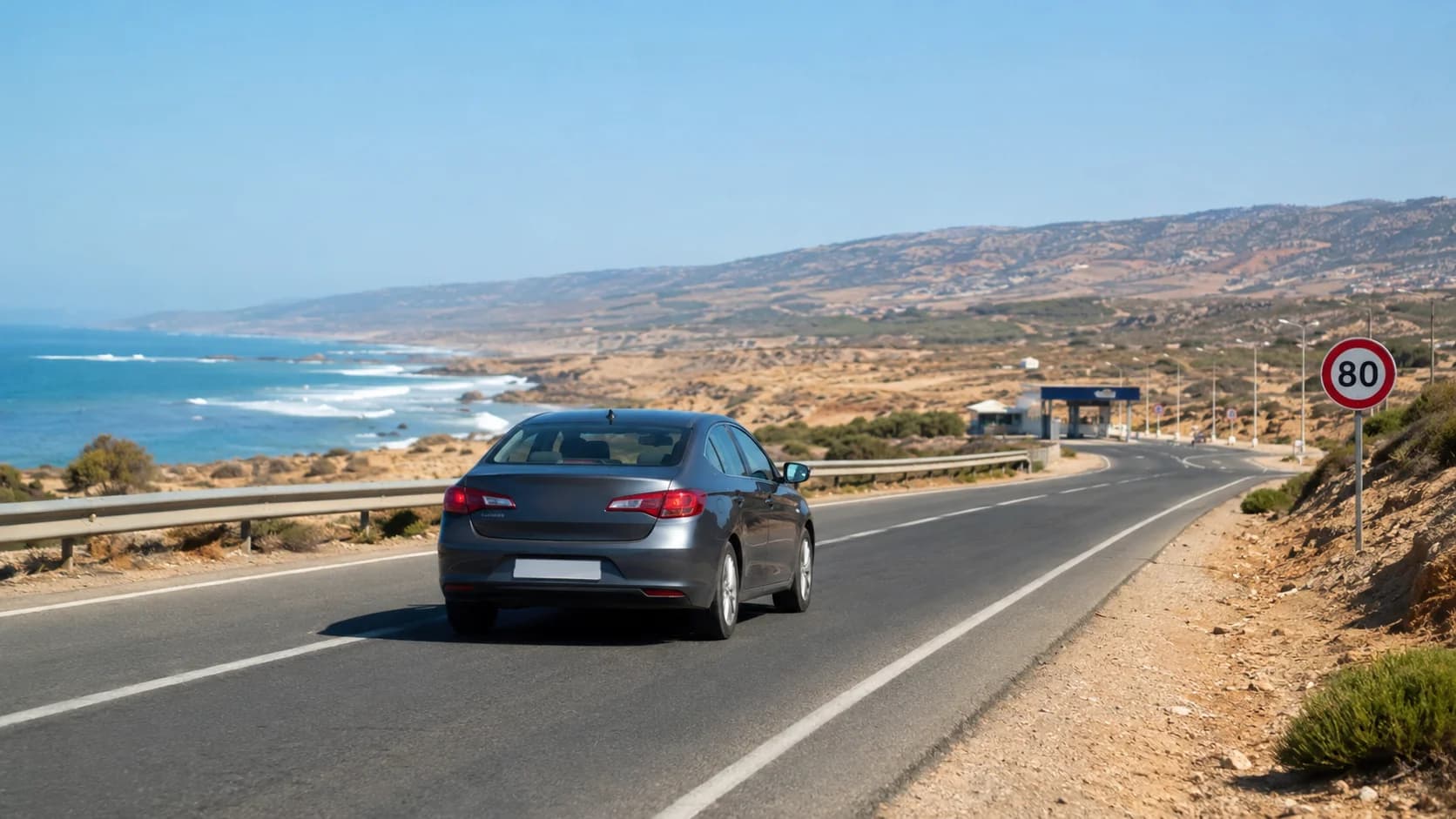
Speed limits around Essaouira are usually 60 km/h in built-up areas, 100 km/h on open national or regional roads, and lower near villages, junctions, schools, roundabouts and police checkpoints. The Marrakech to Essaouira road, the coastal approaches and the Sidi Kaouki road can all include radar checks or police stops. The safest rule is simple: slow down early when you see speed signs, respect the 60, 40 and 20 km/h approach zones before checkpoints, keep your documents ready, and never treat headlight flashes as permission to speed.
1. Speed limits by road type
Understanding speed limits Morocco Essaouira is not only about knowing the national numbers. Around Essaouira, the important part is knowing when the limit changes. A road can feel open and empty, then suddenly drop to 60 km/h when you pass a village, petrol station, roundabout, school area or checkpoint approach.
As a general guide, Morocco uses 60 km/h in urban areas, 100 km/h on rural roads and 120 km/h on motorways, with local signs taking priority where posted. Essaouira does not have a motorway directly into the city, so most visitor driving is on urban roads, regional roads, national roads and coastal routes.
Inside Essaouira city, drive slowly. The roads near Bab Doukkala, Bab Marrakech, the port, the beach road and the medina parking areas can be busy with taxis, scooters, pedestrians, delivery vans and horse carriages. Even when traffic moves, 40 to 60 km/h is the zone where most drivers should stay.
On open roads outside Essaouira, such as the road toward Marrakech, Sidi Kaouki, Diabat or small coastal villages, the limit may rise, but only after the road signs allow it. Never assume that a straight road means you can drive faster. Some of the strictest controls happen exactly where drivers relax after leaving town.
For visitors renting a car, a comfortable sedan is usually enough for Essaouira, Marrakech road sections and hotel-to-beach driving. You can compare sedan rental Essaouira options if you want a stable, comfortable car for road trips without choosing something too large for city parking.
2. Cameras on the Marrakech road
The Marrakech to Essaouira road is one of the most common routes for visitors. Many travelers describe it as an easy drive, but it is also a road where speeding is easy without noticing. Long open stretches, argan countryside, tour buses, rental cars and village approaches all mix together.
The route is often discussed as the Marrakech to Essaouira road, with drivers commonly using the N8 side from Marrakech toward Chichaoua and then continuing toward Essaouira. What matters for tourists is not the road number alone, but the rhythm of the drive: open-road sections, village slowdowns, roundabouts, roadside businesses and police control zones.
Radar Marrakech Essaouira road checks can be fixed, mobile or temporary. You may see a marked police or gendarmerie vehicle, a tripod-style radar, an officer standing near a speed sign or a checkpoint after a reduced-speed area. Morocco also has automated traffic-offense systems, and the NARSA traffic-offenses service mentions automated speed-camera records as part of its digital services.
The mistake many visitors make is braking only when they see the officer. In Morocco, the speed reduction often begins before the checkpoint. You may pass signs such as 60, then 40, then 20 km/h. These signs are not suggestions. They prepare you for the control point, and you should slow progressively before reaching the officer.
If your phone navigation says the road is clear, still follow the physical road signs. Apps can miss temporary controls, new radar points, roadworks, local school zones or reduced limits near villages.
3. The checkpoints at Essaouira's edges
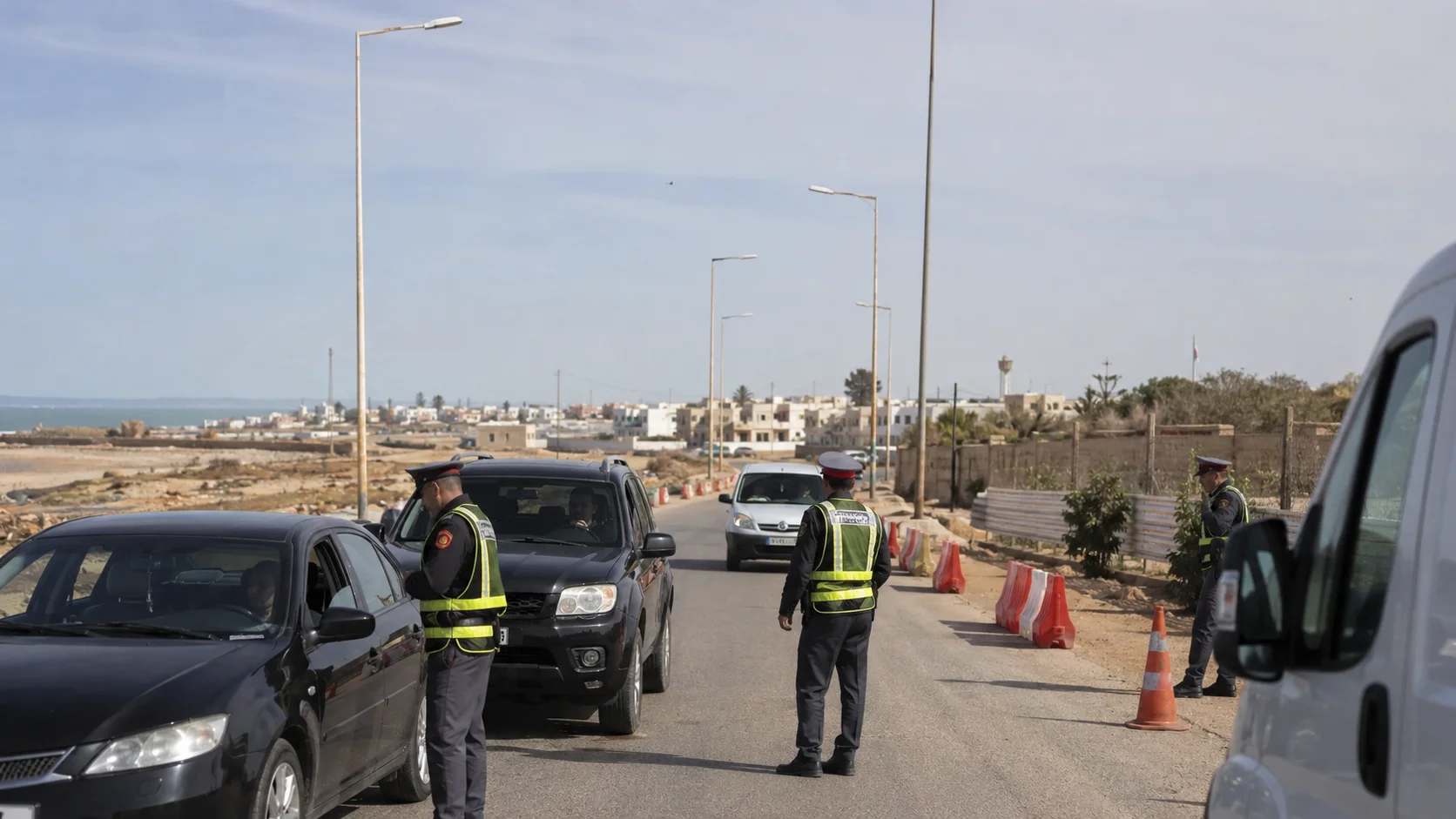
Police checkpoints Essaouira drivers notice most often are located around the city edges and main entry roads. These are normal in Morocco. They are not automatically a problem, and they are not only for tourists. Officers may be checking traffic flow, safety, documents, vehicle registration, insurance, taxi permits, commercial vans or general road security.
Around Essaouira, you should expect slower driving when entering or leaving the city. The approaches from Marrakech, Agadir direction, Diabat and Sidi Kaouki can all have traffic-control points depending on the day, season and police operation.
The best habit is to slow down as soon as you see the first checkpoint sign or a line of cars ahead. Do not overtake near a checkpoint. Do not use your phone. Do not remove your seatbelt. Keep both hands visible, lower the window if the officer approaches, and wait for instruction.
Sometimes the officer will wave you through without stopping. Sometimes they will ask where you are going. Sometimes they will ask for documents. All of this is normal. If the car is rented and your contract is clear, the stop is usually quick.
For travelers who want a simple, affordable car for short distances around Essaouira, beach areas and nearby roads, cheap car rental Essaouira can be enough, as long as the vehicle is properly insured and documented.
4. The Sidi Kaouki road checkpoint
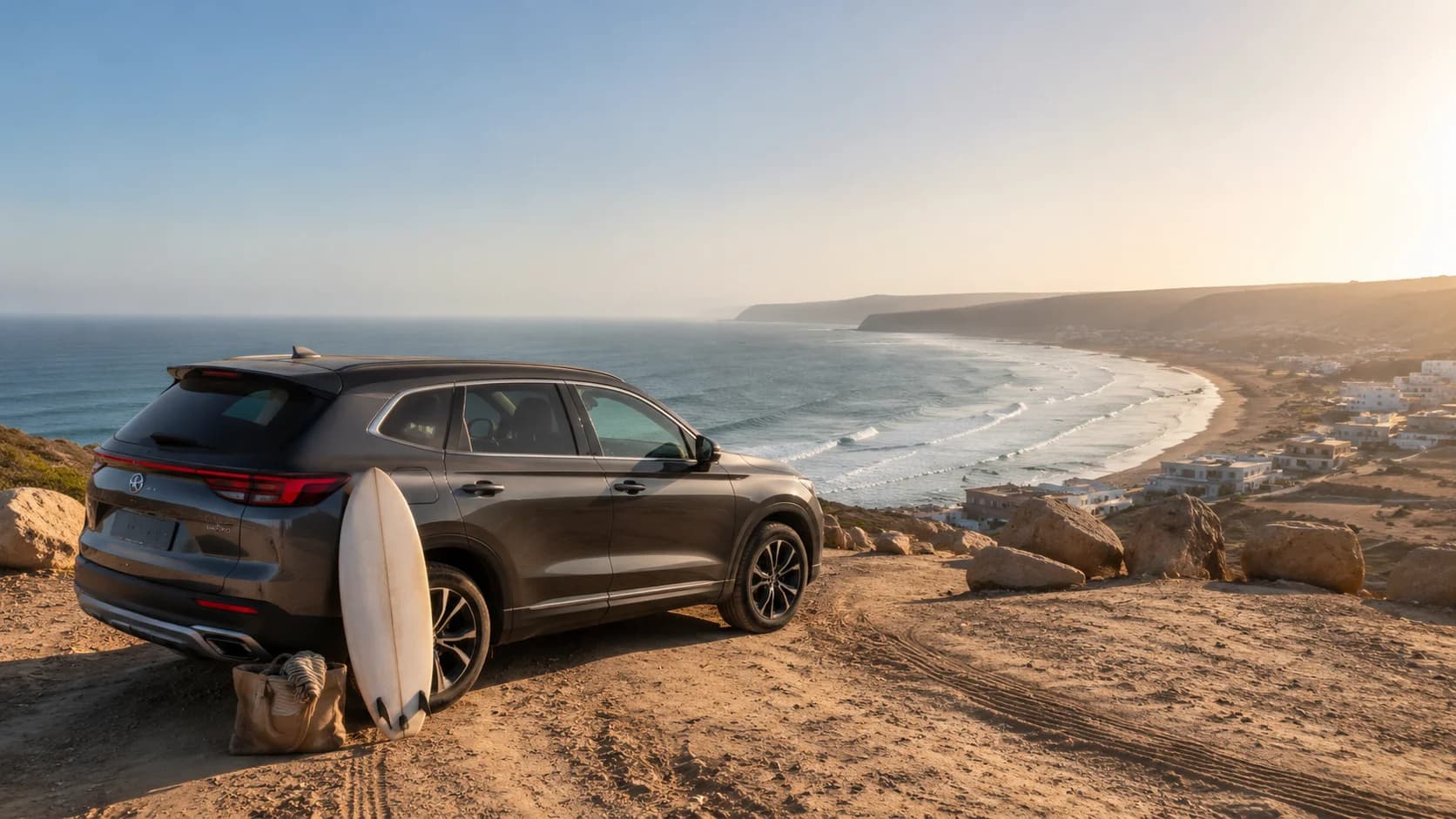
Sidi Kaouki is one of the easiest coastal day trips from Essaouira. It is popular for surfing, beach walks, quiet cafés and sunset stops. The road is not difficult, but drivers should not treat it like an empty beach road. Sidi Kaouki is known as a surf and windsurf spot with wild Atlantic beach scenery, which means visitor traffic can rise on good weather days.
The Sidi Kaouki road checkpoint is important because the drive feels relaxed. You leave Essaouira, the scenery opens, and many drivers naturally speed up. But the road passes rural areas, junctions, animals, pedestrians, local scooters and tourist vehicles. A police checkpoint can appear before or after busier village sections.
Drive especially carefully when returning from Sidi Kaouki in the late afternoon. Sun glare, wind, tired passengers, beach traffic and unfamiliar junctions can make the return feel easier than it is. Keep your speed steady and slow down before any cluster of buildings, parked cars or roadside activity.
If you stop at beaches, cafés or surf areas, avoid parking in a way that blocks the road. Even if the speed limit is your main concern, careless parking can still attract attention and create safety issues.
5. On-the-spot fines explained
Morocco driving fines can be issued at the roadside or through automated systems. For speeding, the amount depends on how much you exceeded the limit and when the fine is paid. The official NARSA payment page lists speeding categories, including less than 20 km/h over the limit and more than 20 km/h but less than 30 km/h over the limit, with different payment amounts depending on timing.
For tourists, the practical point is this: do not argue based on how the road felt. If a sign showed 60 km/h and you drove faster, the officer will treat the posted limit as the rule. A road can feel like a 100 km/h road but still be legally limited to 60 km/h near a checkpoint, town entrance or junction.
If you receive a fine, ask calmly for the official amount and receipt. Do not offer anything unofficial. Do not panic. A documented fine is a normal legal process, while an undocumented payment can create more problems.
If a rental car receives a radar fine after your trip, the rental company may contact you later. This is why the rental contract, handover photos and clear booking details matter. A professional agency should explain how fines are handled before you drive.
6. The headlight-flash warning
In Morocco, drivers sometimes flash their headlights to warn other drivers about police, radar, animals, hazards, slow traffic or a problem ahead. Around Essaouira, you may see this on the Marrakech road, coastal roads or village approaches.
Do not treat headlight flashes as a game or as permission to speed again after the next curve. Treat them as a reason to become more alert. Slow down, check your speedometer, look for signs, watch the shoulder and prepare for a checkpoint or hazard.
Sometimes the flash warning is accurate. Sometimes it is old information from a checkpoint already passed. Sometimes it is not about police at all. The safest response is always the same: reduce speed gently and drive normally.
Avoid flashing aggressively at other drivers. A quick warning may be common local behavior, but repeated flashing, tailgating or sudden braking can confuse tourists and local drivers. Good driving in Essaouira is calm, predictable and respectful.
7. What officers ask to see
At a checkpoint, officers may ask for your driving license, passport or ID, rental contract, vehicle registration document and insurance papers. If you are driving a rental car, keep the contract and documents in the glove box or another easy-to-reach place.
The NARSA traffic-offenses app description says it allows citizens, foreign residents and foreign tourists driving a vehicle registered in Morocco to consult traffic offenses recorded by automated speed cameras, which shows that foreign drivers are included in the traffic-offense system.
Before leaving the rental office, hotel or airport pickup point, check that the car documents are present. You should also confirm what to do if a police officer asks for something you do not understand. A good local agency will explain the basics during the handover.
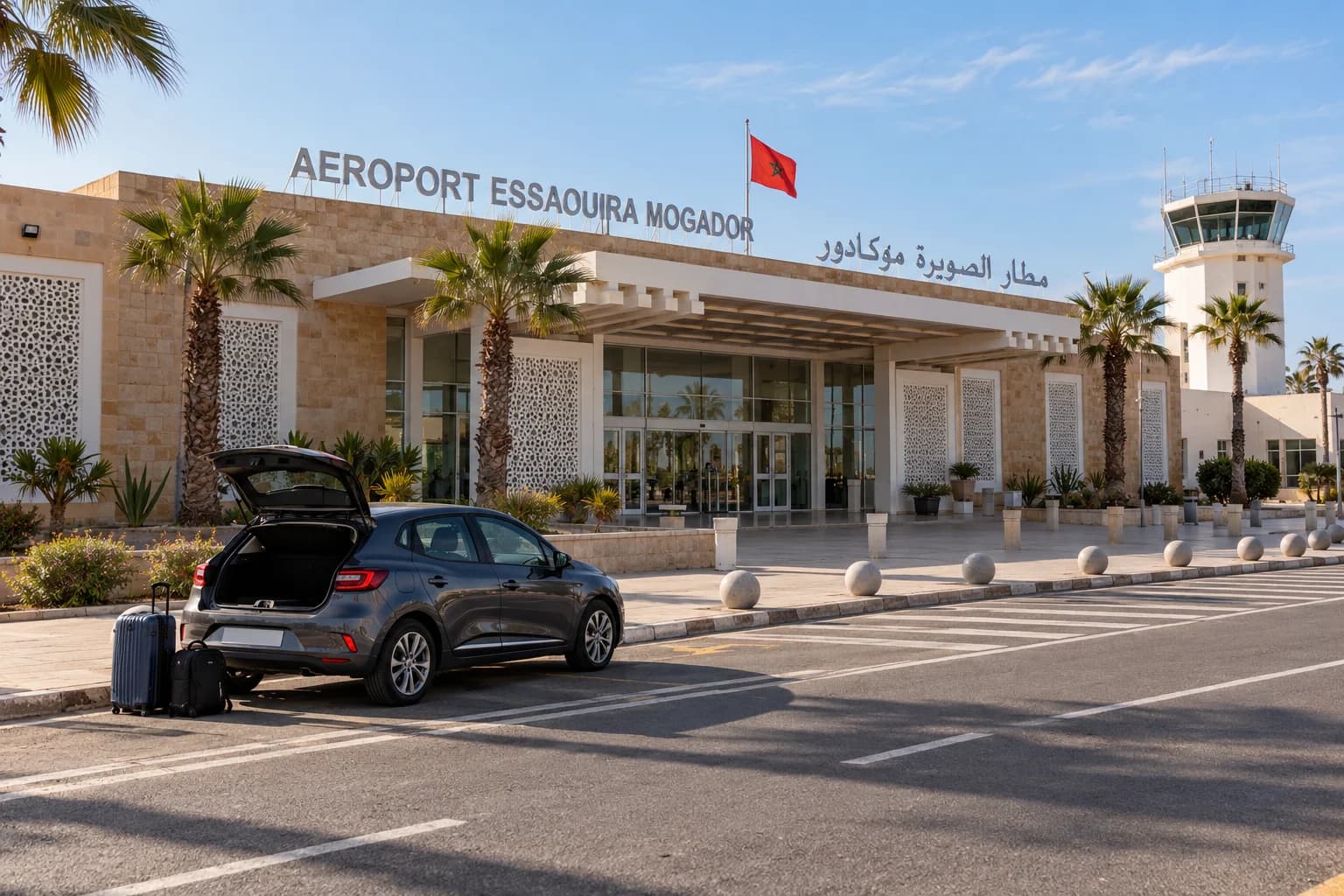
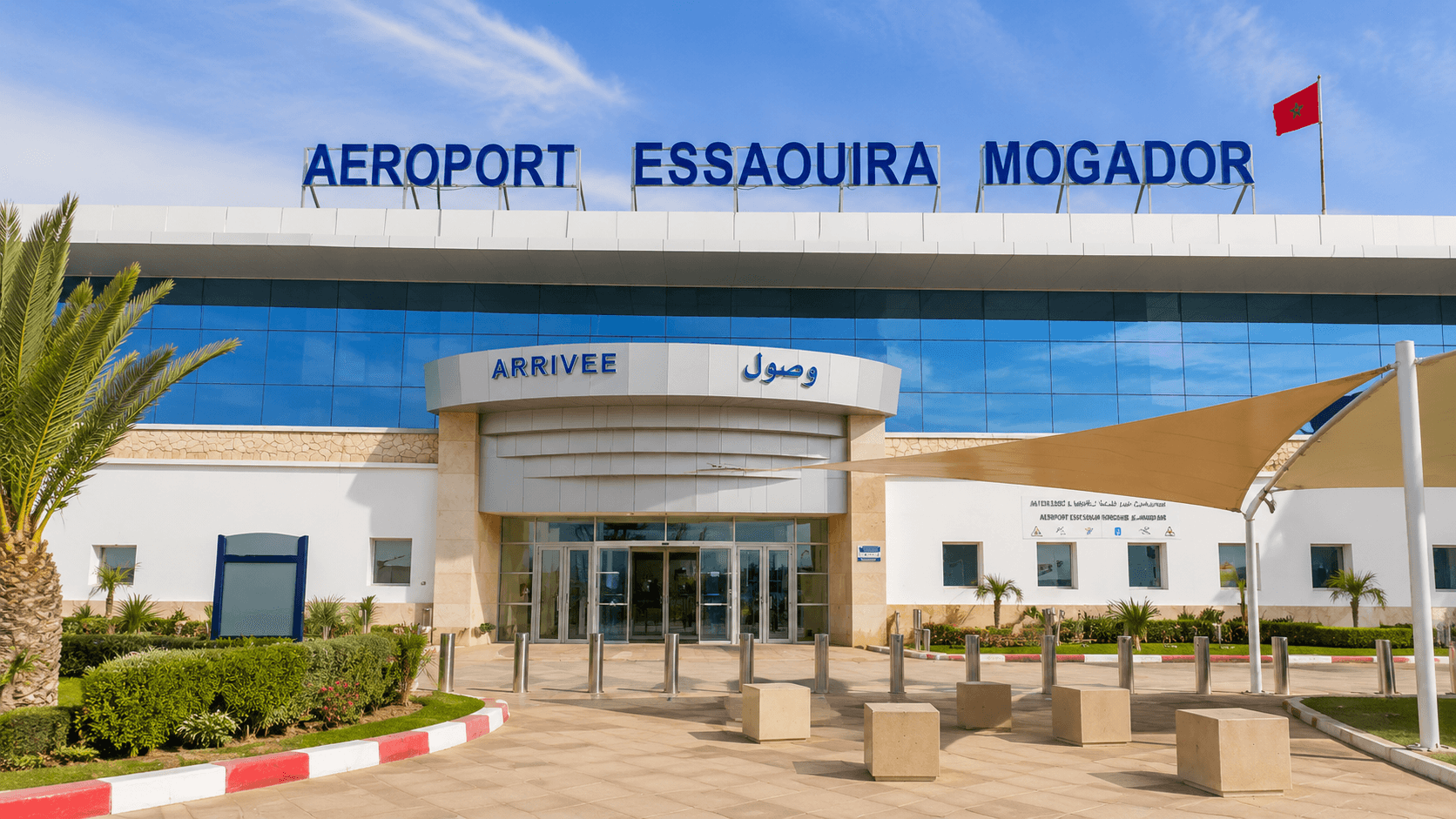
For airport arrivals, road trips and flexible pickup, the main car rental Essaouira page is useful if you want a car with proper documentation, delivery options and local support before driving outside the city.
8. Staying calm and polite
Most checkpoint stops around Essaouira are quick. The officer may look at your face, ask your destination and wave you through. The best attitude is simple: smile, greet politely, answer clearly and avoid jokes about fines or police.
Use basic French if you can: “Bonjour,” “Merci,” “Essaouira,” “Sidi Kaouki,” “Marrakech,” or “voiture de location.” Many officers on tourist routes understand enough French, Arabic or basic English to handle the stop.
Do not take photos or videos of officers or checkpoints. Do not step out of the car unless asked. Do not search through your bags nervously while the officer is standing beside the vehicle. If you need to find a document, say so calmly and take it out slowly.
If you believe there is a misunderstanding, stay respectful. Ask for clarification. If needed, call your rental agency for help translating or confirming the vehicle papers. A calm call is better than an argument at the roadside.
9. Avoiding fines on coastal day trips
Essaouira is perfect for relaxed day trips, but relaxed does not mean careless. Common routes include Diabat, Sidi Kaouki, Moulay Bouzerktoun, Had Draa market days and the road toward the Marrakech countryside. Each route has its own mix of locals, tourists, animals, scooters and sudden speed changes.
The Medina of Essaouira is a UNESCO-listed fortified town, and visitor traffic around the city can grow during weekends, festivals, holidays and high season. That means more cars at the edges of the city, more pedestrian movement and more need to stay patient near parking areas.
To avoid fines, slow down before every village, not inside it. Watch for speed signs on both sides of the road. Keep extra distance from taxis and vans. Do not copy a local driver who is speeding. Local drivers may know where the radar usually is, but you do not know whether a new control has been added that day.
For coastal drives, choose daylight when possible. Essaouira can be windy, and evening driving may include glare, dust, scooters without strong lights or people walking near the road. A fine is one issue, but safe arrival matters more.
10. Pre-drive speed checklist
Before leaving Essaouira, take one minute to prepare. Check your route, fuel level, mirrors, seat position and speedometer display. Make sure your phone is mounted or with a passenger, not in your hand. Confirm where the documents are.
For the Marrakech road, plan the drive as a controlled route, not a race. Leave early enough so you do not feel pressure to “make up time.” Most speeding fines happen when drivers are late for airport returns, hotel check-ins, dinner reservations or sunset plans.
For Sidi Kaouki, remember that the road is short but still checked. Keep your speed low near beach exits, parked cars, cafés and villages. On the return, clean sand from your shoes before driving so your feet do not slip on the pedals.
For Essaouira city, stay patient. The best driving style is slow and smooth. Respect pedestrians, give scooters space, and avoid sudden lane changes near roundabouts and medina gates.
If you are unsure, drive under the limit, not at the edge of it. Radar cameras Essaouira and police controls around Morocco are much easier to handle when your speed is clearly safe.
FAQs
What are the speed limits around Essaouira?
Most built-up areas are around 60 km/h, while open rural roads can be up to 100 km/h where signs allow it. Lower limits appear near villages, checkpoints, schools, junctions and roundabouts. Always follow the posted sign.
Are there speed cameras on the Marrakech road?
Yes, drivers should expect radar checks on the Marrakech to Essaouira road, including mobile controls and reduced-speed checkpoint areas. Do not rely only on navigation apps. Physical speed signs are the rule.
Are there police checkpoints near Essaouira?
Yes. Checkpoints are common around Essaouira’s city edges and on roads toward Marrakech, Agadir direction, Diabat and Sidi Kaouki. Most stops are routine and quick if your documents are ready.
How much are speeding fines in Morocco?
The fine depends on how much you exceed the limit and payment timing. NARSA lists different categories for speeding, including less than 20 km/h over the limit and more than 20 km/h but less than 30 km/h over the limit.
Why do drivers flash their headlights?
Drivers may flash headlights to warn of police, radar, animals, road hazards or slow traffic ahead. Treat it as a warning to slow down and pay attention, not as a trick to avoid rules.
What documents do police ask for?
Officers may ask for your driving license, passport or ID, rental contract, registration papers and insurance documents. Keep them easy to reach inside the car.
Do you pay fines in cash on the spot?
Some roadside fines may be paid on the spot, but you should always ask for the official amount and receipt. Never make undocumented payments.
Is the Sidi Kaouki road checked by police?
Yes, it can be checked. The road feels relaxed, but there may be police controls, village slow zones, pedestrians, animals and tourist traffic, especially on good beach days.
How strict is speed enforcement near Essaouira?
Speed enforcement can be strict, especially near checkpoints, village entrances and radar zones. The safest habit is to slow before the signposted zone, not after you see the officer.
Can a rental company charge you for a fine?
Yes. If a radar fine is linked to the rental car during your rental period, the rental company may contact you later and charge the fine according to the rental agreement. Always ask how fines are handled before driving.
Drive the Coast Fine-Free with MarHire Car Essaouira
A relaxed Essaouira road trip starts before you turn the key. With MarHire Car Essaouira, you can rent a clearly documented, fully insured car for city driving, Sidi Kaouki beach days, Marrakech road transfers and coastal exploring. Choose a sedan, a cheap rental car or an airport pickup option with no deposit, clear handover details and 24/7 support, so you can focus on the road, not the stress.