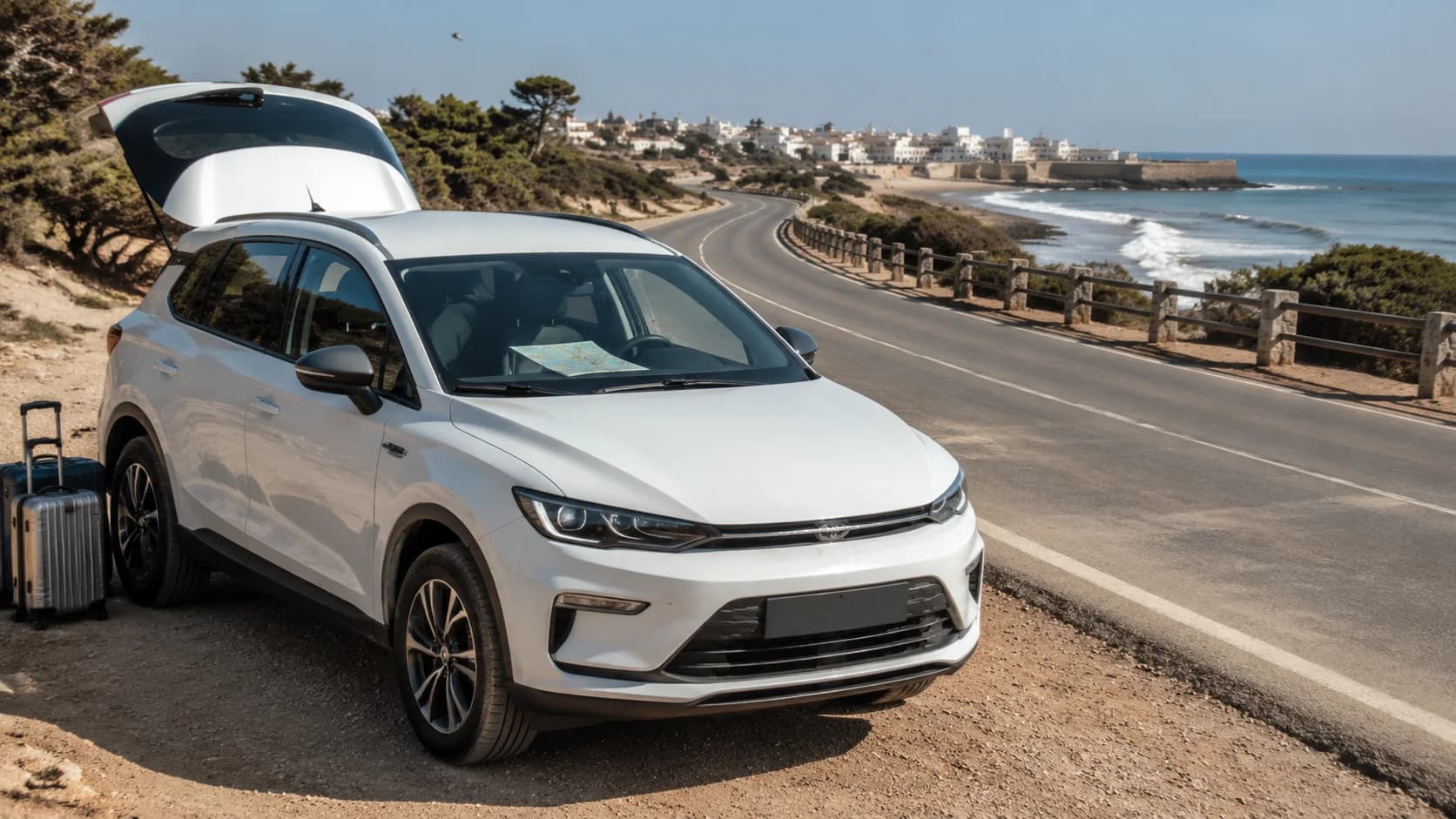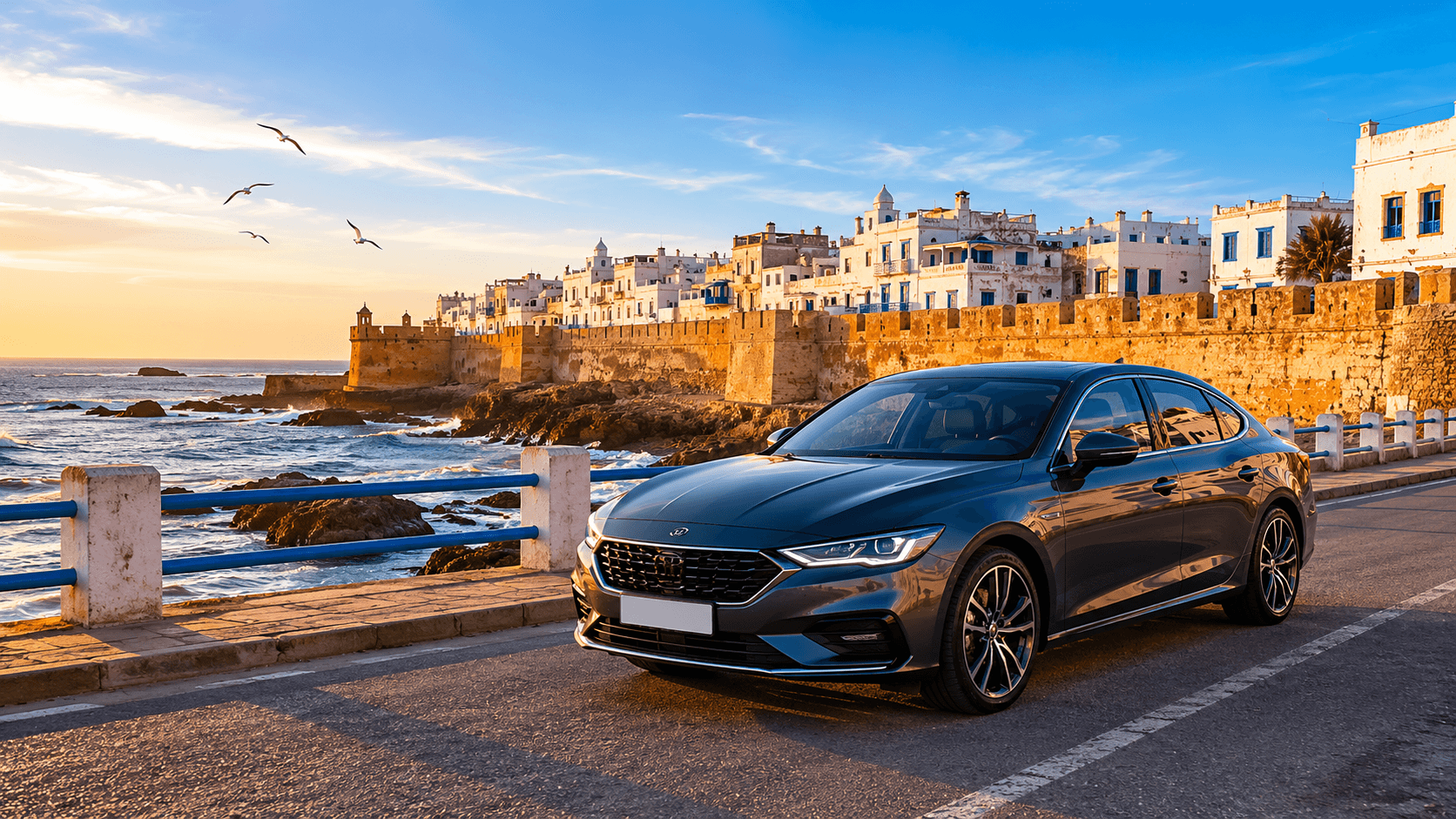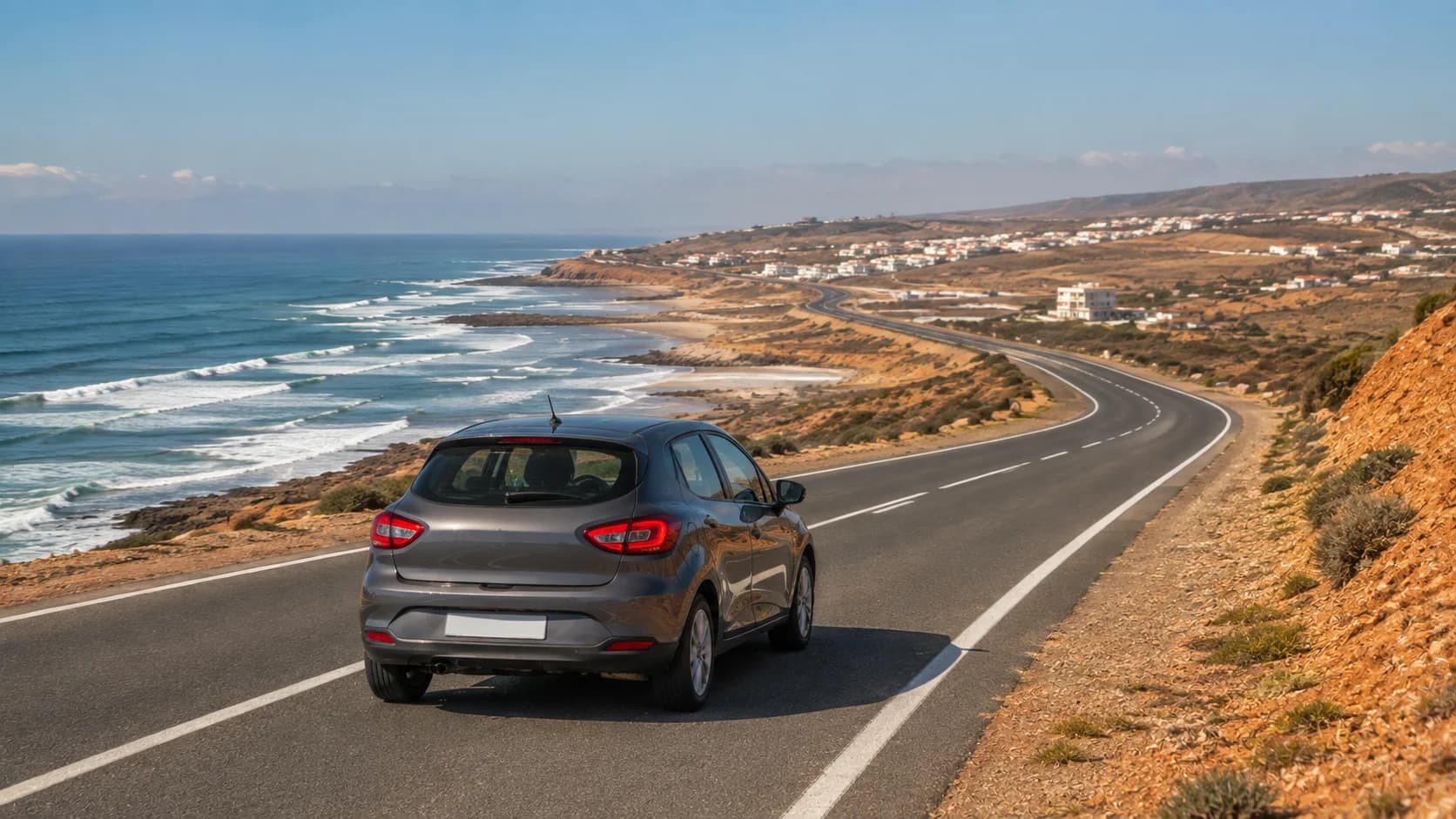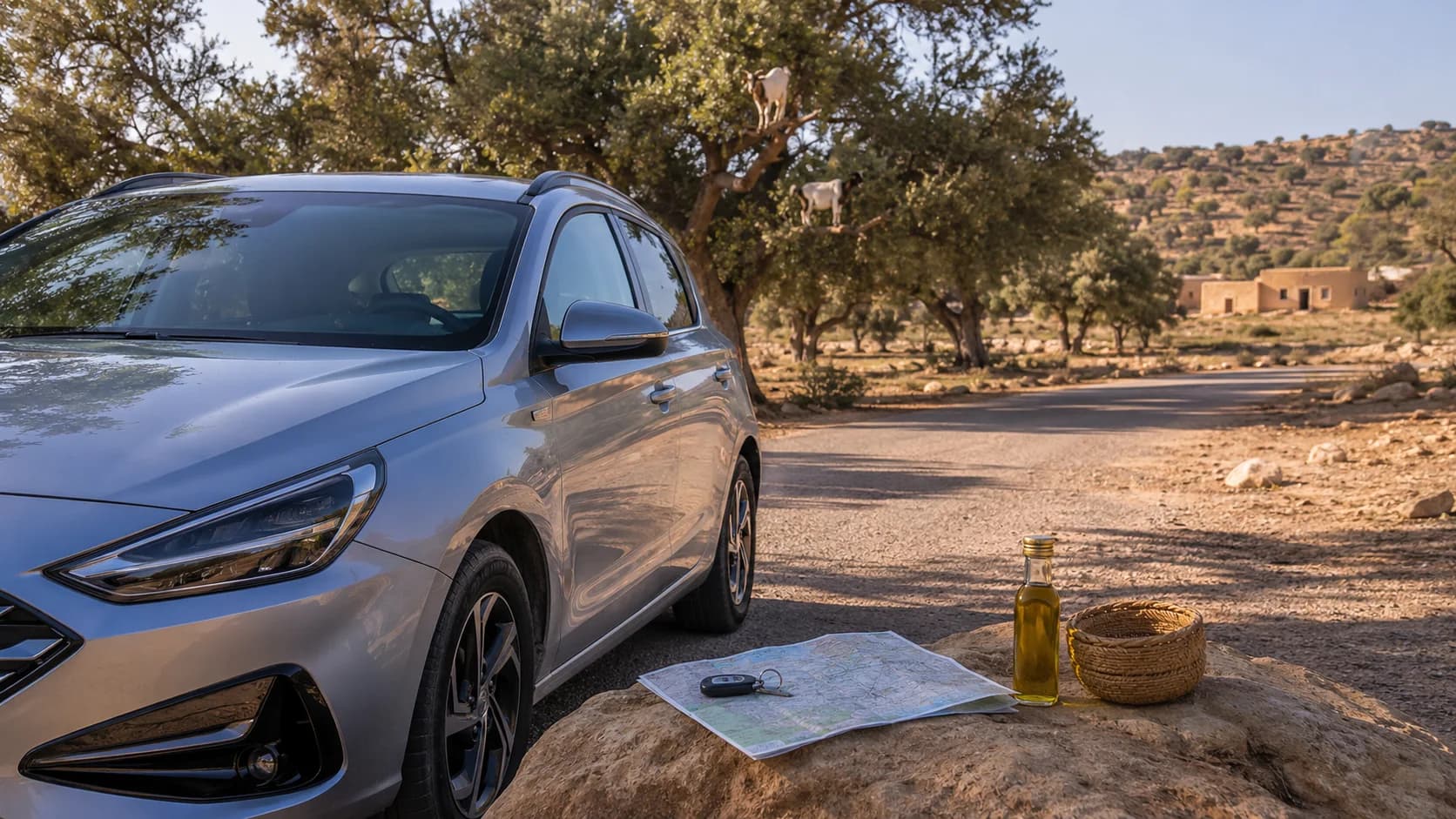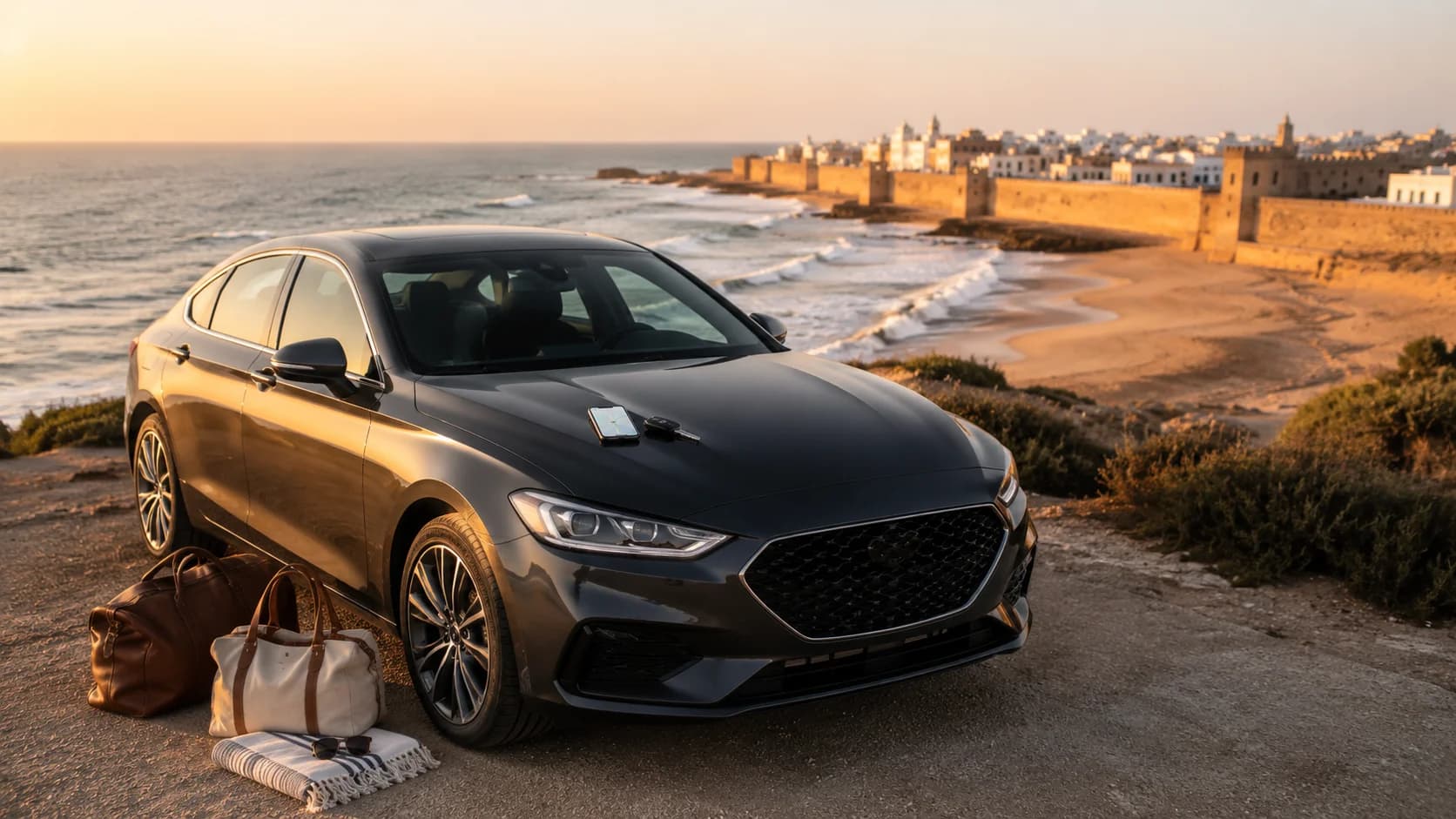









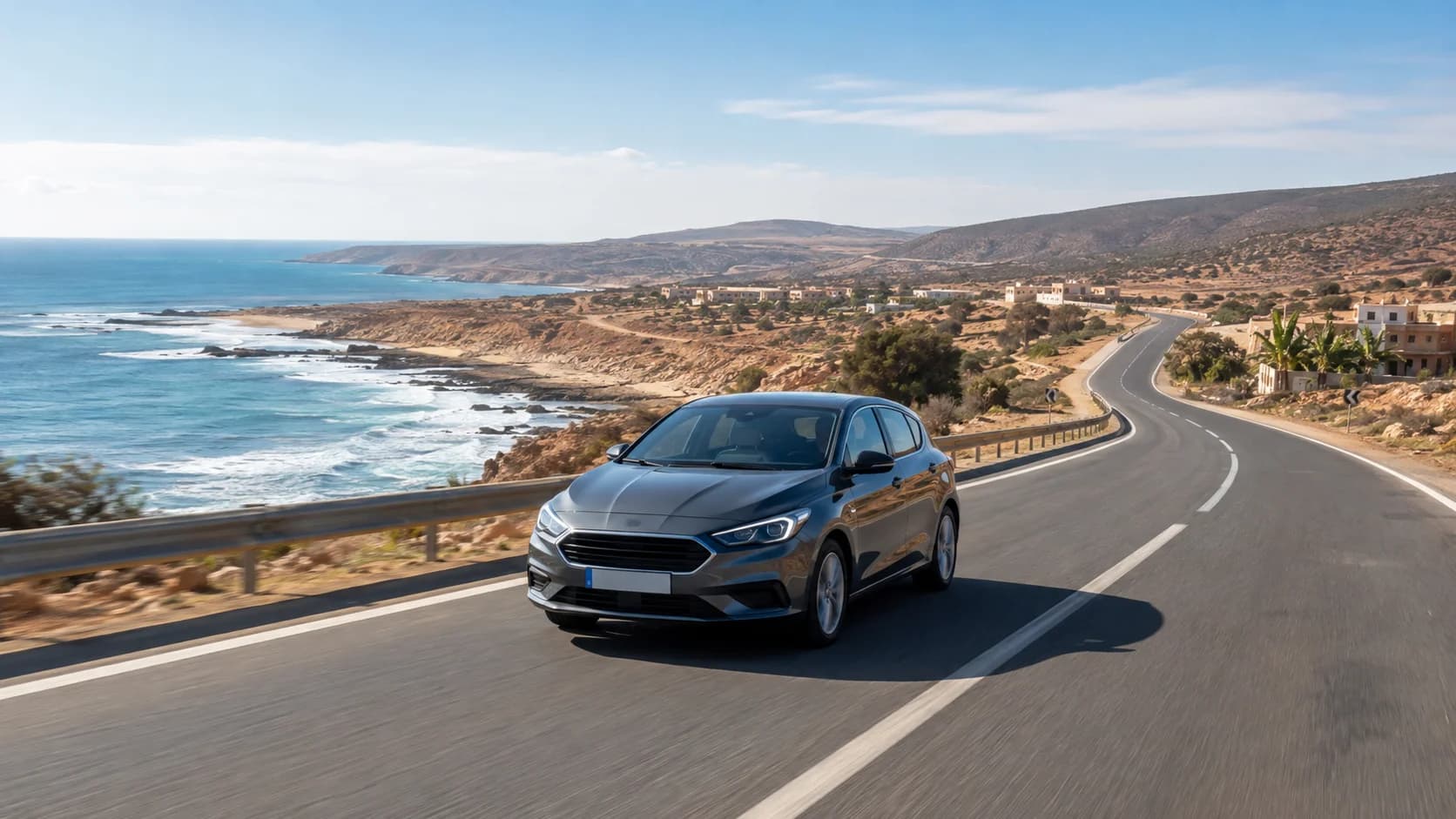
Driving from Essaouira to Aourir by car is an easy way to connect two very different sides of Morocco’s Atlantic coast. You leave the historic, wind-swept streets of Essaouira and travel south through argan country, small towns, coastal viewpoints and surf villages before reaching Aourir, commonly known as Banana Village.
The road journey is approximately 162 km, with a direct driving time of around 2 hours 20 minutes to 2 hours 40 minutes in normal conditions. Travelers who plan to stop along the coast should allow three to five hours, particularly if they want to explore beaches, Taghazout or Tamraght on the way.
Aourir works particularly well as a stop on a longer coastal itinerary. It sits just south of the Taghazout and Tamraght surf area and provides access to local markets, cafés, beaches and the inland road toward Paradise Valley.
For travelers starting in Essaouira, having a rental car makes it easier to explore these smaller places without structuring the entire day around scheduled transport.
Table of Contents
- Essaouira to Aourir
- Distance and Driving Time
- Best Route South
- Coastal Stops Before Aourir
- Driving the Essaouira to Aourir Corridor
- Parking and Moving Around Aourir
- Markets, Food and Nearby Places
- Aourir as a Stop Rather Than Only a Destination
- Taghazout and Tamraght Nearby
- Best Rental Car for the Route
- Combining Aourir With a Longer Coastal Day
- Trip Checklist
- Frequently Asked Questions
Essaouira to Aourir
How do you drive from Essaouira to Aourir?
The simplest route is to leave Essaouira on the N1 heading south and remain on this main coastal corridor through the Tamanar area toward Taghazout and Aourir.
A practical route is:
Essaouira → N1 south → Smimou → Tamanar → coastal corridor → Taghazout area → Aourir
The road distance is about 162 km, and a direct drive can take approximately 2 hours 20 minutes, although allowing closer to 2.5 to 3 hours is more comfortable when accounting for traffic, slower sections and short stops.
The route uses normal paved roads, so most travelers do not need an SUV or 4x4 simply to reach Aourir.
Distance and Driving Time
The road distance from Essaouira to Aourir is approximately 162 km. Route-planning data estimates the fastest drive at around 2 hours 23 minutes.
For trip planning, however, it is better to separate direct drive time from realistic travel time.
| Trip Style | Suggested Time |
|---|---|
| Direct drive | About 2 hr 20 min to 2 hr 40 min |
| Comfortable drive with short breaks | About 3 hours |
| Coastal drive with sightseeing | 4 to 5 hours |
| Full coastal exploration day | 6+ hours |
Traffic can increase around the Taghazout, Tamraght and Aourir corridor, especially when approaching the more developed coastal areas.
If Aourir is your final destination, there is little reason to rush. One of the advantages of driving this section of Morocco is being able to stop when the Atlantic scenery becomes interesting.
Best Route South
The most straightforward Essaouira Aourir drive follows the N1.
The N1 is one of Morocco’s major north-south roads and connects the Essaouira area with the coastal corridor toward Taghazout. The section south of Essaouira passes through places including Smimou and Tamanar before continuing toward the Agadir-Taghazout region.
From central Essaouira:
-
Leave the city in the direction of Agadir.
-
Join the N1 heading south.
-
Continue through the Smimou and Tamanar areas.
-
Remain on the N1 toward Taghazout.
-
Continue south through the coastal communities until Aourir.
Navigation is generally straightforward, but using live GPS remains useful for the final address, accommodation or parking point in Aourir.
Is the Essaouira to Aourir road paved?
Yes. The main route follows paved national roads.
Drivers should still expect changes in road width, village traffic, curves and slower sections. Passing through populated areas also means watching for pedestrians, scooters, taxis and vehicles entering the road.
There is normally no reason to leave the main paved corridor unless you intentionally add an inland attraction.
Coastal Stops Before Aourir
One of the main reasons to drive rather than treat Aourir as a simple transfer destination is the number of places that can be incorporated into the journey.
Tamanar
Tamanar is one of the larger settlements along the route south of Essaouira and can work as a practical break for fuel, refreshments or supplies.
The surrounding region is strongly associated with Morocco’s argan-growing landscape, making the scenery noticeably different from the urban environment around Essaouira.
Coastal Viewpoints
As the road continues south, several stretches open toward the Atlantic.
Rather than stopping suddenly on the roadside, wait for a safe pull-off or designated parking area. The coastal landscapes are particularly useful if you are building a slower road trip rather than simply driving directly to Aourir.
Taghazout
Taghazout is one of the best-known places to add to the journey.
Morocco’s National Tourist Office describes the Agadir-Taghazout region as a major Atlantic destination, with Taghazout particularly associated with surfing and its long coastal setting.
If your schedule allows, you can stop for coffee, lunch, a beach walk or simply a look around the village before continuing south toward Aourir.
Driving the Essaouira to Aourir Corridor
The Essaouira to Banana Village route should be treated as a scenic intercity drive rather than a motorway journey.
The main advantages are simple navigation and a paved route, but drivers should remain patient through built-up areas.
You may encounter:
-
slower vehicles
-
local taxis
-
motorcycles and scooters
-
pedestrians near villages
-
vehicles stopping near roadside shops
-
livestock in rural areas
-
heavier traffic as you approach Taghazout and Aourir
Avoid building a schedule that depends on maintaining exactly the same average speed for the entire journey.
Leaving enough time also makes the drive more enjoyable because you can use legitimate stopping areas rather than feeling pressured to continue.
Parking and Moving Around Aourir
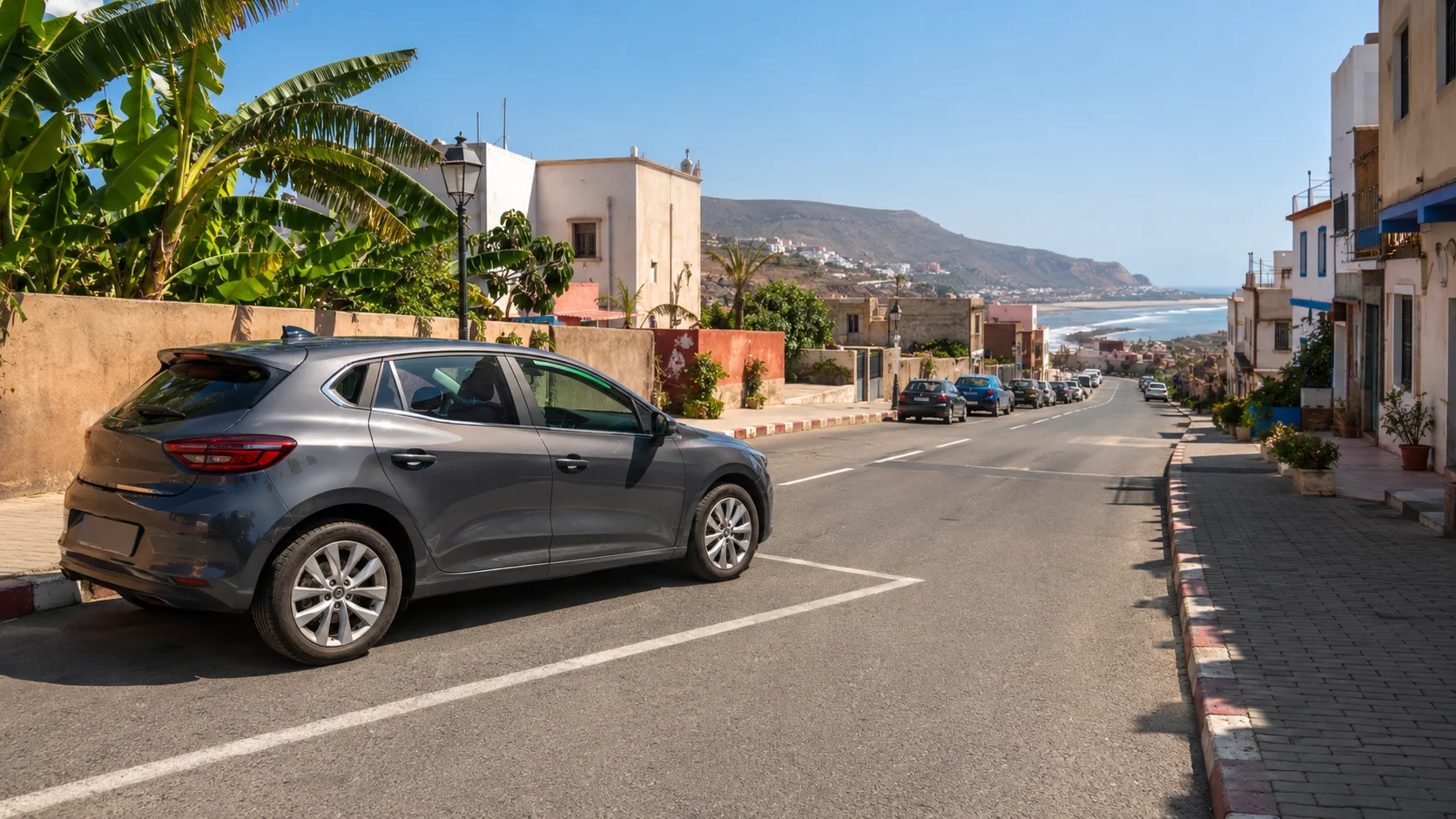
Aourir is a working local town rather than an isolated tourist attraction, so parking conditions vary from one part of the village to another.
Near busy commercial streets, markets, cafés and main-road businesses, spaces can become limited. It is usually easier to park slightly away from the busiest cluster and walk the final distance.
When parking:
-
check local signs
-
avoid blocking entrances
-
do not stop where the road becomes narrow
-
use organized parking when available
-
keep valuables out of sight
-
ask your restaurant or accommodation where they recommend parking
A compact rental car can be particularly convenient if you expect to spend time around local commercial streets.
Markets, Food and Nearby Places
Aourir’s nickname, Banana Village, is connected with the banana-growing landscape historically associated with the area and nearby Banana Point. The Aourir and Tamraght area remains closely linked with banana plantations and the coastal surf culture.
The village is also known for its busy local commercial atmosphere.
Market Planning
Aourir is associated with a Wednesday local market, where residents shop for produce and everyday goods. Travelers specifically hoping to experience the market should verify current operating times locally before planning the whole journey around it.
Market periods can also mean more pedestrians, vehicles and parking demand.
If your priority is simply eating or exploring local shops, arriving outside the busiest period can make parking easier.
Food Stops
Aourir can be a good location for a casual Moroccan food stop during a road trip.
Rather than treating it as a sightseeing checklist, spend some time walking around the commercial area, having a meal and observing the everyday rhythm of the town.
Aourir as a Stop Rather Than Only a Destination
Aourir becomes especially useful when viewed as a route hub.
You can reach the village from Essaouira, spend time locally, then choose whether to continue toward Agadir, return north toward Taghazout or turn inland.
One important inland option is the road toward Paradise Valley and the Ida-Outanane foothills. Current route guidance uses Aourir as the junction between the N1 coastal corridor and the P1001 route leading inland.
That makes Aourir useful for travelers who want a coastal journey one day and a mountain-oriented excursion the next.
Taghazout and Tamraght Nearby
Aourir, Tamraght and Taghazout form a compact coastal area north of Agadir.
Taghazout is only a short drive from the Aourir and Tamraght area, making it unnecessary to choose just one location if you have a rental car. Local guides place Tamraght and Aourir within the same coastal belt and roughly 4 km from Taghazout.
A simple afternoon itinerary could be:
Aourir → Tamraght → Taghazout → coastal viewpoint → return
Alternatively, if you are traveling south from Essaouira, visit Taghazout first and finish the day in Aourir.
Best Rental Car for the Route
You do not need a large or specialized vehicle for the normal paved route from Essaouira to Aourir.
Hatchback
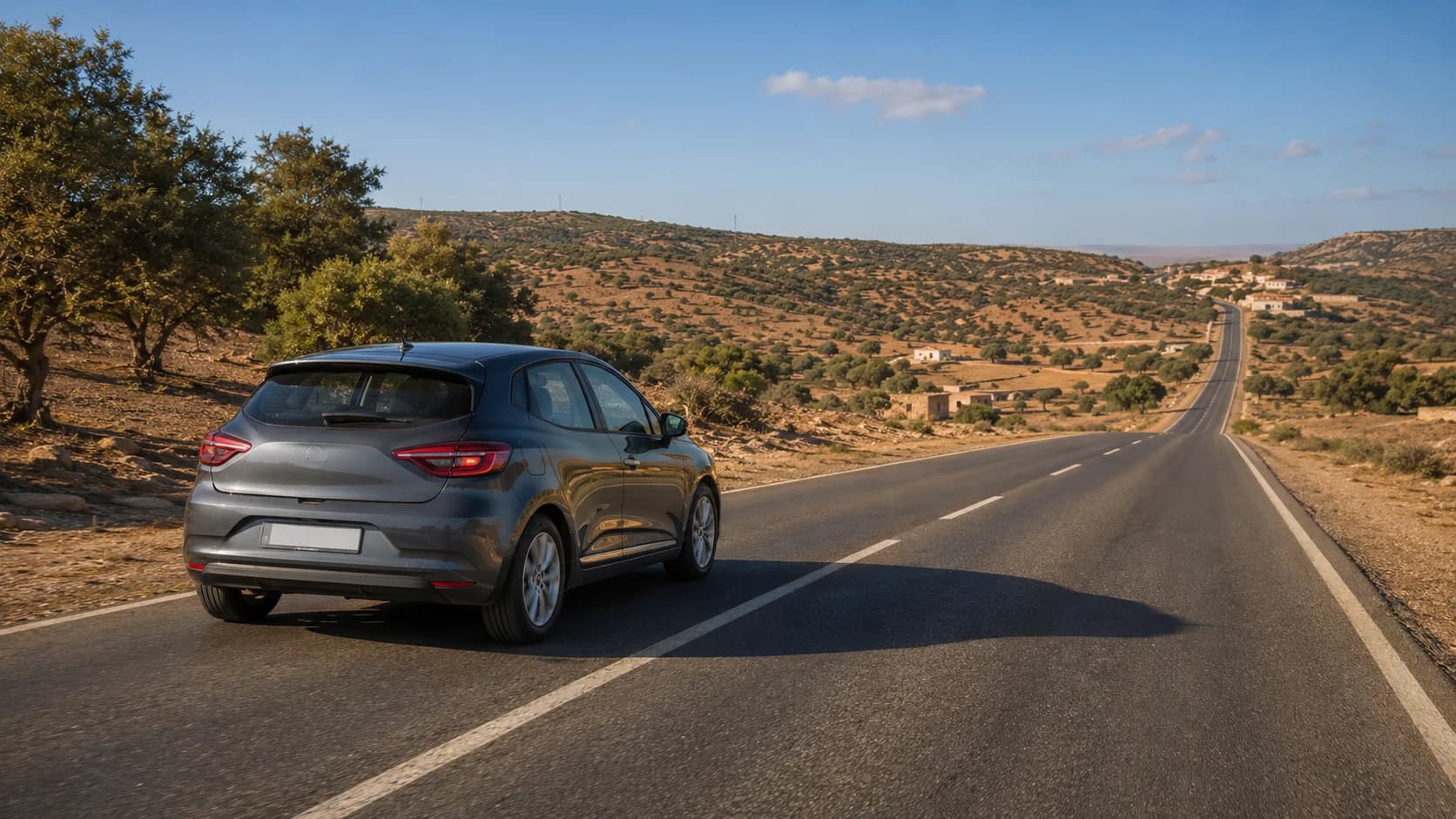
A hatchback rental in Essaouira is a practical option for one or two travelers who want an easy-to-park car.
Hatchbacks work particularly well if you intend to spend time around Aourir, Tamraght or Taghazout, where a smaller vehicle can make local parking more convenient.
Sedan
A sedan rental in Essaouira provides more comfort and luggage capacity for couples, families or travelers continuing farther south.
For a route involving several hours of driving, a sedan offers a useful balance between road comfort, fuel efficiency and manageable dimensions.
Budget Car
Travelers focusing on transportation rather than vehicle size can consider a cheap car rental in Essaouira.
Because the standard Essaouira-Aourir itinerary follows paved roads, paying for off-road capability is usually unnecessary.
Do You Need an SUV?
No, not for the normal Essaouira to Aourir route.
A standard hatchback or sedan is generally sufficient.
An SUV may still be useful if your wider Morocco itinerary involves additional passengers, substantial luggage or more demanding mountain destinations, but it is not required simply because you are driving to Banana Village.
Combining Aourir With a Longer Coastal Day
A rental car makes it possible to build Aourir into a wider itinerary instead of treating the village as the only objective.
Option 1: Essaouira to Aourir With Taghazout
Essaouira → Tamanar → Taghazout → Aourir
Best for travelers interested in coastal scenery, cafés and surf-town atmosphere.
Option 2: Essaouira to Aourir and Agadir
Essaouira → Taghazout → Aourir → Agadir
This works particularly well if you are changing hotels or continuing south rather than returning to Essaouira.
Option 3: Overnight Near Aourir
Drive south slowly, stop along the coast and stay overnight around Aourir, Tamraght or Taghazout.
The following day can then be dedicated to Agadir or the inland surroundings.
The wider Agadir-Taghazout area combines Atlantic beaches with access to the Souss region and nearby mountain landscapes, giving travelers several different directions for onward exploration.
Essaouira to Aourir Trip Checklist
Before driving south, check:
-
Rental-car documents are in the vehicle
-
Your original driving licence is with you
-
You have enough fuel for the first section
-
Offline or mobile navigation is available
-
Accommodation or final parking location is saved
-
You have allowed extra time for coastal stops
-
Bags and valuables are not left visibly inside the parked car
-
Market timing has been checked if that is part of your visit
-
You have decided whether to include Taghazout or Tamraght
-
You have enough daylight for additional stops
Frequently Asked Questions
How far is Aourir from Essaouira?
The road distance from Essaouira to Aourir is approximately 162 km.
How long does it take to drive to Banana Village?
A direct drive can take around 2 hours 20 minutes to 2 hours 40 minutes. Allow about three hours for a more relaxed journey and longer if you plan sightseeing stops.
Why is Aourir called Banana Village?
Aourir is commonly associated with banana cultivation in the surrounding area, and nearby Banana Point also reflects this local connection with banana-growing land.
Is the road from Essaouira to Aourir paved?
Yes. The normal route follows the paved N1 road south from Essaouira toward the Taghazout and Aourir area.
Do I need an SUV for Aourir?
No. A hatchback or sedan is normally enough for the standard paved route.
Is parking easy in Aourir?
Parking is usually possible, but spaces can become harder to find around busy commercial streets and market areas. Parking slightly outside the busiest zone and walking can be easier.
What can I see around Aourir?
Nearby options include Tamraght, Taghazout, Atlantic beaches, surf areas and the inland route toward the Ida-Outanane foothills and Paradise Valley.
Can I combine Aourir with Taghazout?
Yes. Taghazout is only a short drive from the Aourir-Tamraght area, so combining them in the same coastal itinerary is straightforward.
Is Aourir worth stopping at on the way to Agadir?
Yes, particularly if you want a more local stop rather than visiting only the major tourist centers. It is also conveniently positioned between the Taghazout area and Agadir.
What rental car is suitable for the route?
For most travelers, a hatchback or sedan is sufficient. Choose based mainly on passenger numbers, luggage space and how much additional driving you plan elsewhere in Morocco.
Plan Your Essaouira to Aourir Road Trip
Adding Aourir to a south-coast itinerary gives you more than another destination on the map. It connects Essaouira with Morocco’s surf coast, local commercial life, Taghazout, Tamraght and the inland landscapes beyond the Atlantic shoreline.
For the normal Essaouira to Aourir by car route, you do not need an oversized vehicle. A comfortable hatchback, sedan or budget rental is generally well suited to the paved coastal journey.
MarHire Car Essaouira offers hatchbacks, sedans and affordable rental vehicles for travelers planning road trips from Essaouira toward Aourir, Taghazout, Agadir and other destinations along Morocco’s Atlantic coast.