








Driving from Essaouira to Safi by car is one of the most underrated coastal routes in Morocco. Instead of heading south toward Agadir or inland toward Marrakech, this road takes you north along the Atlantic side of the country, where open landscapes, fishing villages, surf energy and Safi’s famous pottery heritage create a completely different kind of day trip. The route is manageable, the drive is not too long, and the reward is a city known for ceramics, ocean views, old fortifications and a working local atmosphere.
Table of Contents
-
Why drive north to Safi
-
Essaouira to Safi: distance and route
-
The N1 coastal drive
-
Safi's pottery quarter
-
The Portuguese fort and old town
-
Safi's surf reputation
-
Best car for the coast road
-
Fuel and rest stops
-
Day trip vs onward to El Jadida
-
Plan your Safi drive
-
FAQs
Why drive north to Safi
Most travelers in Essaouira think first about Sidi Kaouki, Marrakech, Agadir or the nearby beaches. Safi feels different. It is less polished, more local, and more connected to Morocco’s working Atlantic coast. That is exactly why the drive is worth considering.
The Essaouira to Safi road trip gives you a calm alternative to the more common tourist routes. You can leave Essaouira in the morning, follow the north coast, stop for simple roadside views, explore Safi’s pottery quarter, visit the old fort area, see the Atlantic cliffs, have lunch, then return before evening.
This is not a route built around luxury resorts or crowded sightseeing stops. It is more about open-road travel, pottery workshops, surf culture, fishing-city energy and coastal Morocco beyond the usual postcard scenes. For travelers who already know Essaouira and want a fresh direction, Safi is a strong choice.
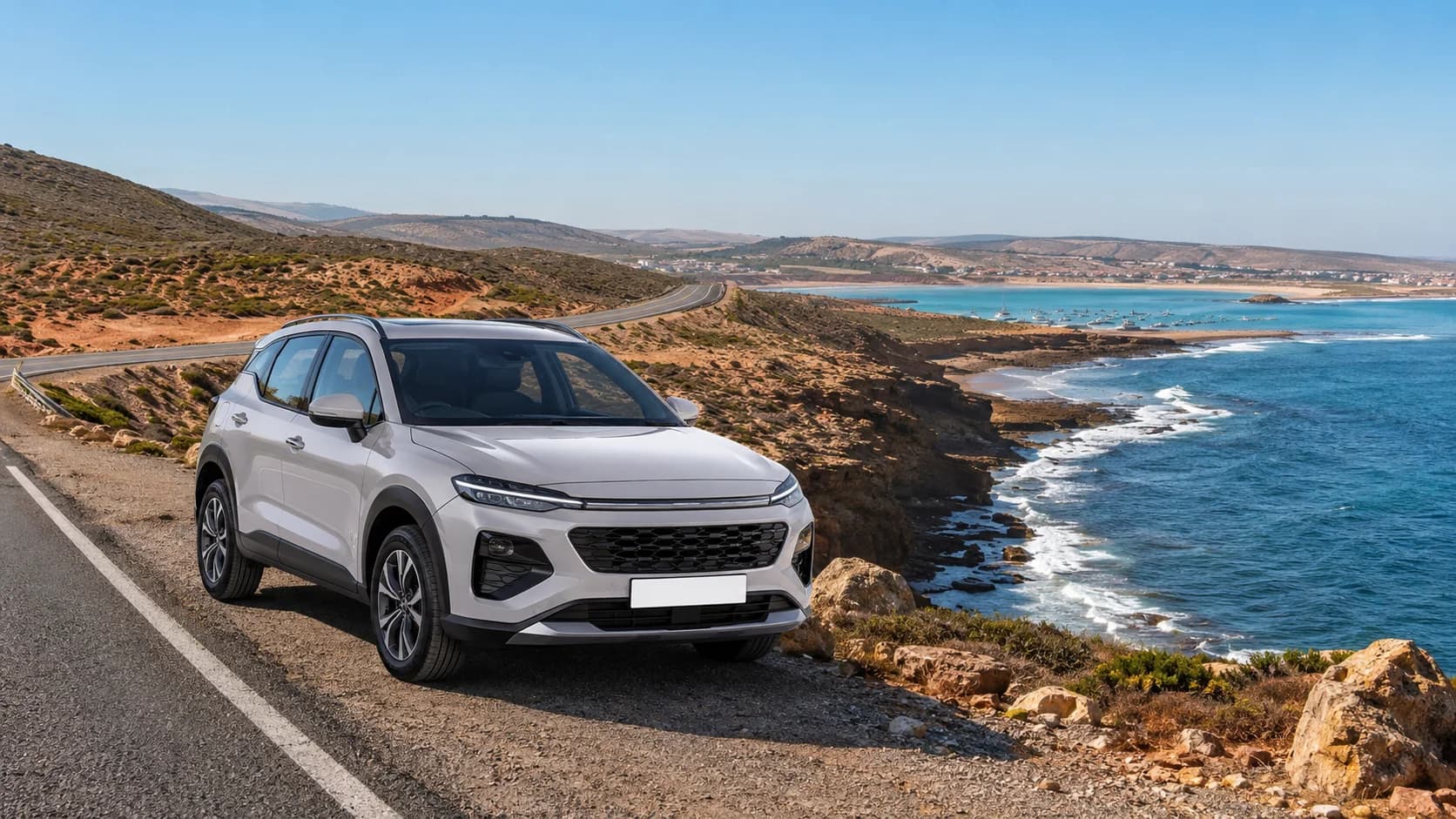
A rental car gives the route its value. You are not tied to a bus schedule, you can stop when the coastline opens up, and you can carry pottery purchases safely without worrying about luggage limits. For this kind of flexible coastal route, a comfortable sedan rental Essaouira option works well for couples, while an SUV rental Essaouira option gives more space for families, bags and longer onward travel.
Essaouira to Safi: distance and route
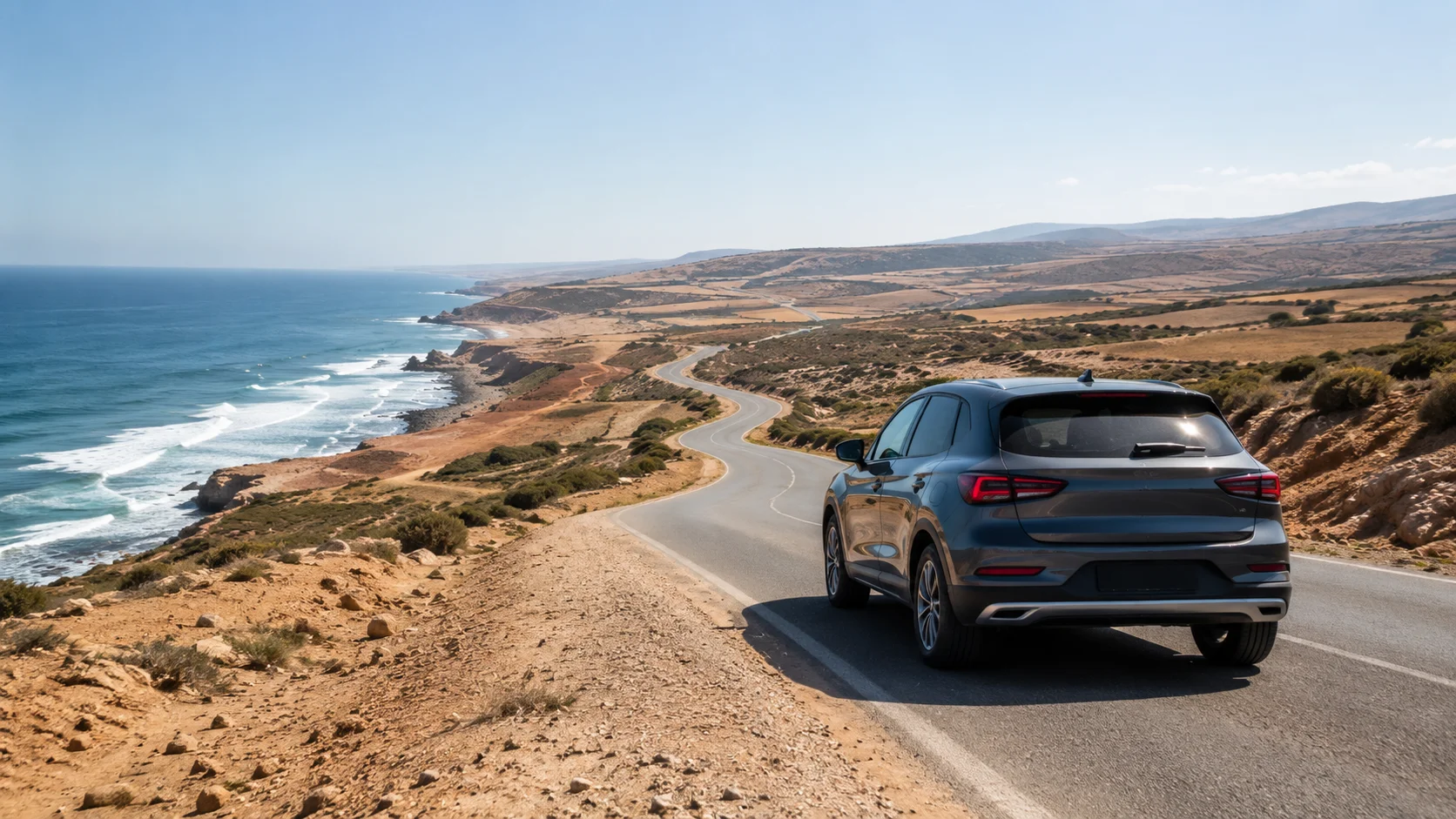
The Essaouira to Safi distance is about 120 to 125 km by road, depending on your exact starting point and the route taken. In normal conditions, the drive usually takes around 2 hours, but you should allow 2.5 to 3 hours if you want a relaxed pace with stops.
From Essaouira, you generally head north on the main road toward Safi. The route is simple compared with mountain drives in Morocco. It does not require difficult navigation, but it still deserves attention because rural stretches, wind, slower vehicles and occasional roadside activity can affect your pace.
The drive is best done during daylight. Morning is ideal because you can arrive in Safi before lunch, explore the pottery quarter while workshops and shops are active, then visit the old town and coastal viewpoints before returning to Essaouira.
A simple timing plan looks like this:
Leave Essaouira around 8:30 or 9:00, arrive in Safi around 11:00, visit the pottery area before lunch, explore the fort and old town in the afternoon, then leave Safi around 16:00 or 17:00 to return before dark.
This route is also useful for travelers continuing north. If your Morocco itinerary goes from Essaouira toward El Jadida, Casablanca or Rabat, Safi can become a natural stop instead of a return day trip.
The N1 coastal drive
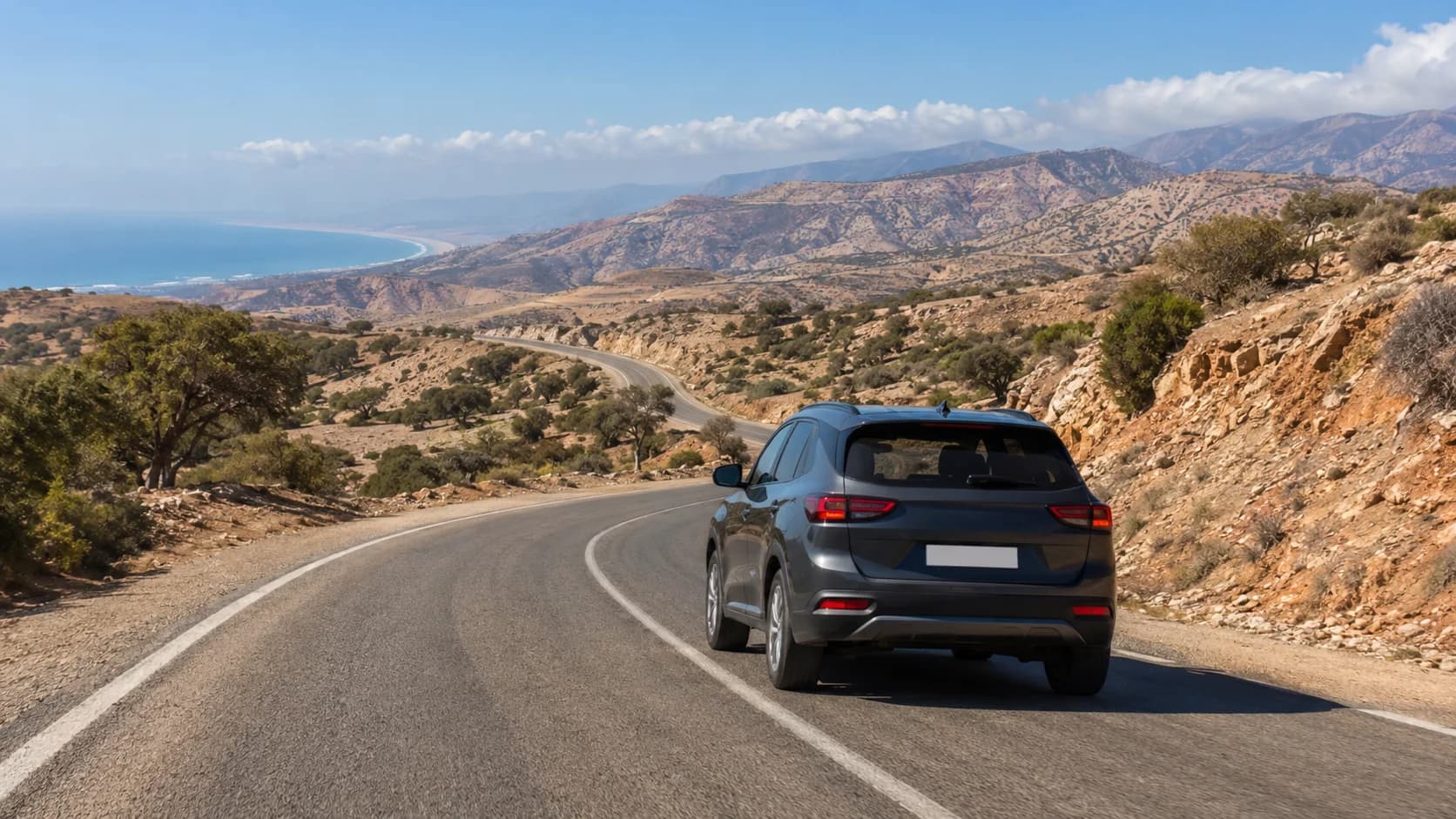
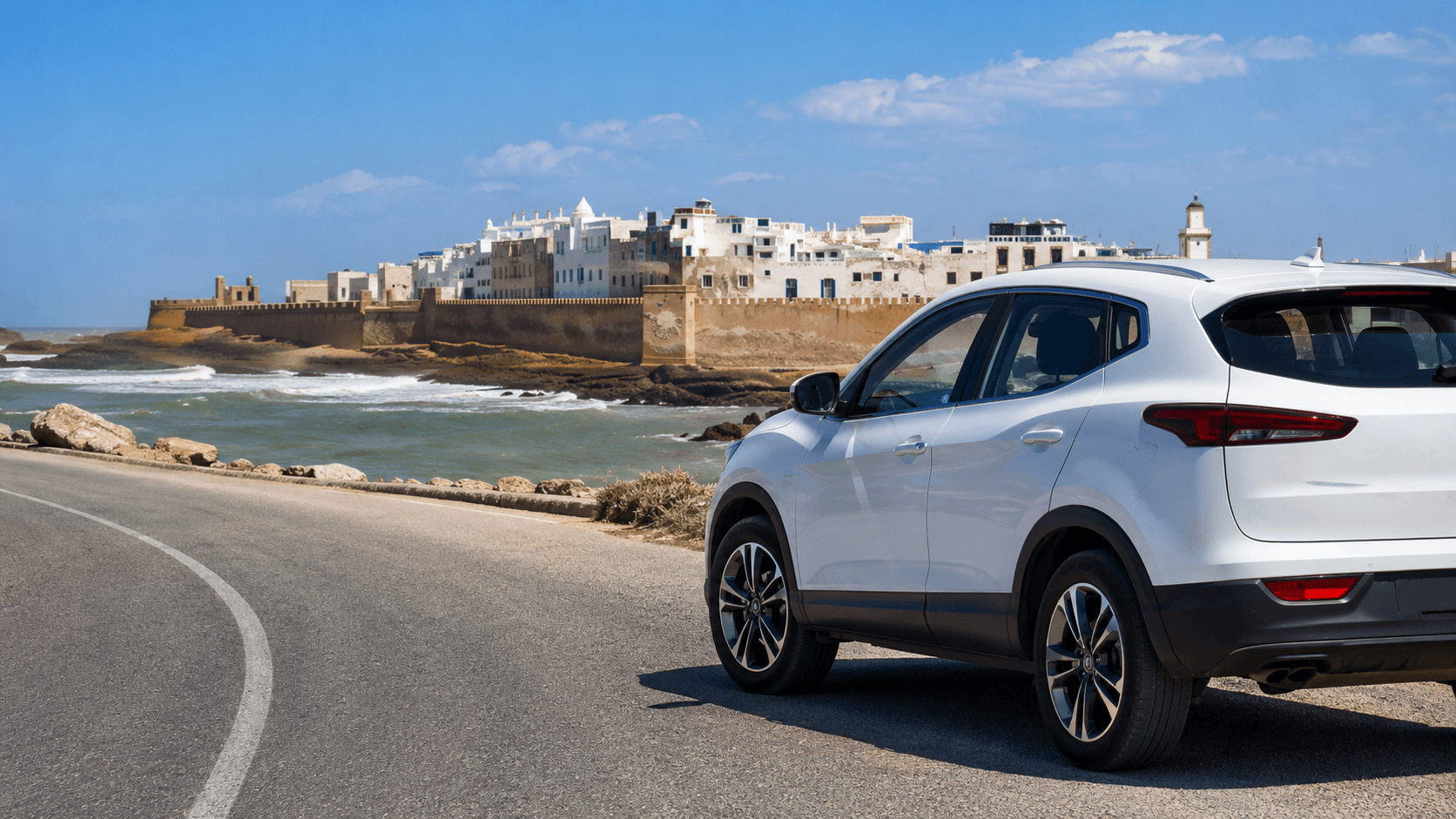
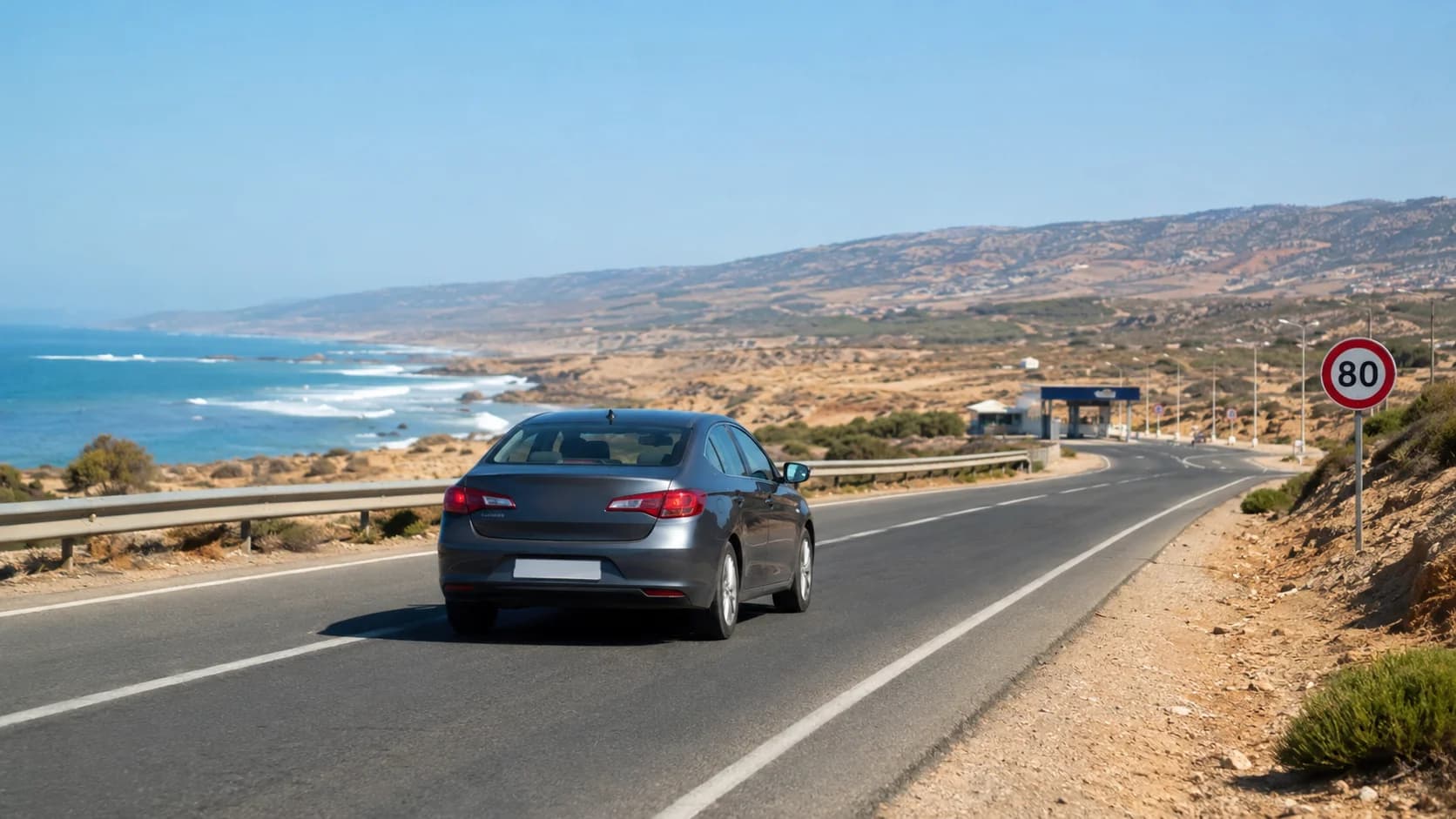
The N1 north from Essaouira toward Safi is not a dramatic cliff road from start to finish. It is better described as a coastal-region drive, with Atlantic influence, open countryside and occasional views or detours toward the ocean. That is part of its charm. It feels practical, spacious and local rather than heavily touristic.
You will pass through stretches where the road opens into wide landscapes, with dry hills, small settlements, grazing animals, roadside cafés and wind-shaped terrain. The closer you get to Safi, the more the drive starts to feel connected to industry, fishing and the working coast.
Because the route is not packed with major attractions every few kilometers, the best way to enjoy it is to avoid rushing. Stop for coffee when you see a clean roadside café, pause for a viewpoint when safe, and keep the journey flexible. This is where having your own car makes the route much better than traveling by fixed transport.
The road is generally suitable for standard vehicles, especially in dry weather. A sedan is comfortable for the main route, while an SUV is useful if you want a higher driving position, more luggage space or extra comfort on rougher access roads near viewpoints or beach detours.
For budget-focused travelers, cheap car rental Essaouira can still be enough for this route, as long as you choose a reliable model, check tire condition before departure, and avoid unnecessary off-road tracks.
Safi's pottery quarter
Safi is one of Morocco’s most famous pottery cities. For many travelers, this is the main reason to drive there from Essaouira. The pottery quarter is where you can see ceramic shops, painted plates, tagines, bowls, tiles and decorative pieces in a more authentic production setting than a typical souvenir shop.
The best way to experience the pottery side of Safi is to walk slowly. Do not treat it like a quick shopping stop. Take time to look at the different styles, compare colors, ask about handmade pieces, and watch how designs vary from workshop to workshop.
Safi pottery is often associated with strong colors, glazed finishes and decorative patterns. Some pieces are made for everyday use, while others are purely decorative. If you plan to buy, check whether the item is food-safe, whether it can be wrapped properly, and whether it will survive the drive back to Essaouira.
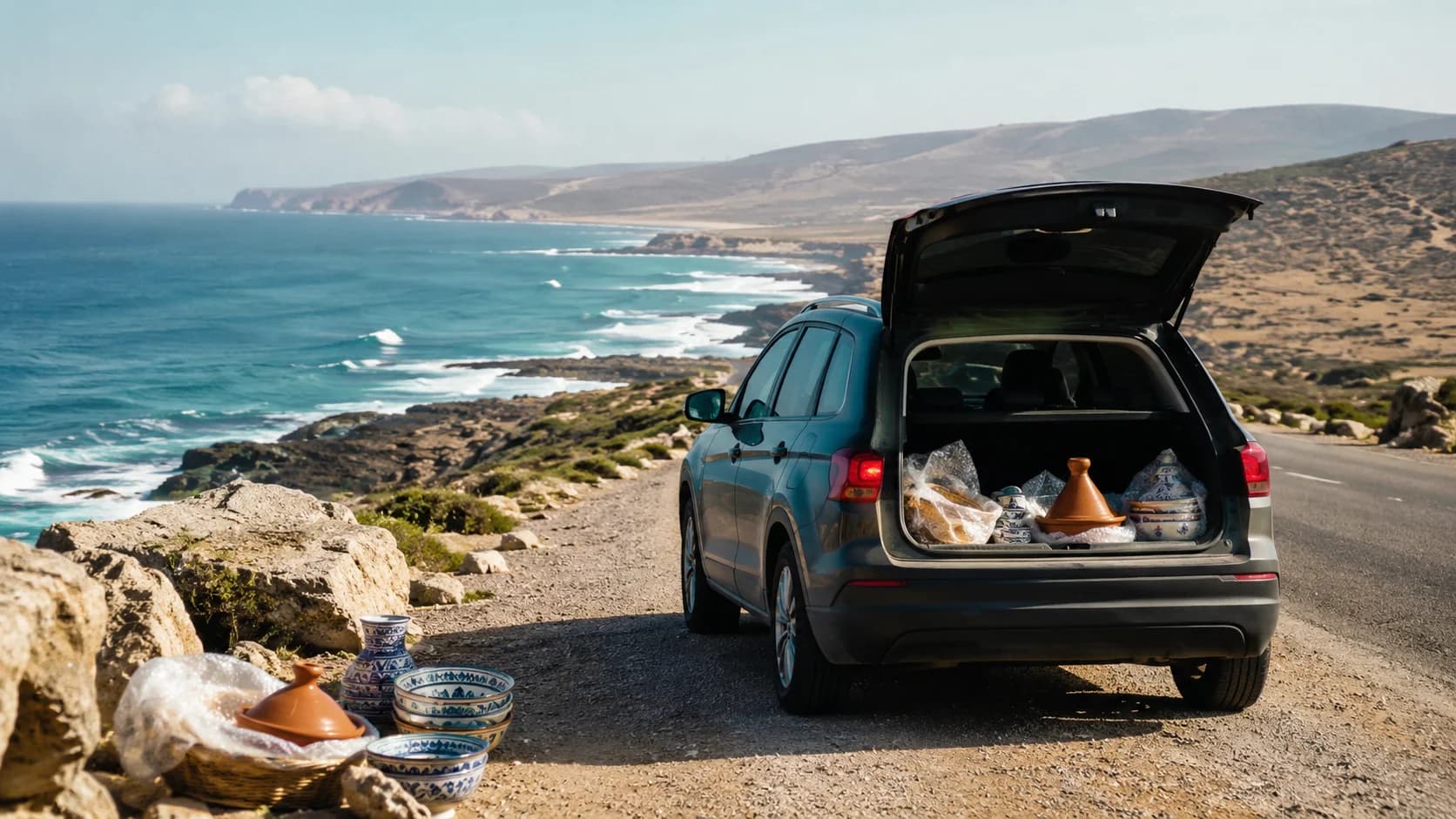
A car is very useful here. Pottery can be fragile and heavy, especially if you buy plates, bowls or a tagine set. Instead of carrying everything through bus stations or taxis, you can place items carefully in the trunk. Bring a towel, jacket or soft bag to protect ceramic pieces on the return drive.
Parking near busy market areas can be tight, so it is better to park a little outside the densest streets and walk in. Do not leave visible shopping bags, cameras or valuables in the car. Keep the vehicle simple, locked and parked in a visible area.
The Portuguese fort and old town
After the pottery quarter, Safi’s old town and fort area give the trip more historical depth. The city has a long Atlantic history, and its fortifications reflect its role as a coastal stronghold and port city.
The Portuguese fort area is one of the main historic sights in Safi. Even if you do not spend a long time inside every monument, it is worth visiting for the views, stone architecture and old-city atmosphere. The contrast between pottery streets, ocean air and fort walls gives Safi a character that feels very different from Essaouira.
Essaouira is elegant, whitewashed and highly photogenic. Safi is more rugged, busier and less curated. That difference is the point. A day trip here gives you another view of the Moroccan Atlantic coast, one shaped by ceramics, fishing, industry, surf and older layers of history.
For photography, avoid aiming your camera at people without permission. Focus on architecture, ceramics, doors, walls, coastal views and wide street scenes. The best light is usually morning or late afternoon, especially near the coast.
If you are visiting with family, keep the old town walk simple. Choose one pottery area, one historic stop and one ocean viewpoint rather than trying to cover everything. Safi rewards slow exploration more than checklist-style sightseeing.
Safi's surf reputation
Safi also has a strong surf identity. Travelers who know Morocco’s surf map often associate the country with Taghazout, Imsouane, Sidi Kaouki and Essaouira, but Safi has its own reputation among experienced surfers.
The Atlantic here can be powerful. That makes the surf interesting, but it also means conditions are not always beginner-friendly. If you are not an experienced surfer, treat Safi’s surf scene as something to watch, photograph from a safe distance, or explore with a local surf school or guide rather than entering unfamiliar conditions alone.
For non-surfers, the coast is still worth seeing. Waves, cliffs, ocean wind and the city’s raw Atlantic setting are part of Safi’s appeal. It feels less like a beach resort and more like a real coastal city where the ocean shapes daily life.
If surf is your main reason for visiting, check conditions before leaving Essaouira. Wind, swell and tide can change the experience completely. If surf is only a side interest, combine a coastal viewpoint with the pottery quarter and old town for a balanced day.
Best car for the coast road
The best car for the north coast drive depends on your travel style. The Essaouira to Safi road does not require a 4x4 for normal driving, but comfort matters because the route includes open stretches, wind and possible roadside stops.
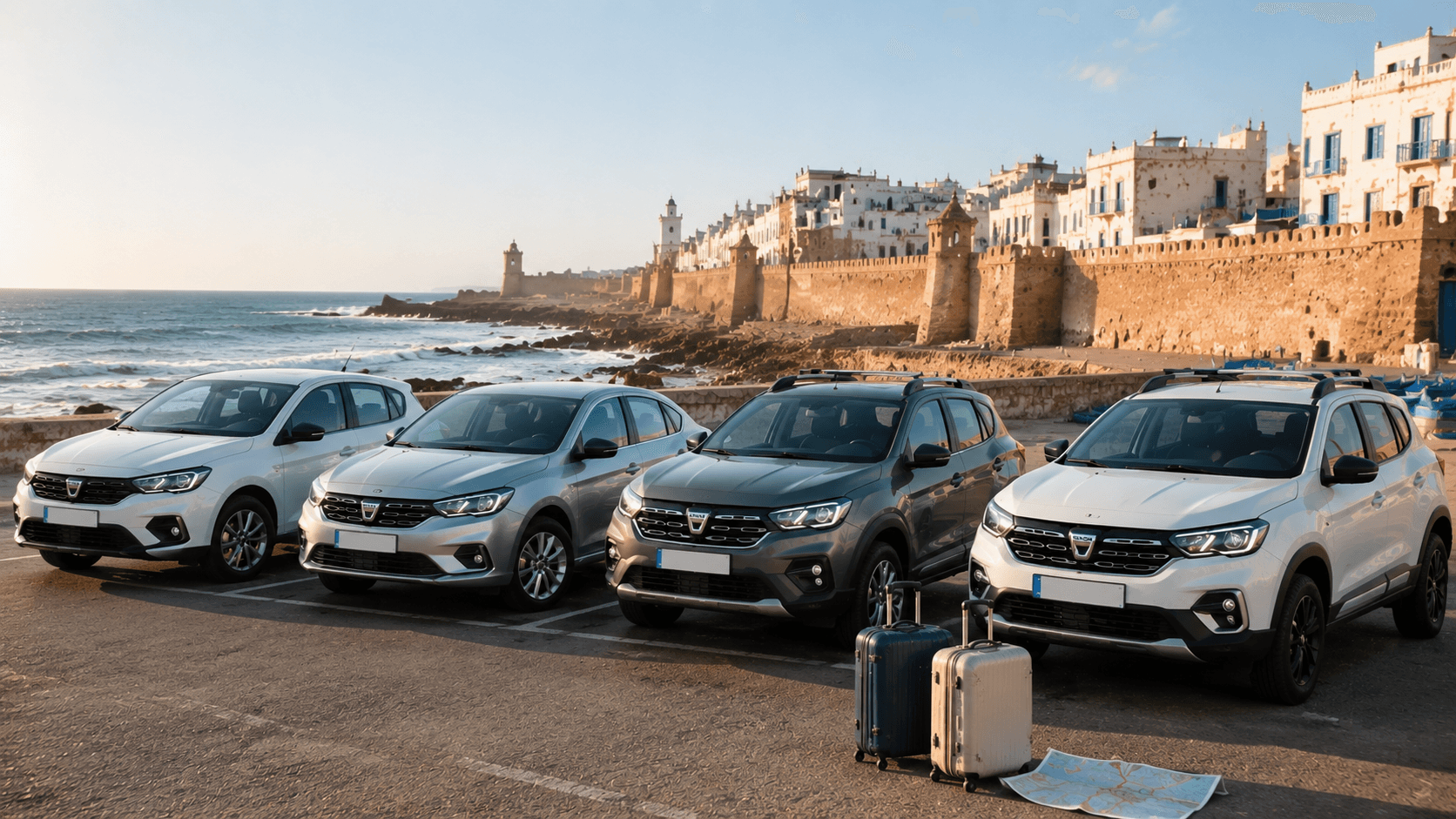
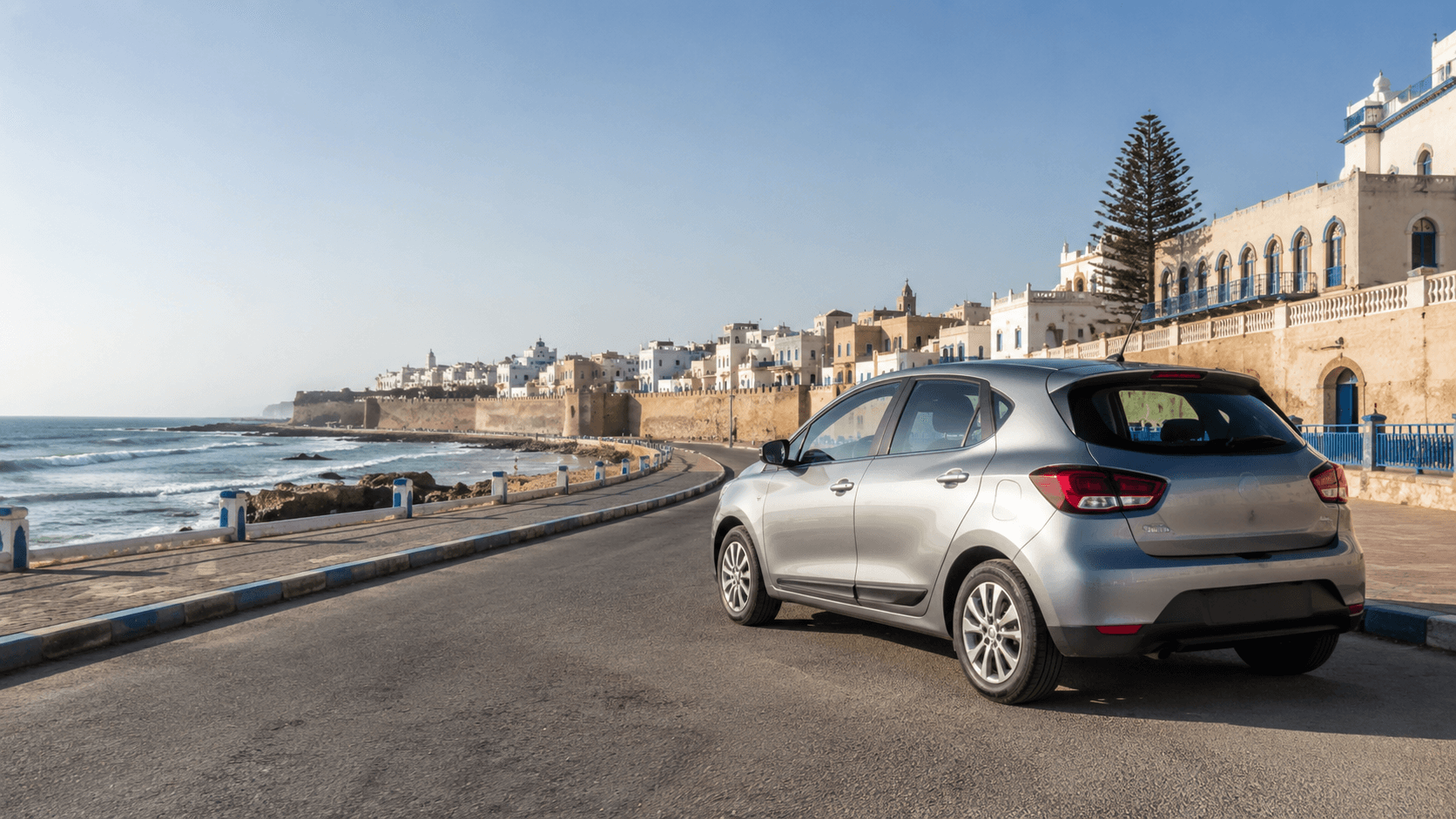
A sedan is the best all-round option for most travelers. It gives better comfort than a tiny city car, enough trunk space for pottery purchases, and a smoother ride for two to four passengers. If you are planning a simple day trip, a sedan rental Essaouira option is usually the most practical choice.
An SUV is better for families, travelers with luggage, photographers carrying gear, or anyone continuing north toward El Jadida or Casablanca. It gives a higher view of the road, more cabin space and easier loading for bags or shopping. For longer coastal routes, an SUV rental Essaouira option can make the day feel more relaxed.
A small economy car works if you are traveling light and want to keep costs low. This can be a smart choice for solo travelers or couples who only need basic transport. Just make sure the car is comfortable enough for a full day and has enough trunk space if you plan to buy pottery.
Automatic cars are useful if you prefer easier driving in towns, parking areas and traffic. Manual cars are common in Morocco and often cheaper, but you should choose what you are most confident driving.
Fuel and rest stops
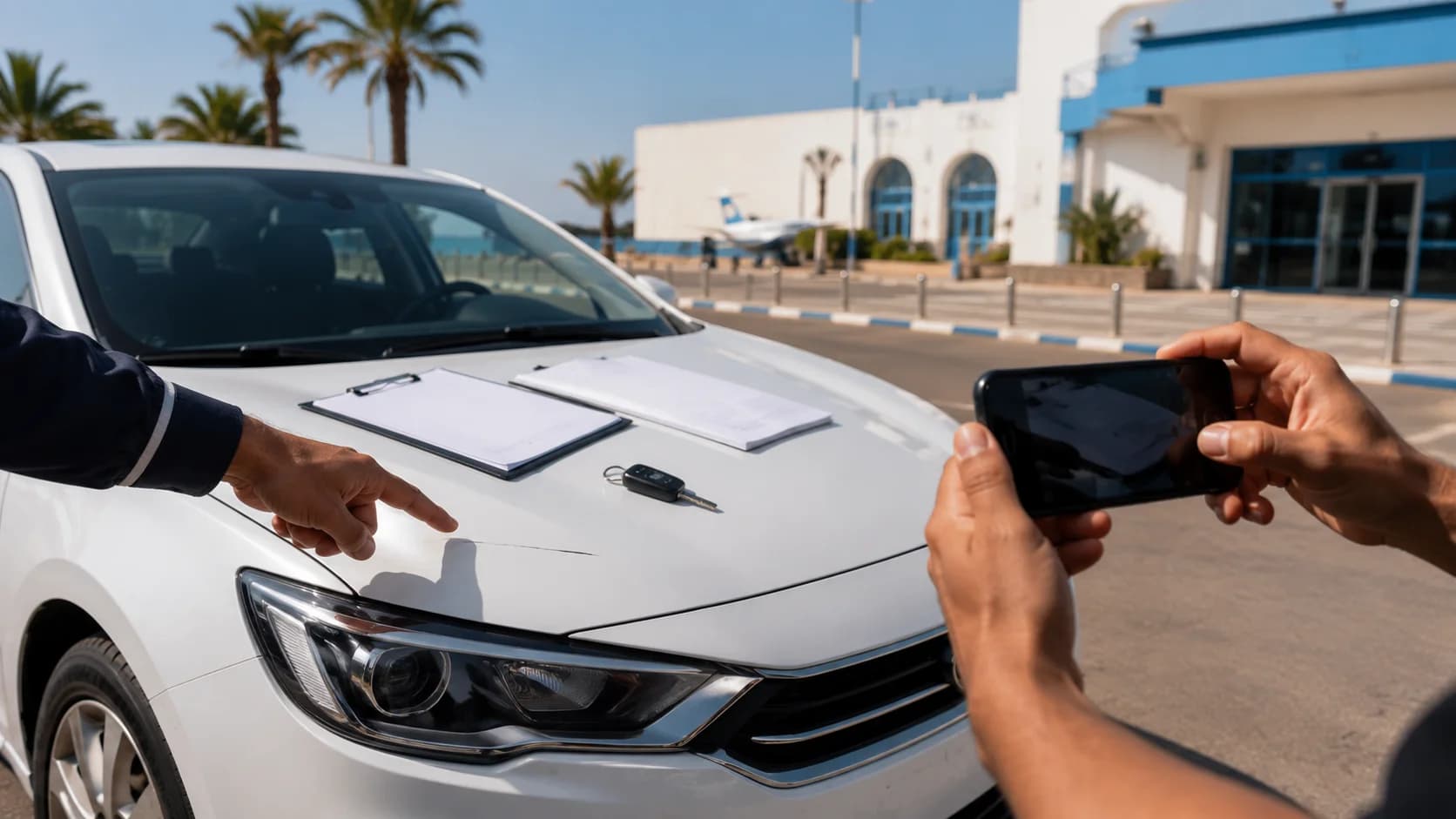
Before leaving Essaouira, check fuel level, tire condition, documents and phone battery. The route is not remote in an extreme sense, but it is still better to start prepared. Fill up before departure if the tank is low, especially if you plan to make detours.
Keep small cash in Moroccan dirhams for cafés, parking and simple purchases. Not every stop will accept cards, and small roadside places may prefer cash. Carry water, especially in warmer months, and keep snacks in the car if traveling with children.
Rest stops on the way are simple. Expect local cafés, fuel stations and roadside shops rather than large service areas. Use stops when you see a good opportunity instead of waiting for the perfect place.
For navigation, download your route before leaving Essaouira or keep mobile data active. The main road is straightforward, but offline maps help if you take detours or enter Safi through unfamiliar streets.
Parking in Safi can require patience. Choose official or visible parking areas where possible, and ask locally if you are unsure. In busy areas, a parking guardian may indicate a space. Agree calmly, keep small coins ready, and avoid leaving valuables inside the vehicle.
Day trip vs onward to El Jadida
Safi works well as a day trip from Essaouira, especially if you start early and keep your plan realistic. The best day-trip version includes the drive north, pottery quarter, lunch, old town or fort area, a coastal viewpoint, then return to Essaouira before dark.
A day trip is best if your hotel base is in Essaouira and you want one different coastal experience without changing accommodation. It is also easier if you are traveling with kids or prefer not to pack luggage.
Continuing onward makes sense if your next destination is El Jadida, Casablanca or Rabat. In that case, Safi becomes a useful cultural stop on a northbound coastal itinerary. You can leave Essaouira, explore Safi, then continue later instead of backtracking.
If you are continuing to El Jadida, allow extra time and avoid leaving Safi too late. Coastal and intercity roads are easier in daylight, and arrival in a new city is always smoother before evening traffic or darkness.
For travelers booking with MarHire Car Essaouira, ask in advance about one-way drop options if you plan to return the car in another city. This can make a coastal route much easier, especially if you do not want to drive back to Essaouira.
Plan your Safi drive
A good Essaouira to Safi by car plan should stay simple. This is not a route where you need to fill every minute. The drive itself, the pottery quarter, the fort area and the Atlantic setting are enough for a rewarding day.
Start with the right vehicle. Choose a sedan if you want comfort and value, an SUV if you want more space, or a cheap rental if your priority is budget. Confirm your pickup time, insurance details, fuel policy and return plan before departure.
Pack light but smart. Bring water, sunglasses, a phone charger, cash, a soft bag for pottery and your driving documents. If you are buying ceramics, ask sellers to wrap everything carefully and place fragile items where they will not move during the drive.
The best version of this trip is flexible. Stop when the road feels interesting, spend more time in the pottery quarter if you enjoy crafts, or focus on the ocean if you came for the coast. Safi is not a polished resort stop, and that is what makes it memorable.
Follow the pottery road north at your own pace. A comfortable sedan or SUV from MarHire Car Essaouira keeps the coast drive easy, with unlimited kilometers on most rentals, no-deposit options on many cars and local support before, during and after your trip.
FAQs
How far is Safi from Essaouira?
Safi is about 120 to 125 km from Essaouira by road, depending on the exact route and starting point.
How long does it take to drive Essaouira to Safi?
The drive usually takes around 2 hours in normal conditions. Allow 2.5 to 3 hours if you want a relaxed pace with coffee stops, viewpoints or slower traffic.
Is Safi worth visiting from Essaouira?
Yes, Safi is worth visiting if you want a different coastal experience from Essaouira. It is known for pottery, surf culture, historic fortifications and a more local Atlantic atmosphere.
What is Safi famous for?
Safi is especially famous for pottery and ceramics. The city is also known for its Atlantic coast, fishing identity, old fort areas and surf reputation.
Is Safi good for surfing?
Safi is known among surfers, but conditions can be powerful. Experienced surfers may appreciate it, while beginners should only go with proper local guidance and safe conditions.
What is the road like from Essaouira to Safi?
The road is generally suitable for normal cars, with open stretches, rural areas and some town traffic near Safi. Daylight driving is recommended for the easiest experience.
Can you do Safi as a day trip from Essaouira?
Yes. Safi is very possible as a day trip from Essaouira if you leave in the morning and return before dark.
Is there much to see in Safi?
There is enough for a relaxed day: the pottery quarter, ceramic shops, the old town, fort area, coastal views and surf spots. It is better for travelers who enjoy local culture rather than polished tourist attractions.
What car is best for the north coast drive?
A sedan is best for comfort and value. An SUV is better for families, luggage or onward travel. A cheap economy car can work for light travelers who want the lowest rental cost.
Can you continue from Safi to El Jadida?
Yes. Safi can be used as a stop on a longer northbound coastal route toward El Jadida, Casablanca or Rabat. If you do this, plan your timing carefully and ask about one-way rental options in advance.