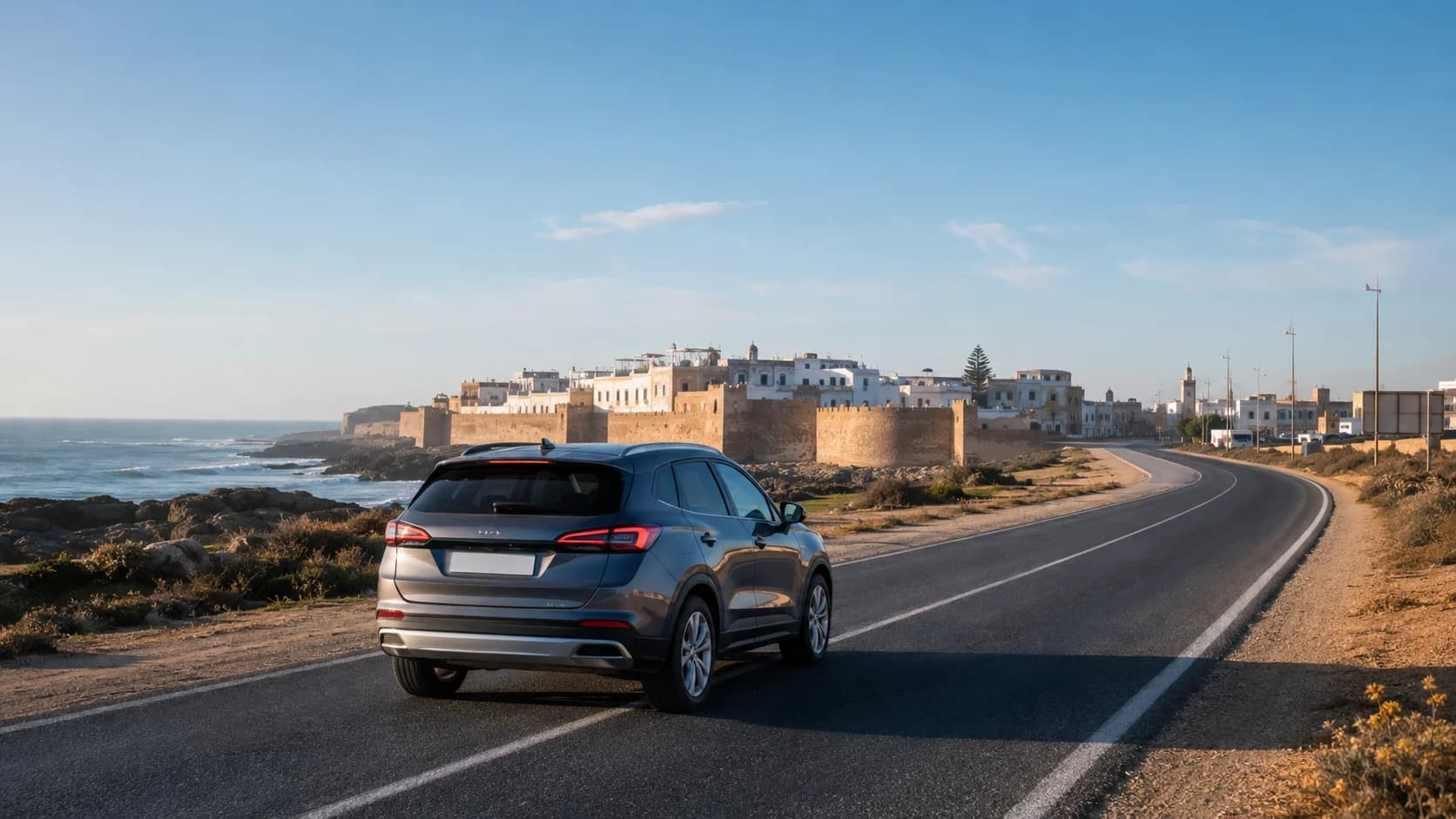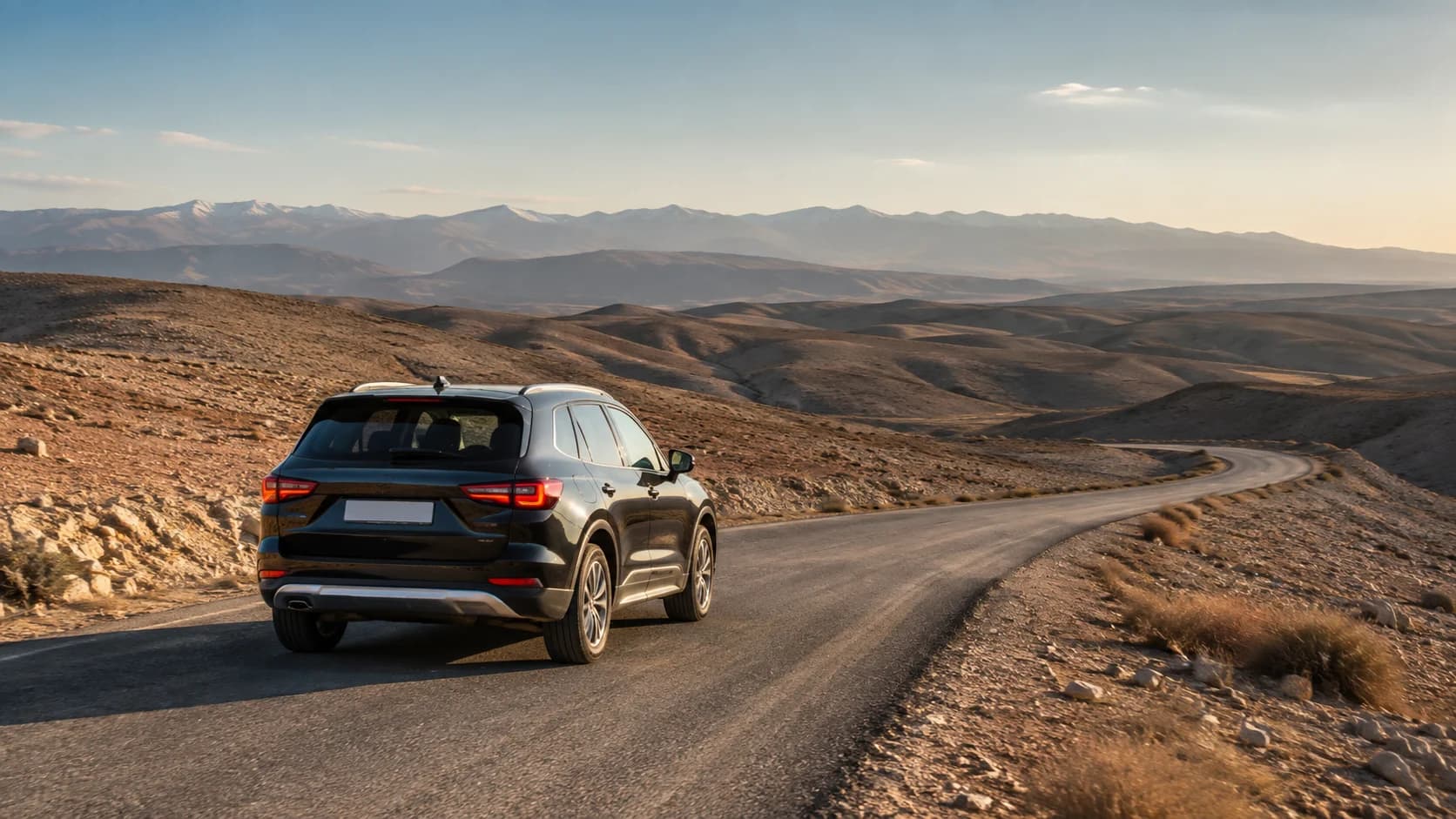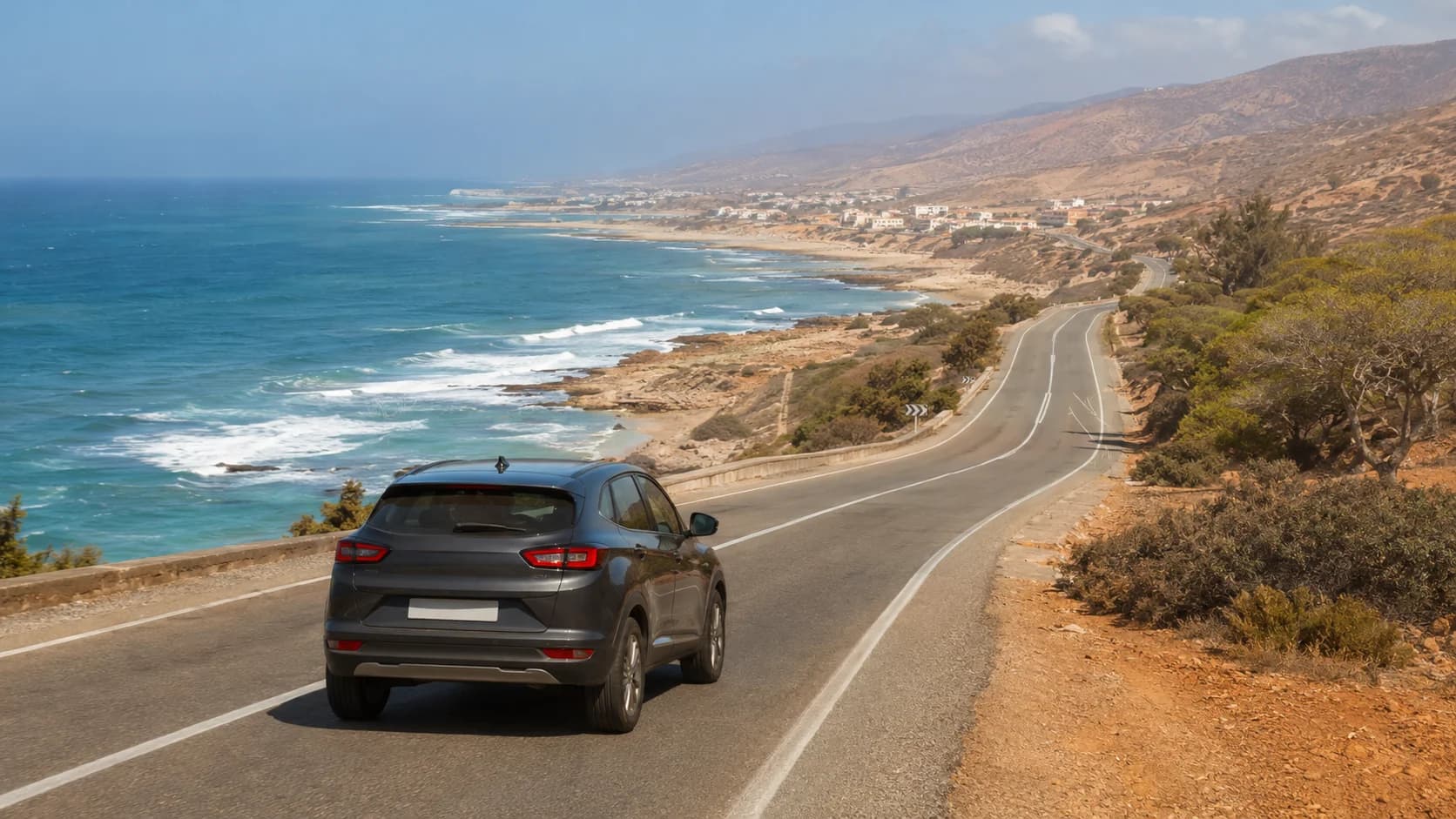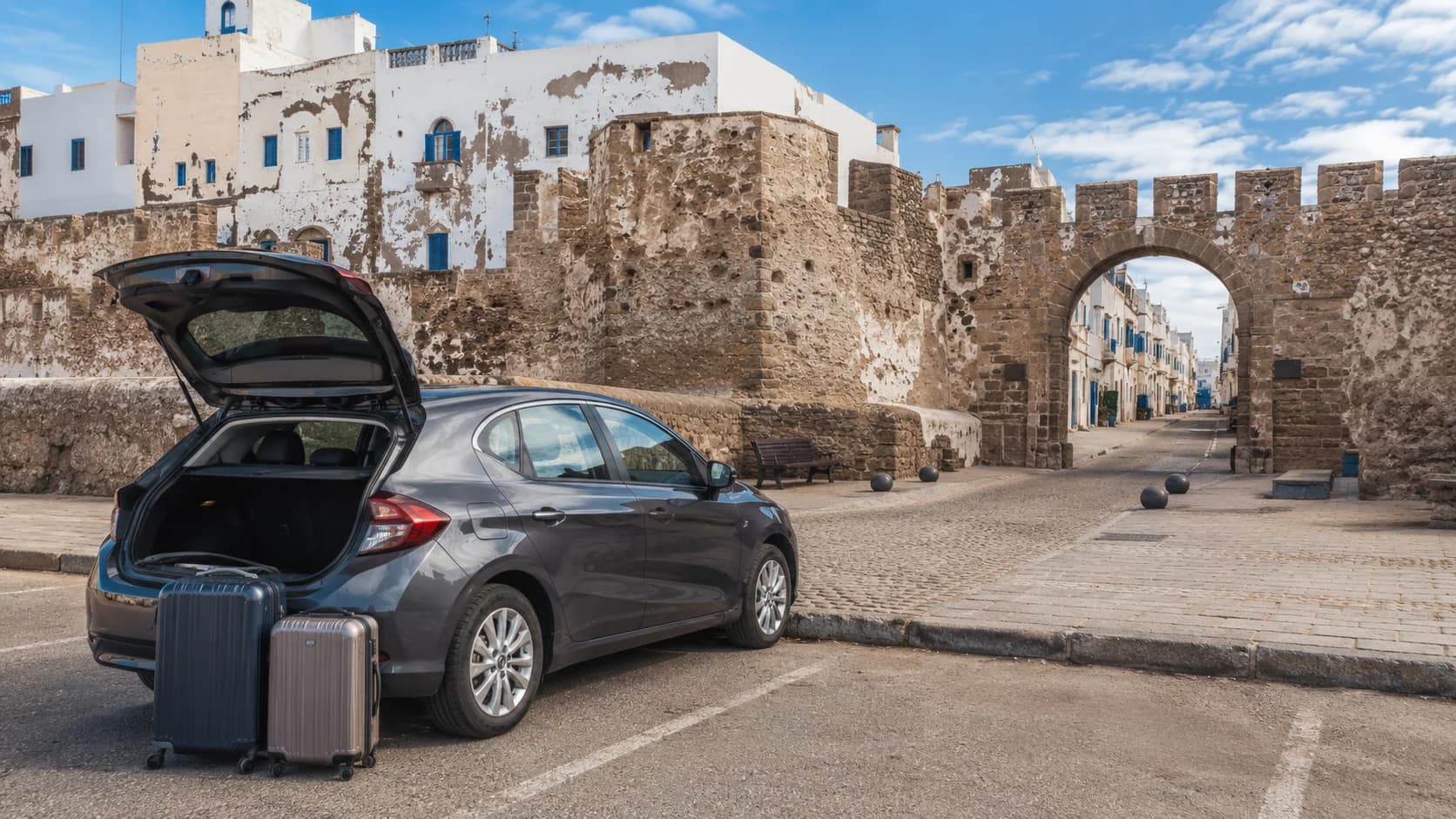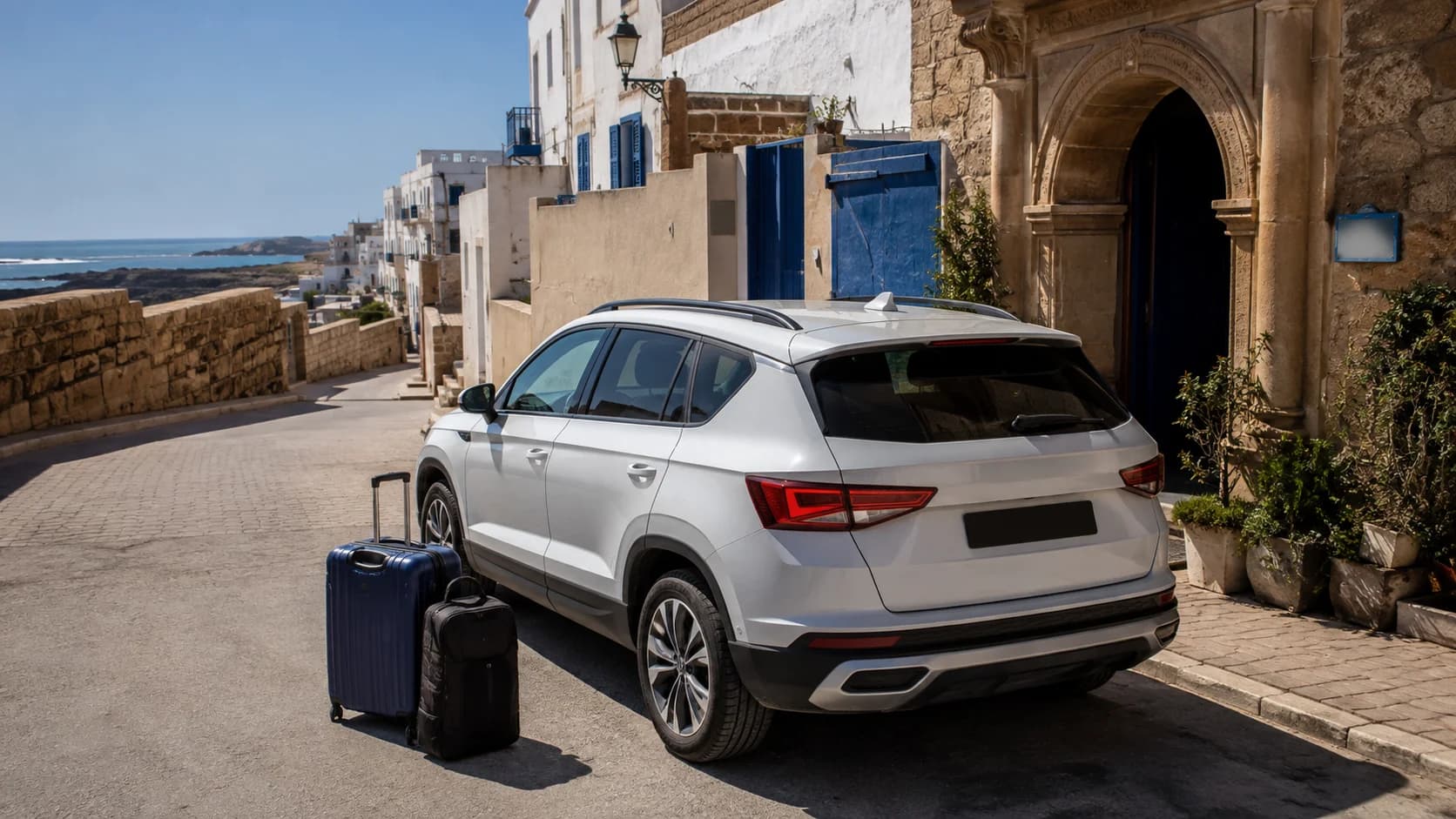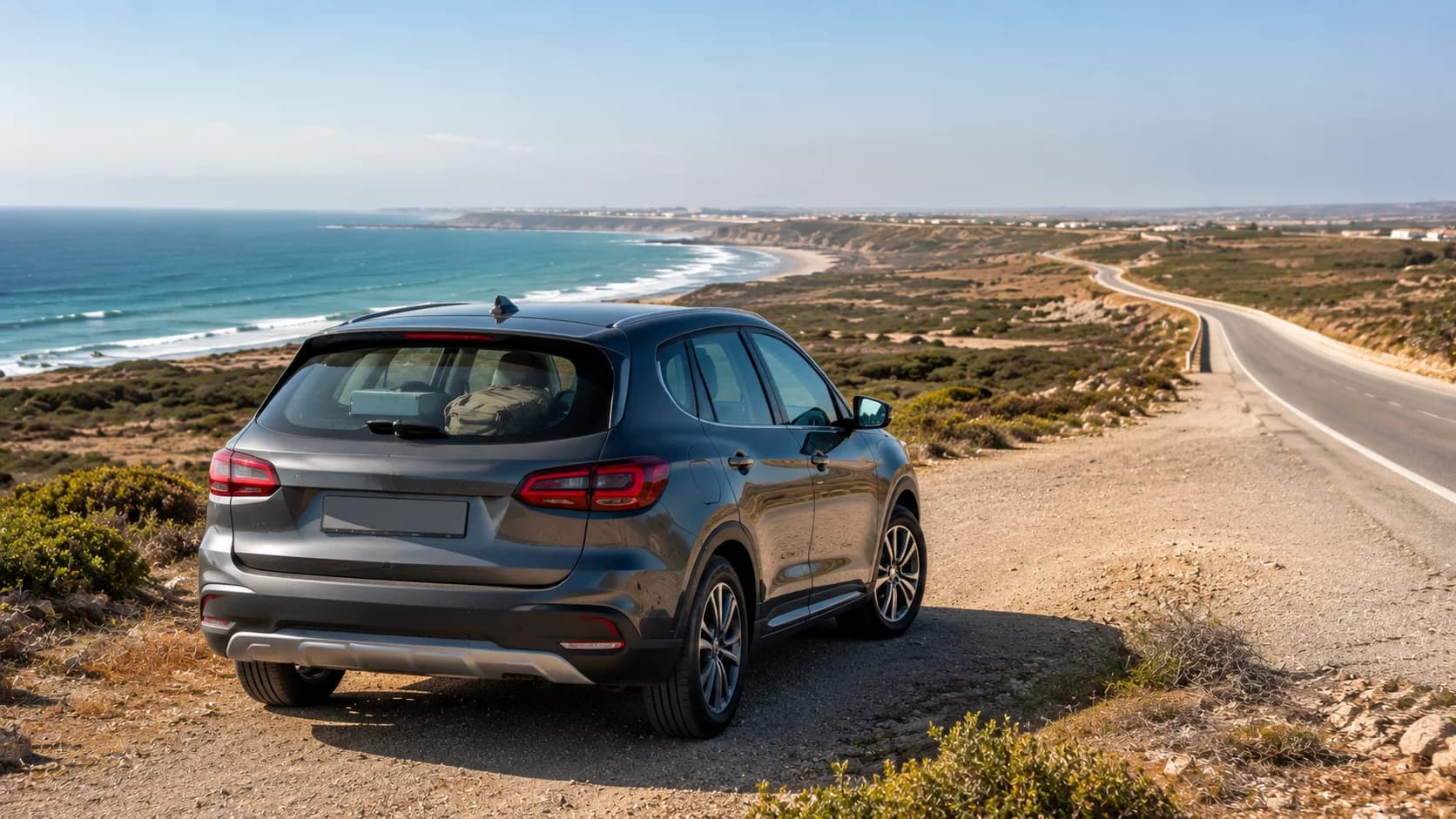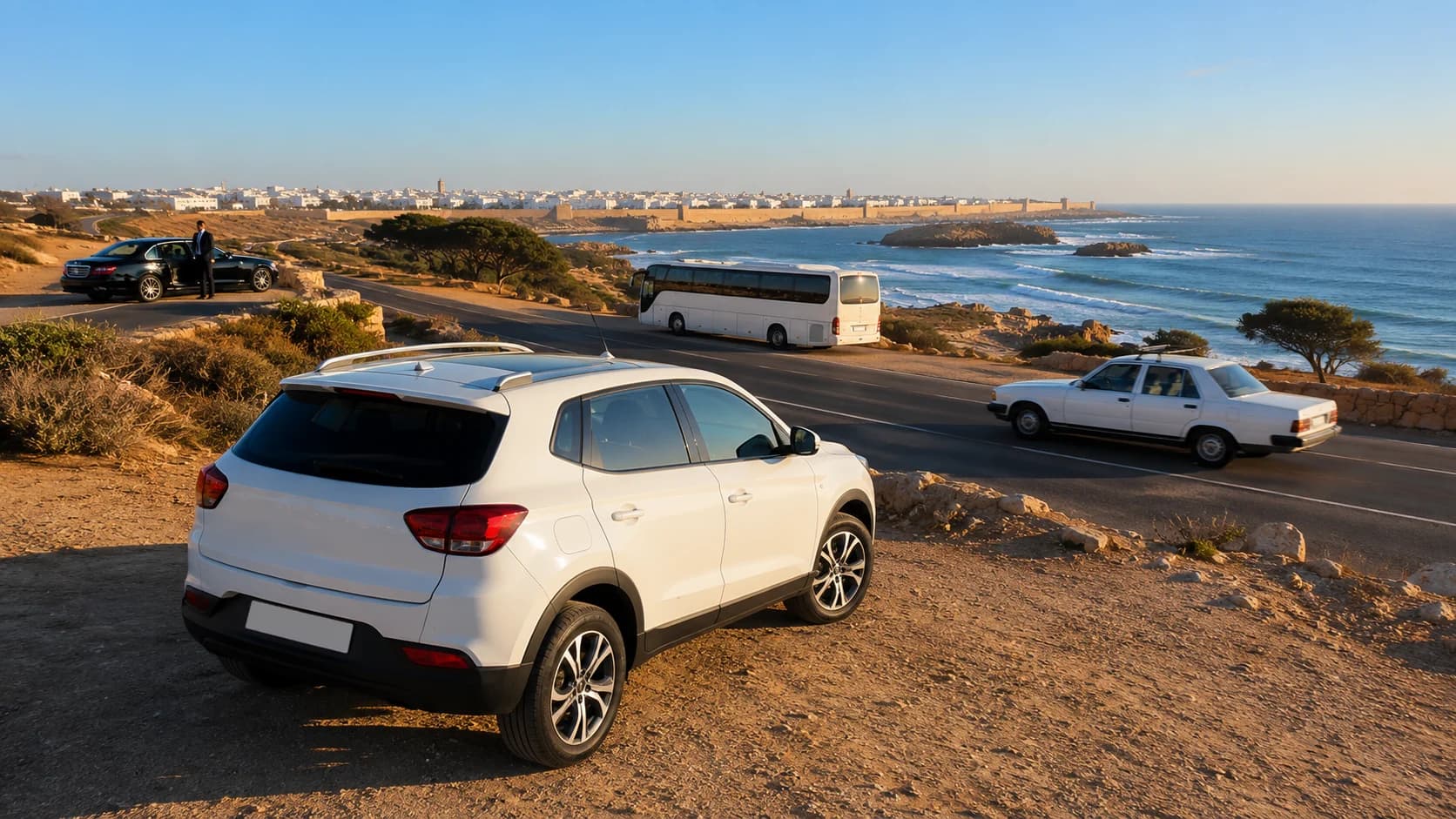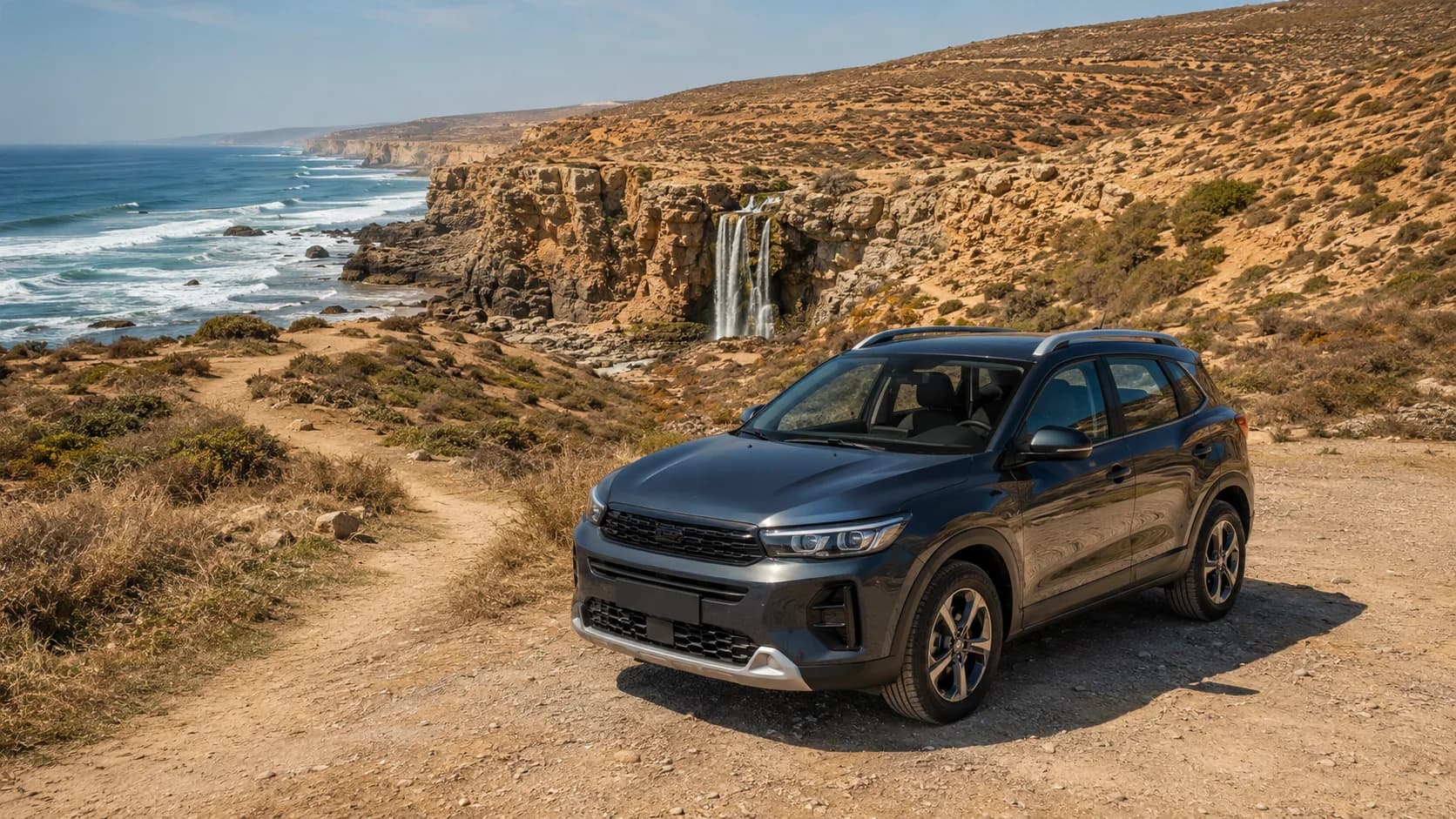









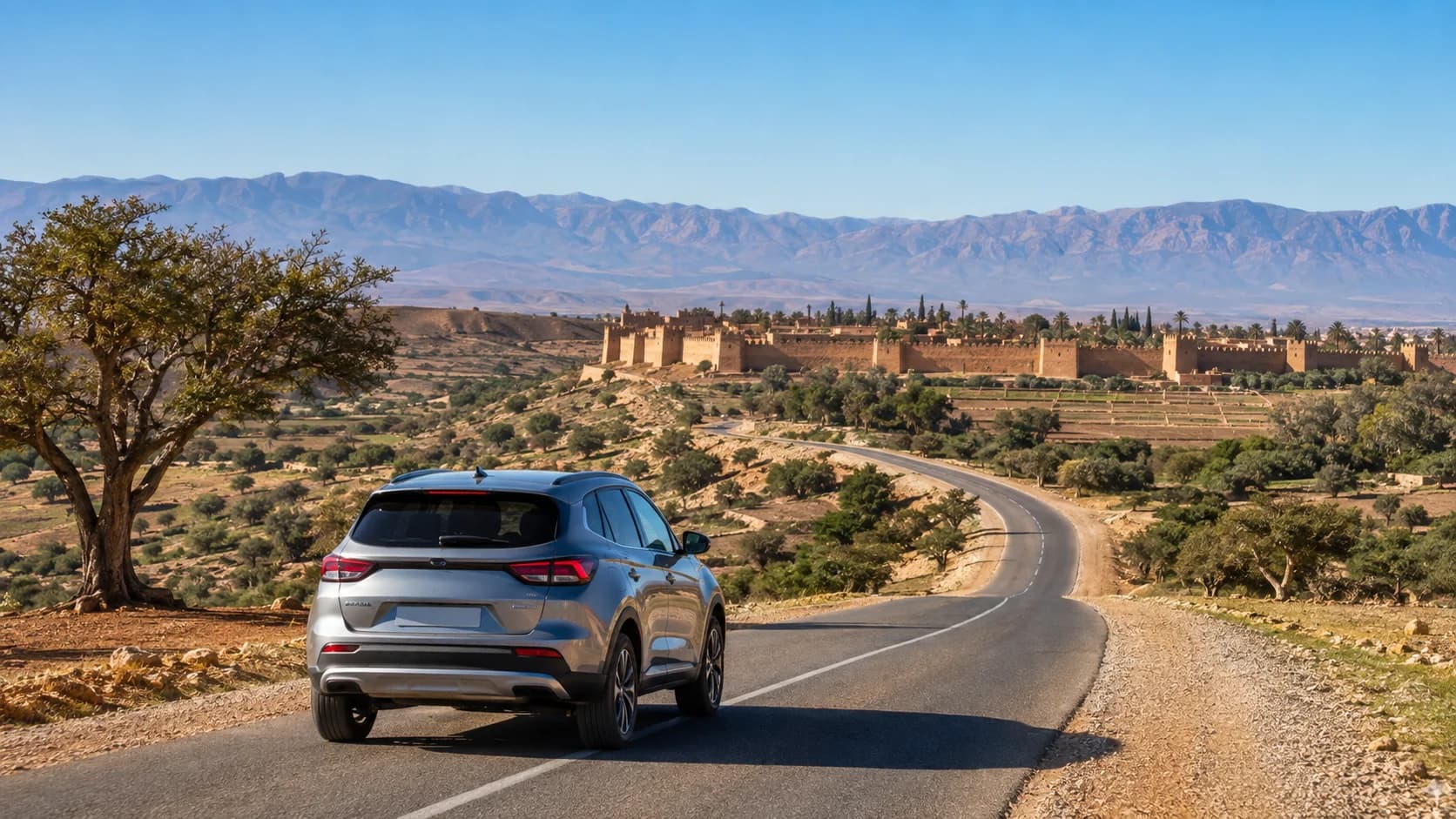
The drive from Essaouira to Taroudant connects Morocco’s Atlantic coast with one of the country’s most atmospheric inland towns. Instead of following another coastal itinerary, this journey takes you through argan-growing countryside, small roadside communities, the Agadir region and the fertile Souss Valley before reaching Taroudant’s historic ramparts.
The journey is achievable in one day, but it becomes much more enjoyable when included in a wider southern Morocco road trip. Renting a car gives you the freedom to stop in Tamanar, explore viewpoints along the N1, visit Agadir or continue toward mountain and desert destinations after Taroudant.
Table of Contents
- Distance, route and travel time
- Why visit Taroudant from Essaouira
- Route options through southern Morocco
- Best stops between Essaouira and Taroudant
- Road quality and driving conditions
- Fuel, food and rest breaks
- Parking and arrival in Taroudant
- Day trip, overnight stay or wider itinerary
- Choosing a suitable rental car
- Pre-drive checklist
- Frequently asked questions
Essaouira to Taroudant Distance and Drive Time
The practical driving distance from Essaouira to Taroudant is approximately 240 to 280 kilometres, depending on the route selected and where you enter or leave the Agadir area. Online route estimates vary, with some services calculating around 238 kilometres and a little over four hours of uninterrupted driving.
For most visitors, a more realistic total journey time is:
-
Around 4 to 4.5 hours without sightseeing
-
Around 5 to 6 hours with fuel, coffee and photo stops
-
A full day when including Agadir or another substantial stop
The easiest route normally follows the N1 south from Essaouira toward Tamanar and Agadir, followed by the main inland roads leading through the Souss region toward Taroudant.
The Essaouira-to-Agadir section alone is approximately 170 kilometres by road. It is therefore better to treat navigation-app estimates as minimum driving times rather than guaranteed arrival times.
Why Visit Taroudant from Essaouira?
Essaouira and Taroudant offer two very different sides of Morocco.
Essaouira is shaped by the Atlantic Ocean, its fishing port, white-and-blue medina streets and coastal climate. Taroudant is an inland market town surrounded by historic ochre ramparts and framed by the landscapes of the Souss Valley and nearby mountains.
The Moroccan National Tourist Office describes Taroudant as one of Morocco’s most beautiful historic towns, particularly known for its ramparts and centuries-old towers.
Travellers often call it “Little Marrakech,” but Taroudant should not be treated simply as a smaller copy of Marrakech. It has a slower rhythm, a strong local character and a medina that generally feels easier to explore.
A visit can include:
-
Walking beside the historic ramparts
-
Exploring the traditional souks
-
Visiting Place Assarag
-
Shopping for local crafts, leather goods and spices
-
Taking a carriage ride around the walls
-
Watching the colour of the ramparts change near sunset
-
Using Taroudant as a base for the Souss Valley or Anti-Atlas region
The journey also adds variety to a Moroccan itinerary. Travellers who have already visited coastal destinations can use Taroudant as their first inland stop before continuing toward Ouarzazate, Tafraoute, Taliouine or Marrakech.
Route Options Through Southern Morocco
Route 1: Essaouira to Taroudant via Agadir
For most visitors, the coastal route through the Agadir region is the simplest and most practical option.
A typical route is:
Essaouira → Smimou → Tamanar → Imsouane junction → Tamri → Agadir area → Souss Valley → Taroudant
The first part follows the N1 south from Essaouira. The road passes through argan landscapes, rolling countryside and stretches offering views toward the Atlantic.
After reaching the Agadir region, navigation may direct you around the city rather than through its central streets. The final section turns inland across the Souss plain toward Taroudant.
This route is usually the best choice because it offers:
-
Major-road navigation
-
Regular fuel and food opportunities
-
The option to stop in Agadir
-
Easier access to services
-
A straightforward continuation toward Taroudant
It is especially suitable for first-time visitors driving in Morocco.
Route 2: Essaouira to Agadir, Then Overnight Before Taroudant
Drivers who do not want to spend four or more hours on the road can divide the journey into two stages.
Day one can include the drive from Essaouira to Agadir, with stops around Tamanar, Imsouane, Tamri or Taghazout. After an overnight stay in Agadir, the shorter inland drive to Taroudant can be completed the following morning.
This option works well for families, photographers and travellers who want to enjoy the coastal section without watching the clock.
Route 3: Taroudant as Part of a Larger Circuit
Taroudant is particularly valuable as part of a longer road trip rather than a simple return journey.
Possible itineraries include:
-
Essaouira → Agadir → Taroudant → Marrakech
-
Essaouira → Taroudant → Taliouine → Ouarzazate
-
Essaouira → Agadir → Taroudant → Tafraoute
-
Essaouira → Taroudant → Souss-Massa region → Agadir
-
Essaouira → Taroudant → mountain villages → Marrakech
Before selecting an inland or mountain continuation, check current navigation guidance and local road conditions. Mountain routes can be slower than expected and may be affected by weather or road works.
Best Stops Between Essaouira and Taroudant
Tamanar
Tamanar is one of the most practical early stops on the journey. It is approximately halfway between Essaouira and the Agadir area and provides access to cafés, shops and fuel services.
The town is closely associated with Morocco’s argan-producing region. It may not require a long sightseeing visit, but it is useful for stretching your legs, buying water and checking the remaining route.
Smimou
Smimou is another convenient roadside town south of Essaouira. It can work as a brief coffee or breakfast stop, especially when leaving Essaouira early in the morning.
There is rarely a need to plan a long stop here, but it is preferable to driving continuously until Agadir.
Imsouane Detour
Imsouane is a popular coastal village known for its bay and surfing environment. Reaching it requires leaving the direct N1 route, so it should only be included when you have several additional hours available.
It is better suited to:
-
A full-day coastal itinerary
-
An overnight stop
-
A two-day journey to Taroudant
-
Travellers specifically interested in surfing or coastal photography
Do not add Imsouane to a tightly scheduled same-day drive.
Tamri
Tamri is known for the surrounding coastal and agricultural landscapes. It is another possible short rest point before reaching the busier Taghazout and Agadir areas.
Nearby coastal viewpoints can be attractive, but drivers should only stop in clearly safe pull-off areas. Avoid parking on narrow shoulders or close to blind bends.
Agadir
Agadir is the most substantial stop between Essaouira and Taroudant.
You can use the city for lunch, fuel, shopping or an overnight stay. It also gives travellers access to a larger range of services before turning inland.
A central Agadir visit can add significant time due to urban traffic and parking. When Taroudant is the priority, choose a restaurant or rest stop near the planned route instead of driving deep into the city centre.
Souss Valley
The landscape changes noticeably after leaving the coast. The road toward Taroudant crosses the broad Souss region, with agricultural land, roadside communities and mountain views appearing in the distance.
This section is less about one famous attraction and more about observing the transition from coastal Morocco to the inland south.
Road Quality and Driving Conditions
The main route from Essaouira toward Agadir is paved and commonly used by local traffic, buses, commercial vehicles and tourists. However, it is not a motorway.
Drivers should expect:
-
Two-way sections with one lane in each direction
-
Curves and elevation changes
-
Slower vehicles
-
Traffic entering from small communities
-
Pedestrians near populated areas
-
Occasional animals close to the road
-
Changing visibility caused by coastal mist or low sunlight
Traffic can become heavier near Taghazout, Agadir and major junctions. Summer weekends and holiday periods may also increase journey times.
The inland section toward Taroudant is generally manageable in a standard rental car. Conditions can still change because of maintenance, construction, weather or local traffic, so navigation should be checked on the day of travel.
Keep a safe following distance and avoid risky overtaking. A slower agricultural vehicle or truck may reduce your average speed, but waiting for a clear section is safer than trying to match the shortest estimated journey time.
Driving in daylight is strongly recommended. Daylight makes it easier to see junctions, pedestrians, road edges and changing traffic conditions.
Fuel, Food and Rest Breaks
Fuel stations are available along the main route and become more frequent around larger towns and the Agadir area.
A sensible fuel strategy is:
-
Start with enough fuel in Essaouira.
-
Refill around Tamanar or Agadir when necessary.
-
Avoid arriving in Taroudant with an almost empty tank if continuing farther inland.
There is no need to rely on exact online fuel prices because they can change. Focus instead on using established stations in larger towns and keeping a reasonable reserve.
For food and rest breaks, Tamanar and Agadir provide the widest choices. Smaller roadside cafés can be useful, but opening hours and card acceptance should not be assumed.
Carry:
-
Drinking water
-
A small snack
-
Cash in Moroccan dirhams
-
Tissues or basic travel supplies
-
A charged phone
-
An offline map
Taking a short break every couple of hours can make the drive more comfortable and reduce fatigue.
Parking and Arrival in Taroudant
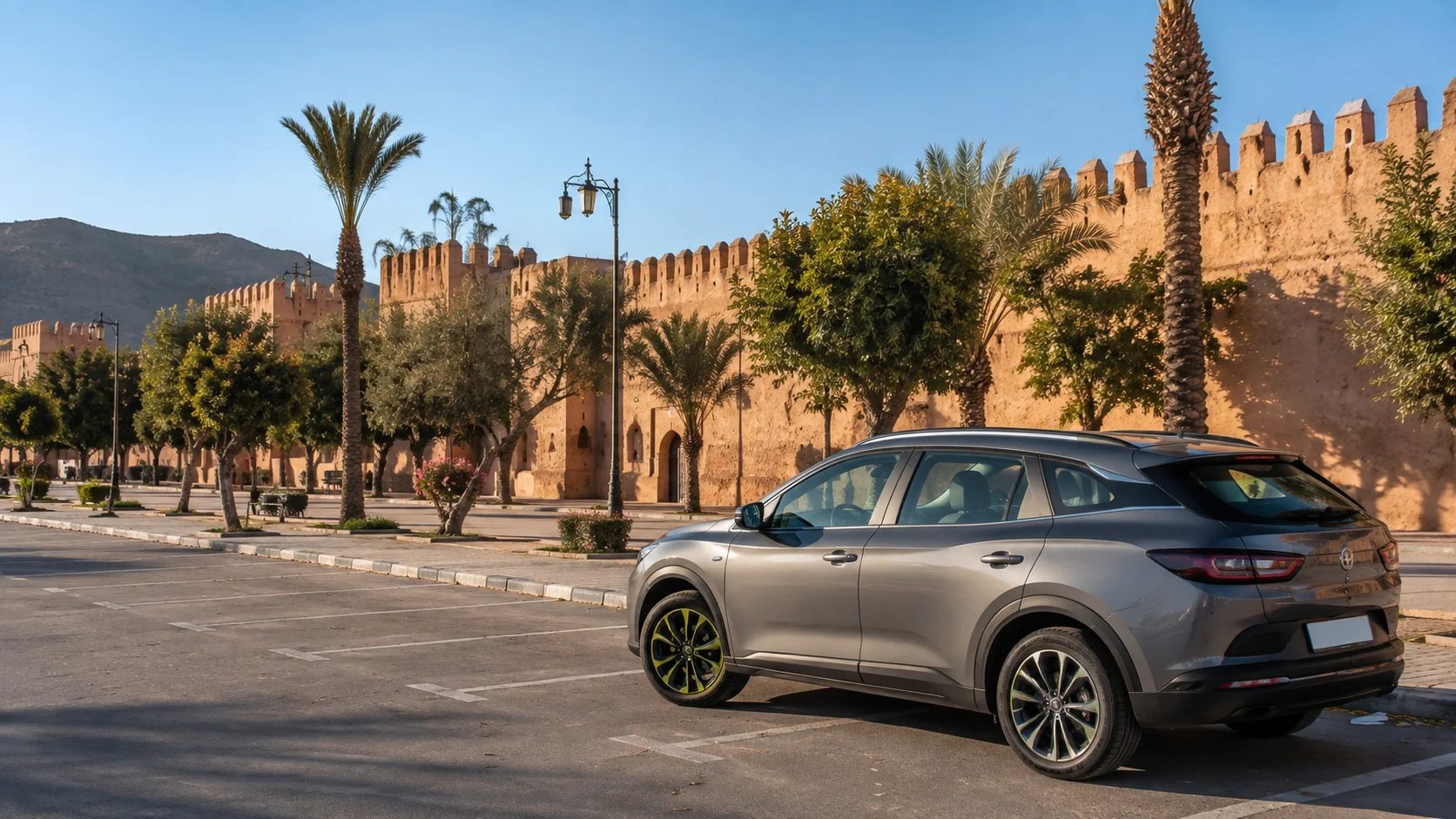
Taroudant is easier to approach than the centre of Marrakech, but its historic core still contains narrow streets, local traffic, pedestrians and busy market areas.
The simplest strategy is to park near the edge of the medina and continue on foot. Parking areas can be found close to sections of the ramparts, although availability may change by time of day, local events and market activity.
Visitor-reported parking areas exist close to the medina walls, but current access, prices and operating arrangements should always be confirmed locally rather than assumed from an older online listing.
When parking:
-
Do not block gates, shops or residential entrances.
-
Remove passports, electronics and luggage from view.
-
Confirm whether the parking area is supervised.
-
Ask your accommodation about overnight parking.
-
Keep small cash available for legitimate parking charges.
-
Avoid forcing a large vehicle into narrow medina lanes.
Hotels and riads inside the old town may not have direct vehicle access. Contact the accommodation before arrival and ask where guests normally stop or park.
Day Trip, Overnight Stay or Wider Itinerary?
Can Taroudant Be Visited as a Day Trip?
A same-day return is technically possible, but it is not the best use of the route.
Four or more hours of driving in each direction would create a long and tiring day. Stops, traffic and meal breaks could push the total road time much higher.
A day trip from Essaouira is only reasonable for travellers who are comfortable with a very early departure, limited sightseeing and a late return. Even then, an overnight stay is safer and more rewarding.
One-Night Visit
One night provides enough time to:
-
Arrive during the afternoon
-
Check into a riad or hotel
-
Explore the souks
-
Walk around the ramparts near sunset
-
Have dinner in Taroudant
-
Continue the road trip the next morning
This is the minimum recommended plan.
Two-Night Visit
Two nights allow a slower medina visit and time for an excursion into the surrounding Souss Valley or nearby mountain foothills.
It also gives the driver a full rest day before continuing toward a more demanding inland route.
Choosing a Suitable Rental Car
You do not need a four-wheel-drive vehicle for the standard route from Essaouira to Taroudant. The correct choice depends mainly on passenger numbers, luggage and the wider itinerary.
Sedan Rental
A comfortable sedan rental in Essaouira is suitable for couples, business travellers and small families using the main paved route.
Sedans provide:
-
Comfortable longer-distance driving
-
Stable handling on main roads
-
Useful luggage capacity
-
Good value for a multi-day itinerary
Check the boot size when travelling with several large suitcases.
SUV Rental
An SUV rental in Essaouira can be useful for families, groups carrying more luggage or travellers continuing toward rural and mountain destinations.
An SUV offers:
-
Additional luggage room
-
A higher seating position
-
Easier entry for some passengers
-
More flexibility for a longer southern Morocco itinerary
An SUV does not remove the need to drive cautiously, and it may be less convenient when entering narrow streets or small parking spaces.
No-Deposit Rental
A no-deposit car rental in Essaouira may reduce the amount temporarily blocked or collected at the start of the rental.
Always confirm what “no deposit” includes. Review the insurance terms, excess, fuel policy, mileage allowance, accepted payment methods and any exclusions before collecting the vehicle.
For an intercity journey, unlimited kilometres can be especially valuable. The route may become longer than expected when adding Agadir, coastal stops or an onward destination.
Pre-Drive Checklist
Before leaving Essaouira, check:
-
Your planned route and current navigation estimate
-
Fuel level
-
Tyre condition
-
Rental documents
-
Driving licence
-
Passport or identification
-
Insurance and emergency contact details
-
Spare tyre or repair kit
-
Phone battery and charging cable
-
Offline map
-
Water and snacks
-
Accommodation parking instructions
-
Expected sunset time
Leave enough daylight for the journey. Starting early also gives you more flexibility when stopping in Tamanar or Agadir.
Avoid building a schedule around the fastest navigation estimate. A realistic plan should include traffic, fuel, food and unplanned delays.
Frequently Asked Questions
How far is Taroudant from Essaouira?
The practical road distance is generally around 240 to 280 kilometres, depending on the selected route and navigation around Agadir. Some route services calculate approximately 238 kilometres.
How long does it take to drive from Essaouira to Taroudant?
Allow around four to four and a half hours of driving without long stops. A more comfortable itinerary with fuel, food and rest breaks usually takes five to six hours.
What is the best route from Essaouira to Taroudant?
For most tourists, the best route follows the N1 south through Tamanar toward Agadir before turning inland through the Souss region to Taroudant.
Can Taroudant be visited as a day trip from Essaouira?
A return day trip is possible but not recommended because of the total driving time. Staying for at least one night creates a safer and more enjoyable itinerary.
Is the road to Taroudant safe for tourists?
The standard route uses established paved roads and is regularly travelled. Drivers should still watch for curves, slower vehicles, pedestrians, changing traffic and limited visibility after dark.
Do I need an SUV to drive to Taroudant?
No. A sedan is sufficient for the normal paved route. An SUV may be preferable for larger groups, extra luggage or an itinerary continuing into more rural areas.
Where should I stop between Essaouira and Taroudant?
Tamanar is a practical rest stop, while Agadir provides the largest choice of fuel stations, restaurants and services. Imsouane can be added when you have enough time for a coastal detour.
Is parking easy in Taroudant?
Parking is generally possible near the outer edges of the medina. It is usually better to park near the ramparts and explore the historic centre on foot.
Are there fuel stations along the route?
Yes. Fuel is available in towns along the main route, particularly around Tamanar and Agadir. Starting with a sufficient fuel level is still recommended.
Can I include Agadir in the same trip?
Yes. Agadir fits naturally between Essaouira and Taroudant. You can stop for lunch, spend one night there or combine the three destinations in a longer southern Morocco itinerary.
Plan Your Essaouira to Taroudant Road Trip
The drive from Essaouira to Taroudant is an excellent way to move beyond Morocco’s Atlantic coast and experience the landscapes, towns and cultural character of the inland south.
Build a flexible southern Morocco itinerary with a reliable rental from MarHire Car Essaouira. Choose a comfortable sedan, an SUV with additional luggage room or a no-deposit option with unlimited kilometres. Confirm the rental conditions before departure, leave enough time for breaks and enjoy the transition from Essaouira’s coastal scenery to Taroudant’s historic ramparts.