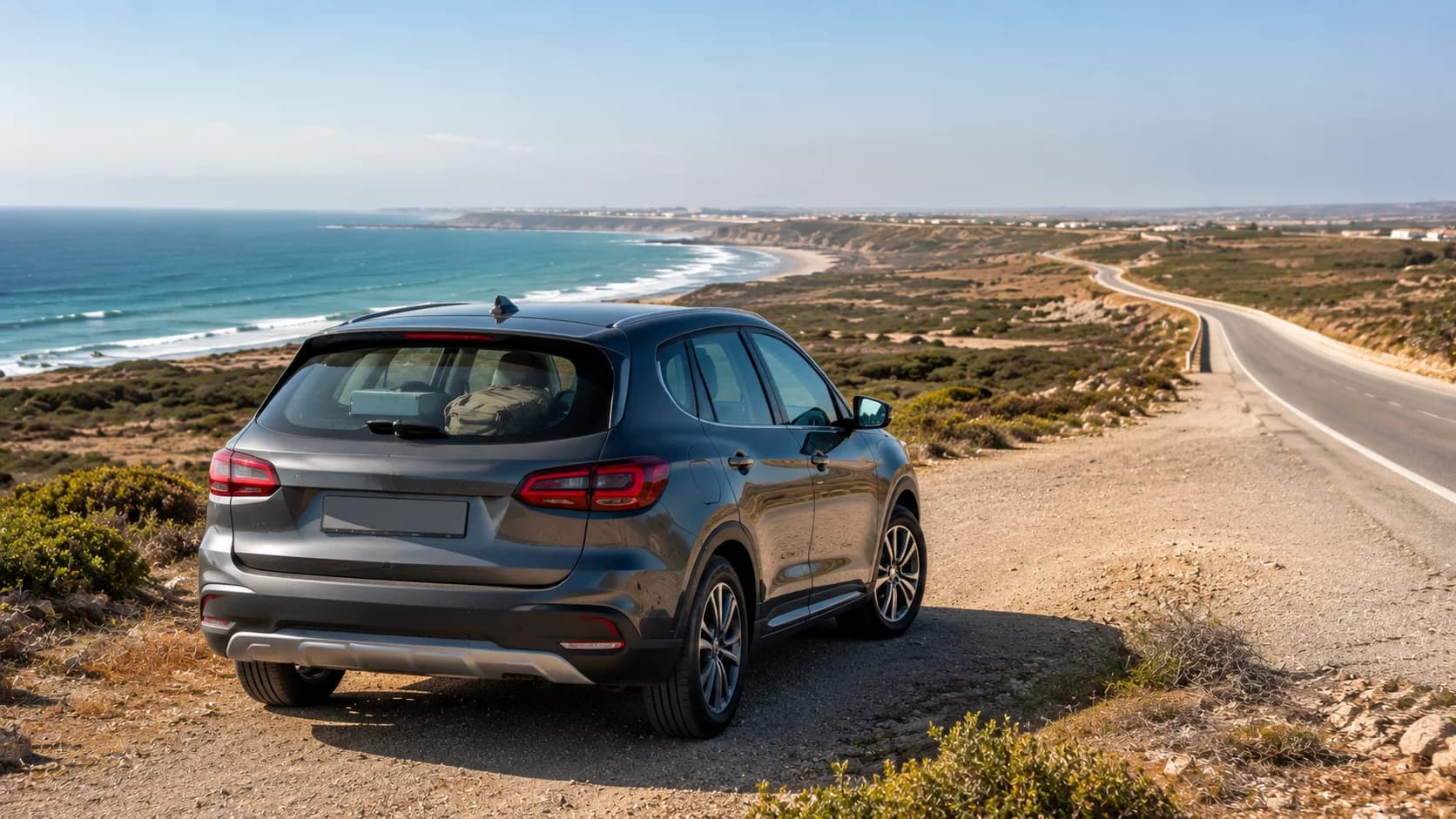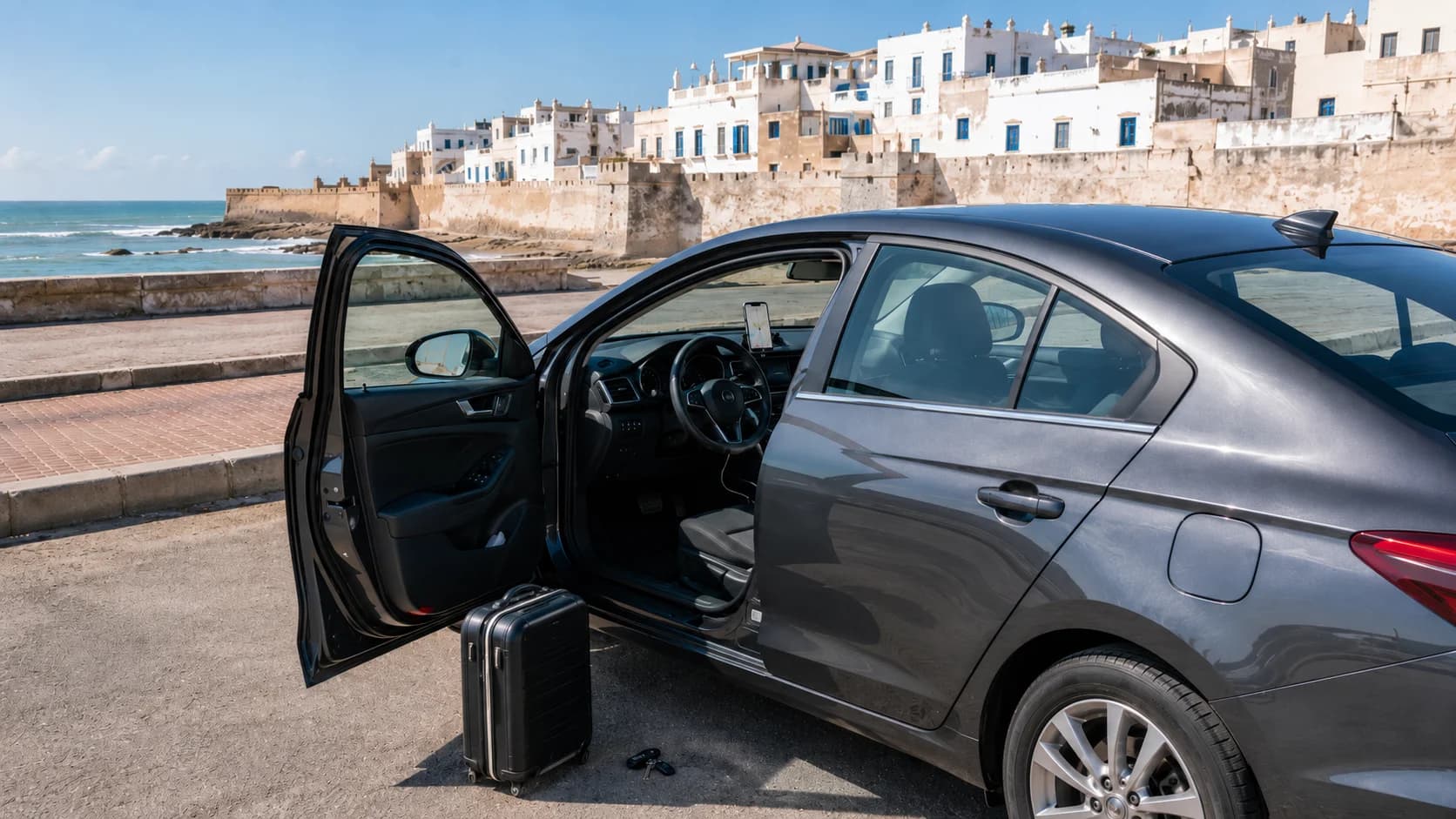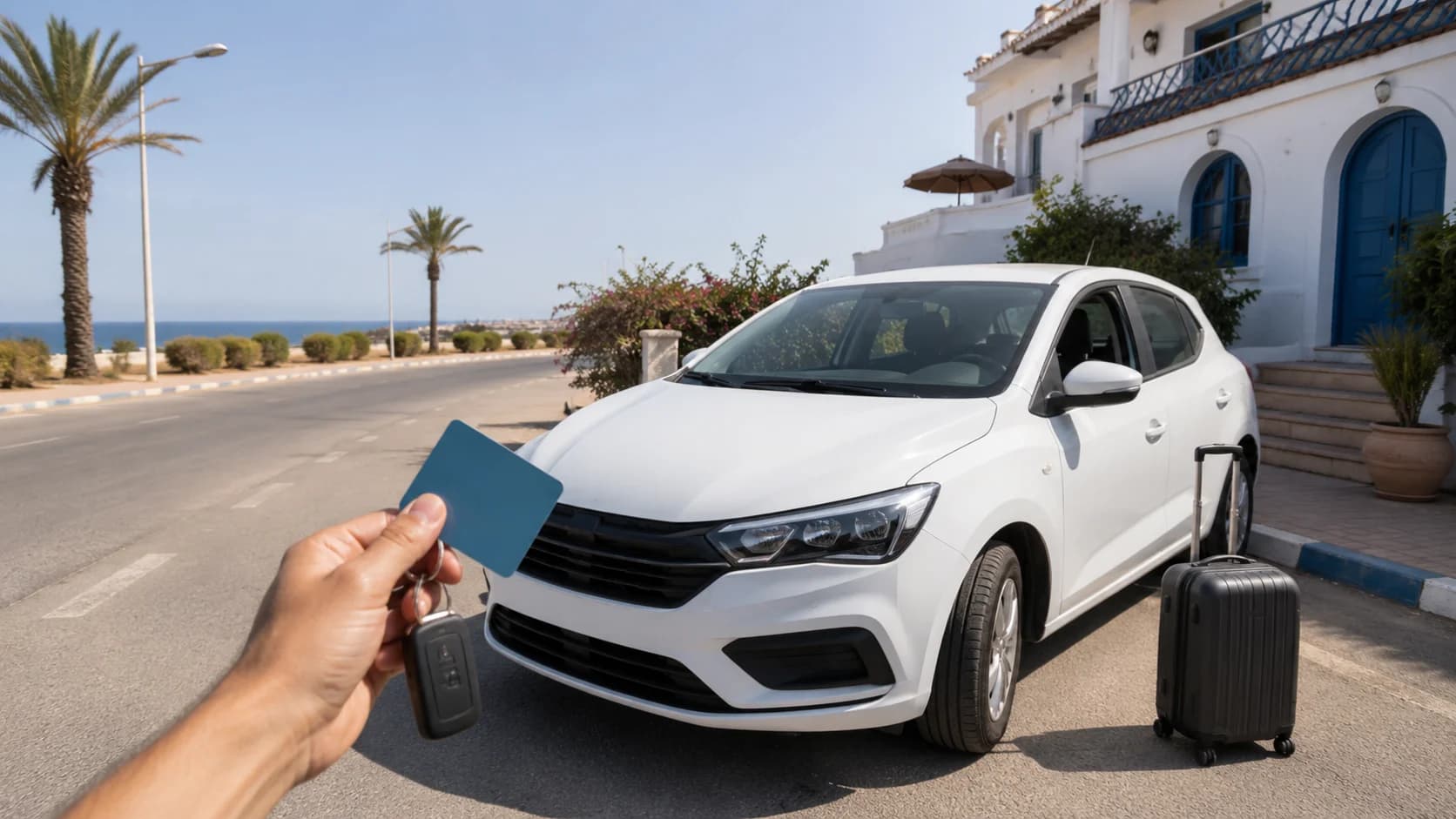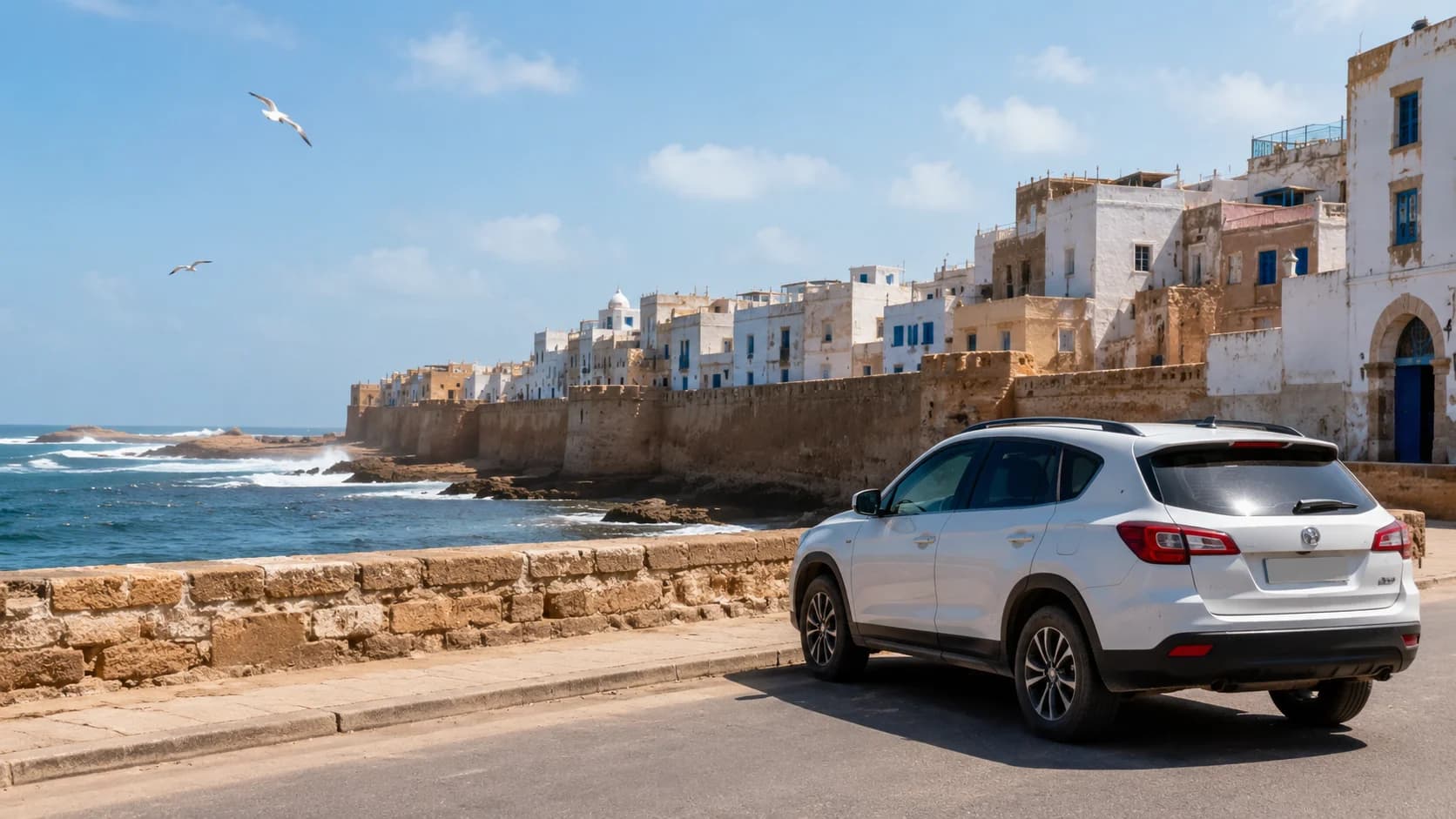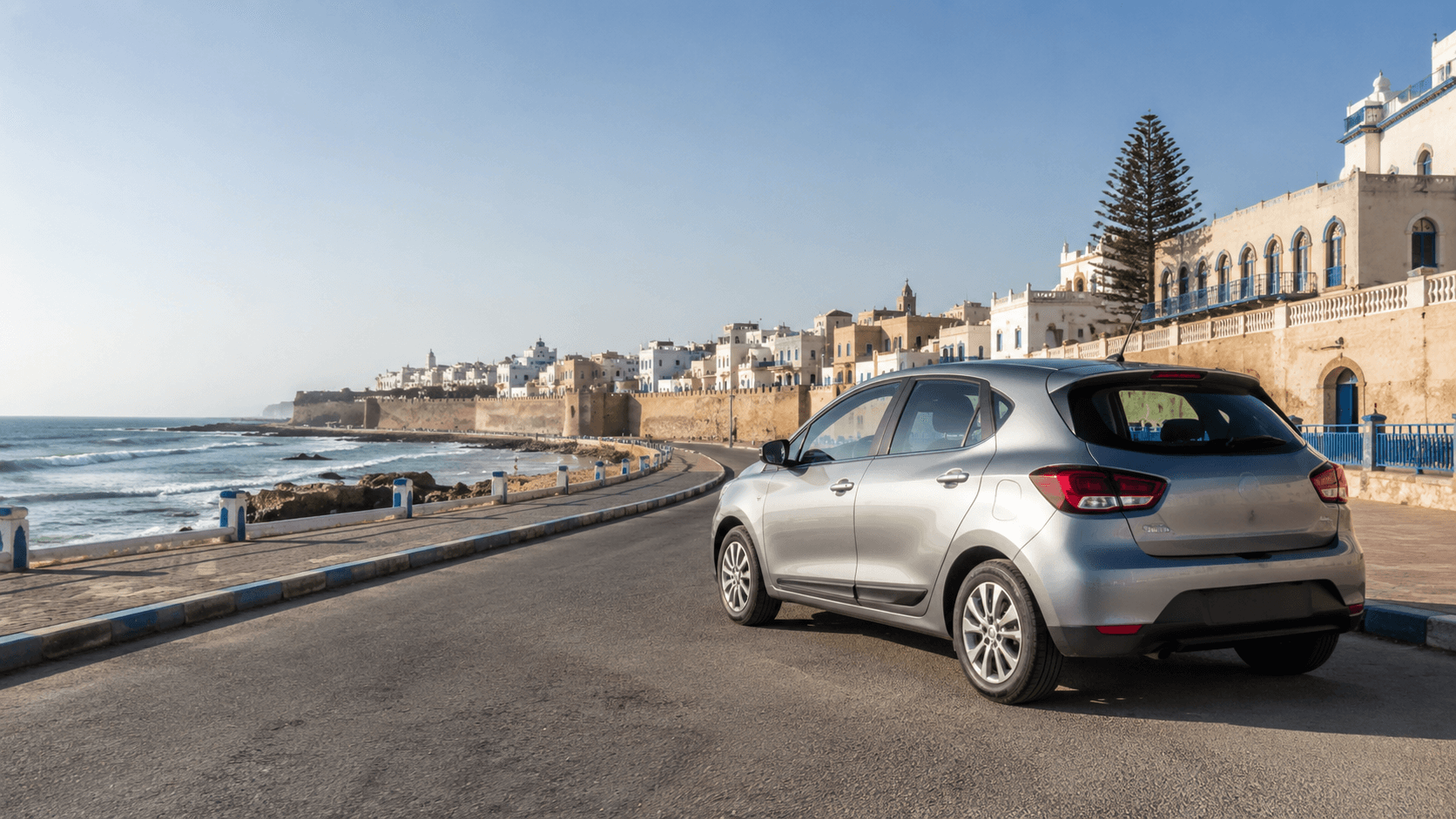









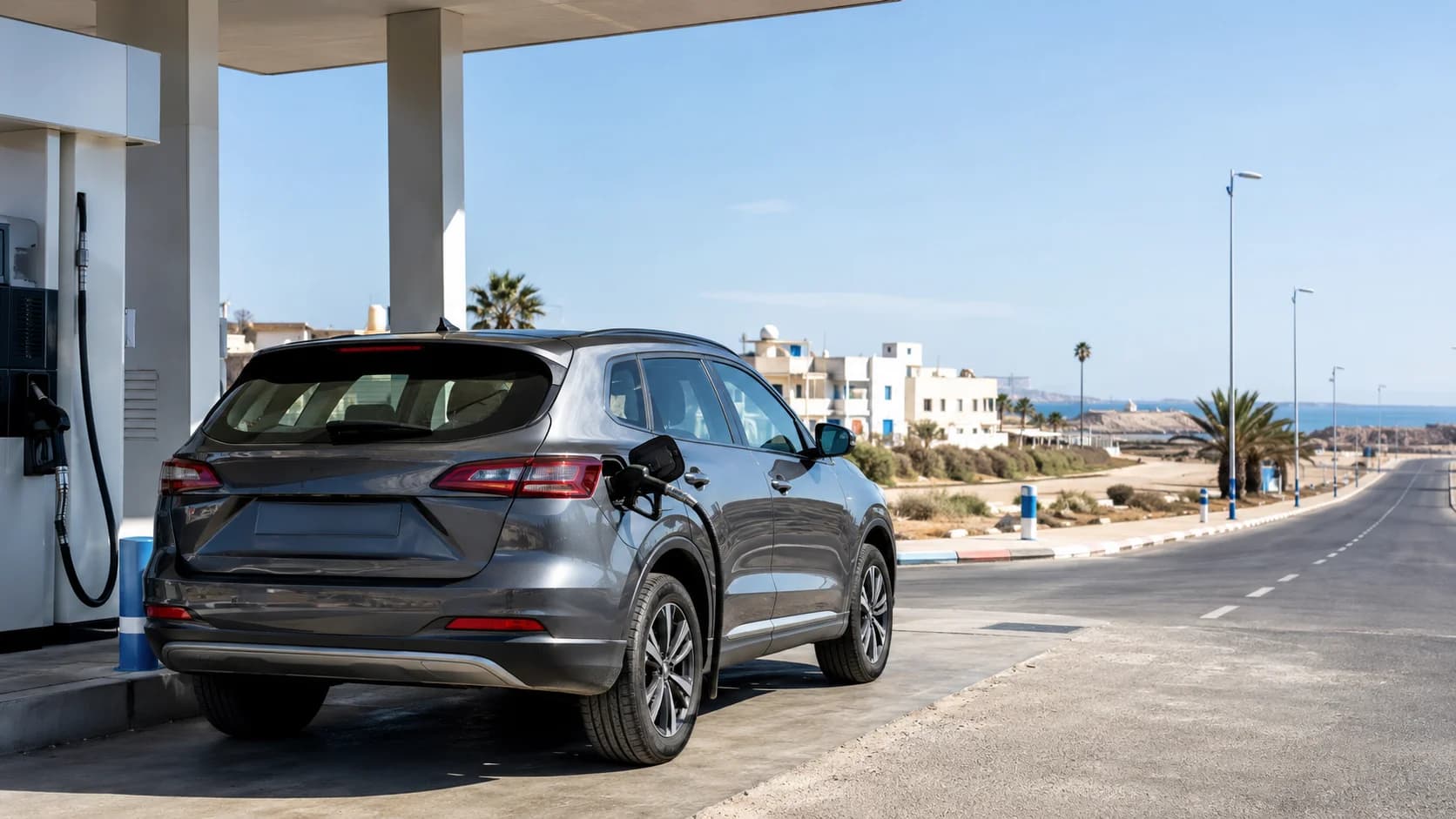
Fuel planning is one of the simplest parts of a Morocco road trip, but it is worth thinking about before leaving Essaouira for the coast, mountains, or a longer intercity drive. Travelers searching for petrol stations Essaouira road trip information usually do not need a complicated strategy. The main priorities are knowing your rental car's fuel type, checking the gauge before departure, and refueling before entering a longer stretch where stations may be farther apart.
Essaouira itself has several service stations, so drivers normally have opportunities to refuel before leaving the city. Morocco also has extensive national fuel-station networks, but availability becomes less predictable once you move away from larger towns and main roads. Starting with enough fuel gives you more freedom to choose where to stop instead of planning the entire journey around the fuel gauge.
If you are preparing for a self-drive trip, choosing the right car rental in Essaouira can also affect fuel consumption, luggage comfort, and how practical longer journeys feel.
Table of Contents
- Fuel planning in Essaouira: quick answer
- Why to start longer trips with enough fuel
- Fuel types and rental-car checks
- Southbound routes
- Northbound and inland routes
- When to refuel on longer journeys
- Fuel-return policies
- Pre-road-trip checklist
- Frequently asked questions
Fuel Planning in Essaouira
The easiest approach is to refuel in or around Essaouira before starting a long road trip, especially if your route includes smaller coastal villages or rural roads. Check whether your rental car uses diesel or petrol, confirm the required return fuel level, and avoid waiting until the tank is almost empty.
You generally do not need to leave Essaouira with a completely full tank for every short excursion. For longer trips, however, starting with a comfortable fuel reserve reduces unnecessary stops and makes route planning easier.
Fuel planning should be based on the route ahead rather than anxiety about finding a petrol station every few kilometers.
Why Start Longer Trips With Enough Fuel?
Essaouira is a practical place to organize the beginning of a road trip because fuel, shops, restaurants, accommodation, and other services are concentrated around the city.
Once you leave, the situation changes depending on your direction.
Main routes between Moroccan cities normally pass through towns where fuel is available. Smaller coastal roads and rural stretches can have fewer convenient options, particularly if you are traveling early in the morning, late in the evening, or taking detours.
Starting with enough fuel gives you several advantages.
You can stop when it is convenient rather than because the fuel warning light appears. You also have more flexibility if you change your route, visit an additional beach, encounter traffic, or decide to continue farther than originally planned.
For most road trips, there is little benefit in deliberately running the tank very low before searching for a station.
Checking the Correct Fuel Type
Before putting fuel into a rental car, confirm exactly what the vehicle requires.
Moroccan rental fleets contain both diesel and petrol vehicles. Never assume the fuel type based on the size, model, or appearance of the car.
Check the information provided during vehicle handover. You can also look for a label near the fuel cap or ask the rental team if there is any uncertainty.
The most important rule is simple:
If you are not completely sure which fuel the car takes, do not start refueling until you have confirmed it.
Putting petrol into a diesel vehicle or diesel into a petrol vehicle can cause serious mechanical problems. Rental agreements may also make the driver financially responsible for damage caused by using the wrong fuel.
If incorrect fuel has already been added, avoid starting the engine and contact the rental company immediately.
Fuel Stations in Essaouira
Drivers looking for fuel stations in Essaouira should normally find several options within and around the urban area.
The city is served by established Moroccan fuel networks as well as service stations on roads leading out of Essaouira. This makes the city itself one of the easiest places to prepare before beginning a longer journey.
Instead of focusing on finding one particular station, it is often more practical to choose a convenient station along the direction in which you are leaving.
Before departure, check:
-
Your current fuel level
-
The fuel type required by the vehicle
-
Your approximate driving distance
-
Whether your route passes through major towns
-
The fuel level required when returning the rental car
For travelers trying to keep overall trip costs controlled, a cheap car rental in Essaouira may also provide lower fuel consumption than a much larger vehicle, depending on the model and journey.
Southbound Routes From Essaouira
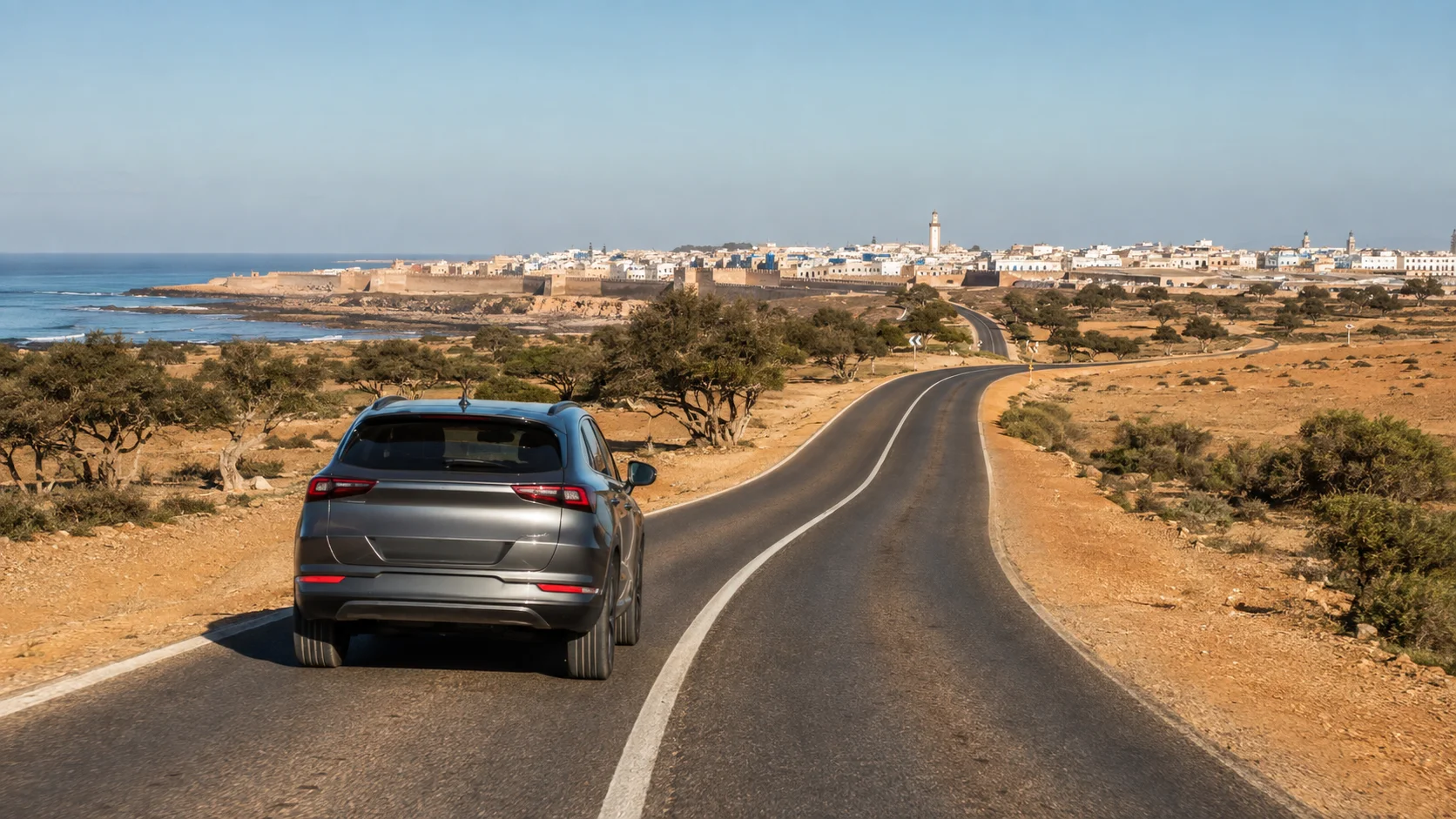
Fuel planning becomes particularly useful when heading south from Essaouira because travelers often combine several coastal destinations.
Popular directions include Sidi Kaouki, Imsouane, Agadir, Taghazout, and other Atlantic Coast stops.
Essaouira to Sidi Kaouki
Sidi Kaouki is relatively close to Essaouira, so this is not normally a journey that requires special fuel planning.
If you already have a reasonable amount of fuel, there is usually little reason to fill the tank specifically for this short drive.
However, travelers who plan to continue exploring after Sidi Kaouki should think about the complete day's distance rather than only the first destination.
Essaouira to Imsouane
A trip toward Imsouane deserves slightly more planning.
The route takes you away from Essaouira and through less urbanized stretches of the Atlantic Coast. Even though fuel can be found along broader regional routes, it is easier to leave Essaouira with a comfortable reserve rather than planning to search for petrol near a small coastal destination.
If you intend to explore viewpoints or beaches along the way, those detours can also add kilometers.
For an Essaouira to Imsouane road trip, refueling before departure is a sensible choice if your tank is already below roughly half.
That is not because the route is exceptionally remote. It simply gives you more flexibility.
Essaouira to Agadir
The drive between Essaouira and Agadir is much longer but follows an important regional corridor.
You will pass towns and developed areas along the journey, so finding fuel is normally manageable. Nevertheless, leaving Essaouira with enough range allows you to choose a comfortable break instead of making an early fuel stop simply because you started with an almost empty tank.
Northbound and Inland Routes
Fuel strategy is similar when traveling north toward Safi or inland toward Marrakech.
Essaouira to Marrakech
The road between Essaouira and Marrakech is a major tourist and intercity route.
You are not entering an isolated expedition route, and there are towns and roadside services along the way. A sensible fuel level at departure is therefore more important than having a completely full tank.
The drive is long enough, however, that starting almost empty is unnecessary.
If you are carrying several passengers or luggage, a comfortable sedan rental in Essaouira can be a practical choice for longer paved-road journeys while generally avoiding the size of a larger SUV.
Essaouira to Safi
The northbound journey toward Safi also passes through populated areas.
The same rule applies: begin with adequate range and refuel in a proper town or established station when convenient.
Inland Detours
More attention is useful if you plan to leave the principal route and explore rural villages, countryside attractions, or smaller roads.
Navigation apps may show a petrol station somewhere along the route, but operating conditions and services can change. Do not base a long rural detour on the assumption that one specific small station will definitely be open when you arrive.
When Should You Refuel on a Longer Journey?
There is no universal fuel level at which every traveler must stop.
A better strategy is to consider what comes next.
If you are approaching a major town with one-third to half a tank remaining and know that the next part of your trip crosses a quieter area, it can be sensible to refuel there.
Waiting until the warning light appears reduces your options.
A practical road-trip rule is:
Refuel at a convenient established station before you actually need fuel.
This approach is particularly useful if you are:
-
Driving through unfamiliar areas
-
Taking secondary roads
-
Traveling after dark
-
Driving on a public holiday
-
Planning several detours
-
Continuing to another destination after your original stop
Planning by Route Rather Than by Fear
Visitors sometimes approach fuel planning in Morocco as if every journey outside a major city requires a full emergency tank.
For most normal tourist routes, that is unnecessary.
Morocco has a large road network connecting its major cities and regional centers, and established fuel brands operate extensive station networks across the country. For example, Shell Morocco states that its network alone includes more than 400 service stations nationwide.
The better strategy is to distinguish between major intercity routes and genuinely quieter stretches.
On routes such as Essaouira to Marrakech or Essaouira to Agadir, fuel planning is mainly about convenience.
On smaller coastal or rural roads, maintaining a larger reserve makes more sense.
Budget Implications of Longer Drives
Fuel should be included when estimating the real cost of a road trip.
Your consumption depends on several factors:
Vehicle type, engine, traffic, road gradient, driving speed, air-conditioning use, passenger load, and luggage can all affect fuel use.
A compact car may consume less fuel on a simple paved-road itinerary, while a larger vehicle can make sense when extra passenger or luggage capacity is necessary.
Rather than calculating your budget from the rental price alone, estimate:
Rental cost + expected fuel + tolls if applicable + parking + optional stops or detours.
Fuel prices can change, so checking current prices shortly before traveling is more reliable than relying on an old blog article quoting a fixed price per liter.
Keeping Fuel Receipts When Useful
You do not normally need to save every fuel receipt during a road trip.
However, keeping the final receipt before returning a rental car can be useful, particularly if your agreement requires a specific fuel level.
It gives you a simple record of where and when you last refueled.
For longer trips, receipts can also help travelers who are tracking expenses or sharing travel costs with other passengers.
Understanding Rental-Car Fuel Return Policies
Do not assume every rental company uses the same fuel policy.
Common policies include:
Same to same: You return the vehicle with approximately the same fuel level it had at handover.
Full to full: You receive the car full and return it full.
The correct rule is the one written in your rental agreement or communicated during handover.
Some Moroccan rental companies charge both the cost of missing fuel and an additional refueling service fee when a car is returned below the required level.
For that reason, photograph the fuel gauge when you receive the vehicle and confirm the return requirement before driving away.
Avoiding Last-Minute Refueling Stress
One of the least enjoyable ways to finish a Morocco trip is searching for fuel immediately before an airport, train, or hotel return deadline.
If your vehicle must be returned with a particular fuel level, plan the final refueling stop before reaching the handover point.
Do not leave yourself only a few minutes.
Traffic, navigation mistakes, queues, or difficulty locating the correct station entrance can turn an easy task into unnecessary stress.
If returning in Essaouira, ask the rental team which general area is most convenient for final refueling based on your return location.
Pre-Road-Trip Fuel Checklist
Before leaving Essaouira, confirm:
-
Correct fuel type: diesel or petrol
-
Current fuel level
-
Approximate route distance
-
Major towns along your route
-
Whether you will make rural or coastal detours
-
Rental fuel-return requirement
-
Emergency/contact details for the rental provider
-
Enough fuel to avoid depending on one specific remote station
You do not need to over-plan every liter. You simply want enough range to travel comfortably between realistic refueling opportunities.
Frequently Asked Questions
Where can I get fuel in Essaouira?
Essaouira has multiple service stations in and around the city, including stations operated by major Moroccan fuel networks. Refueling before leaving the urban area is convenient when beginning a longer road trip.
Should I fill the tank before a day trip?
Not necessarily. For a short trip such as Essaouira to Sidi Kaouki, a full tank may be unnecessary if you already have sufficient fuel. For longer routes or several stops in one day, starting with more fuel provides additional flexibility.
Are petrol stations easy to find in Morocco?
They are generally common around cities, major towns, and important intercity roads. Stations may be farther apart on rural roads and quieter coastal routes, so drivers should avoid deliberately running the tank very low.
What fuel does my rental car use?
Check the vehicle handover information, rental agreement, fuel-cap label, or ask your rental provider. Never assume whether a rental vehicle uses diesel or petrol based only on the model.
What happens if I put in the wrong fuel?
Do not start the engine. Contact the rental provider immediately. Incorrect fuel can damage the engine and fuel system, and the renter may be responsible for the resulting repair costs.
Do I need cash at petrol stations?
Payment options can differ between stations. Larger stations may accept cards, but having some Moroccan dirhams available is sensible, particularly outside major urban areas or if a payment terminal is temporarily unavailable.
Should I refuel before driving to Imsouane?
If your tank is already relatively low, refueling in Essaouira before heading toward Imsouane is a sensible choice. It gives you more freedom to explore the coastal route without needing to organize your trip around a fuel stop.
How much fuel should I leave when returning the car?
Follow the fuel policy stated in your rental agreement. If the car was supplied under a same-to-same policy, return it at approximately the same level. If your agreement requires full-to-full, refill the tank before return.
Are fuel stations open early or late?
Operating hours vary by location. Some larger stations have extended hours, while smaller stations may not. If you are departing extremely early or arriving late, refueling the previous day removes uncertainty.
How do I plan fuel for a long road trip from Essaouira?
Check your route, start with a comfortable fuel reserve, identify the larger towns you will pass, and refuel before entering quieter stretches. There is usually no need to calculate fuel availability kilometer by kilometer on standard tourist routes.
Start Your Essaouira Road Trip Prepared
Fuel planning around Essaouira should be simple: know what fuel your vehicle requires, check the gauge before departure, understand the return policy, and refuel before longer or quieter stretches rather than waiting for the warning light.
With MarHire Car Essaouira, vehicle handover information and local support can help you confirm the correct fuel type and understand your return requirements before setting off.
Explore available car rental in Essaouira options and start your next Morocco road trip with a clear plan.